

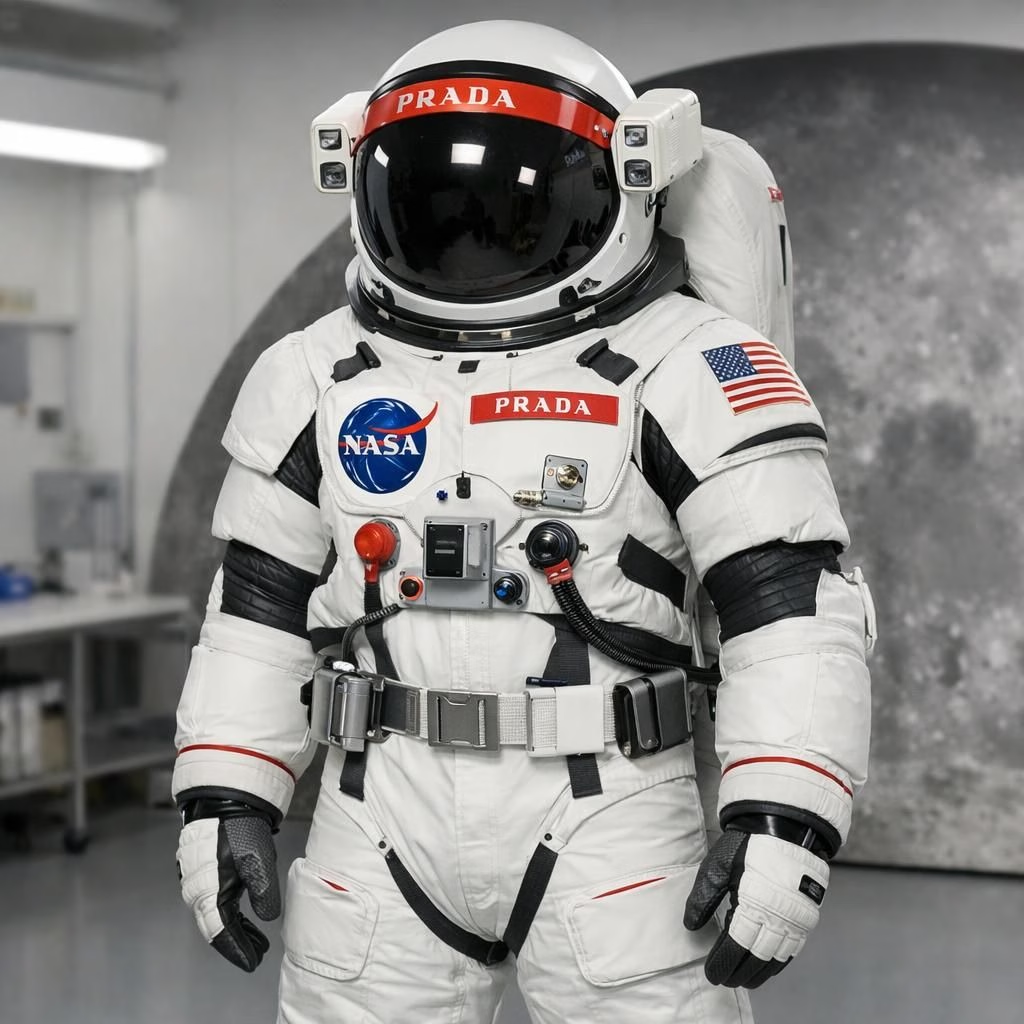
Prada and NASA have entered a space-age duet that sounds more like a launch-day collaboration than a fashion show. In 2026, the luxury brand quietly wove its name into the fabric of space exploration, not as a logo, but as a partner on the next generation of spacesuits. The goal is simple and ambitious: improve comfort, boost efficiency, and perhaps add a dash of visual confidence for televised moon landings. The result is a Prada-inspired layer atop AxEMU configurations for Artemis missions, featuring cooling garments and modular layers built to survive lunar tests. The memes pace ahead, but the science behind it is real and methodical.
Prada x NASA: Moonwear meets runway logic
First, a quick reality check: the Artemis program is about safety, reliability, and science. The fashion angle is an overlay that aims to reduce heat stress, improve mobility, and cut down on suit fatigue. NASA‘s team is not replacing NASA’s engineers; they are complementing them with materials and design thinking borrowed from luxury production lines. The collaboration with NASA also involves Axiom Space, which has been pushing AxEMU—the next generation moon suit—for Artemis IV. The goal is to add a breathable, liquid cooling garment to the existing moonsuit layers. In plain terms: a sophisticated cooling system tucked inside a stylish, functional shell.
Here’s where the tone shifts from glossy press coverage to practical engineering. The liquid cooling garment is not a fashion gadget; it helps regulate temperature, manages moisture, and reduces the risk of overheating during long extravehicular activities. The garment must work in lunar conditions, where sun exposure is intense and shade is brutally cold. NASA‘s involvement signals a shift toward user-centered design: the astronaut wears something that feels less like a space suit and more like a personal climate system that happens to have a very expensive wardrobe exterior.
Prada NASA collaboration reshapes Artemis IV wear
How does all this translate to the AxEMU, the suit currently under consideration for Artemis IV? The engineers at Axiom Space and the teams at Prada have to align on interfaces, connectors, and maintenance schedules. They test the layers for vacuum integrity, mobility, and thermal performance. They test the packaging, the glove dexterity, and the helmet fit. They test the suit in simulated lunar dust environments and in zero-g analogs. The result is a layered system that promises to be both safer and easier to repair on the Moon. The collaboration does not cheapen safety; it is an attempt to bring more life to the suit under real-world lunar mission pressures.
From a design perspective, the fusion of Prada aesthetics with NASA requirements is not just a marketing stunt. It creates a case study in cross-industry collaboration. It pushes the boundaries of what a spacesuit can be: not just a tool for survival, but a portable climate module as well as a channel for brand storytelling. The real value is in the incremental benefits: better cooling, better mobility, lower fatigue. For Artemis IV crews, that translates into more productive EVA time and clearer thinking in pressurized suits. For observers on Earth, it is a reminder that space exploration does not need to be all government hardware—there can be a gentle touch of culture and luxury without compromising safety.
Critics will note potential risks: cost, schedule impacts, and the possibility of fashion over function. NASA advocates point to real data and accelerated development cycles. In this 2026 moment, NASA and Prada demonstrate that a brand collaboration can support a serious technical program while still keeping a sense of wonder. The collaboration with Prada is not the entire story; it sits alongside the ongoing work by The Verge, Reuters, Vanity Fair, and others that reported on the human side of these suits. The aim is to keep the moon mission as practical as possible while making it a little more human and a little less sterile. That balance matters when humans leave Low Earth Orbit for longer periods and need to manage physical and mental load in harmony.
For readers curious about what this means as a consumer, the answer is: you may not be donning the suit, but you can appreciate the design philosophy. Innovation in spacesuit technology often starts with a small, deliberate improvement to comfort and safety, then scales into broader efficiency gains. Prada’s involvement is a signal that the line between fashion and engineering will blur in more high-stakes environments. NASA‘s mission remains about exploration and science, while Prada’s touch adds grace under extreme pressure. Together, they present a future where astronauts and fashion lovers alike can celebrate the Moon as a platform for human achievement, not just a testing ground for materials.
To be clear, this is not a publicity stunt that ignores risk—it is a measured collaboration built on safety assessments, thermal modeling, and real-world testing. The AxEMU system must pass NASA‘s rigorous standards, with a design philosophy that favors modular upgrades and straightforward maintenance. Prada’s design influence focuses on integrating cooling textiles, ergonomic support, and aesthetic readability so that astronauts can quickly assess suit status at a glance. The practical outcome might include faster suit checks, clearer display of vitals, and improved comfort during long EVA tasks. It is space for science, with a hint of style, and a nod to the fact that humans remember best when they can see themselves in the process.
In 2026, Prada NASA collaboration sits at the intersection of luxury branding, aerospace engineering, and public interest in space exploration. It challenges the stereotype that safety gear has to be dull or utilitarian. If done right, the partnership could yield a new standard for space attire that blends function with form while meeting NASA‘s stringent performance criteria. It also invites other brands to consider how design can contribute to mission success without compromising safety. The Moon remains a harsh place, but with a well-designed, cooling-aware suit, the crew can focus on science while looking prepared for a photo moment that might end up on the cover of a future magazine—ideally, with a space-age twist that feels both credible and aspirational.
Finally, as we look toward Artemis IV and beyond, the most important takeaway is that fashion and space can share the same sky without stepping on each other’s toes. Prada’s collaboration with NASA is less about glitz and more about a practical upgrade to a crucial system. The fashion team does not replace the engineers; they partner with them to refine the living environment inside the suit. The result is a smoother transitory experience between Earth and Moon, a sense that the journey can be comfortable as well as courageous. And yes, if you enjoy the drama of a great fabric and a great mission, you are watching a new chapter in how technology and taste can travel together to the Moon.
External note: keep watching for updates as Artemis IV progresses. External partners and NASA planners emphasize safety milestones and real-world testing phases that validate the cooling layer’s performance in vacuum and shade.
Practical implications for consumers and the supply chain become clearer as testing advances. They show that a careful blend of engineering discipline and design empathy can yield equipment that is safer, lighter, and easier to maintain. Prada’s involvement signals that a brand’s curiosity about space can translate into tangible benefits for crews and mission planners alike.
Prada in space: design implications
From a design standpoint, Prada brings ergonomic studies, fabric science, and modular assembly to the AxEMU layers. The result could be a new standard where cooling textiles and streamlined interfaces reduce fatigue and error during long EVAs. Yet the safety backbone remains NASA‘s evaluation criteria and independent testing. In other words, aesthetics meet engineering in a way that reinforces mission success rather than compromising it.
FAQ
- Q: How does Prada influence space suits without compromising safety?
A: The collaboration centers on cooling textiles, ergonomic support, and modular upgrades that pass NASA‘s rigorous standards and extensive testing. - Q: What makes AxEMU different for Artemis IV?
A: It adds improved mobility, better thermal management, and easier field maintenance—benefits the partnership aims to preserve while integrating Prada design language. - Q: Will this affect mission safety or timelines?
- A: The goal is to maintain safety while reducing fatigue and boosting productivity during long EVAs, with careful schedule planning and incremental testing.
External references and credible context are important for readers who want to follow the technical side of this collaboration. For ongoing spaceflight updates, see official NASA pages and AxEMU documentation in addition to reputable industry reporting.
References
Original article inspiration and gratitude to the sources: Reuters and The Verge and Vanity Fair for reporting on Prada and NASA’s spacesuit collaboration. Thank you for the original material that sparked this synthesis. Original article link: https://www.reuters.com/technology
We’d love to hear your thoughts. Share your questions, ideas, or your own space-fashion fantasies in the comments below.
External references for further context:
NASA Artemis missions,
AxEMU on Axiom Space.