

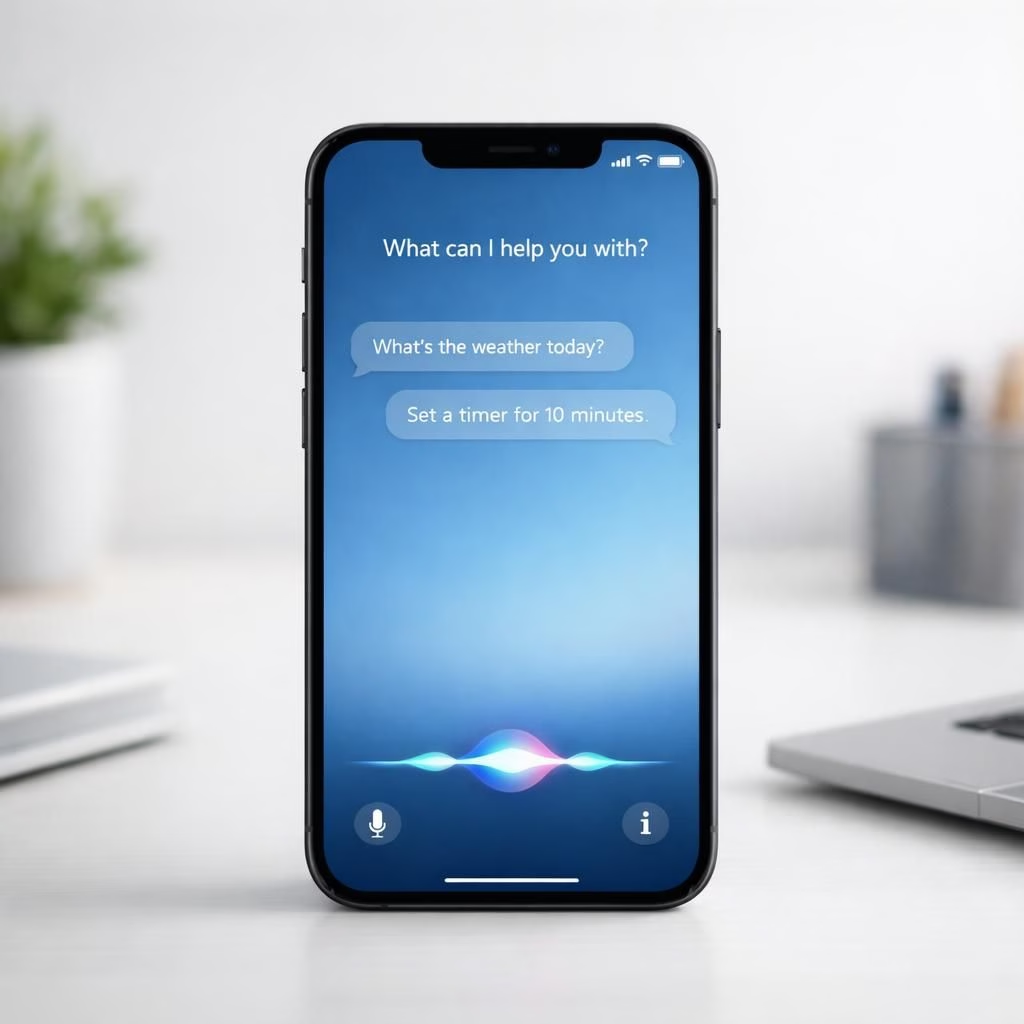
Apple is quietly testing Siri as part of its AI overhaul in 2026, with plans for a standalone Siri app and a cross-platform Ask Siri feature. The redesigned Siri aims to wear a softer, chatbot-like face, making it feel more like a chatty teammate within the AI overhaul. If rumors hold, Siri will lead with more context, quicker answers, and a touch of personality.
With this shift, the company aims to unify voice, messaging, and automation under one assistant that can slide between apps and devices as smoothly as your coffee slides into your morning routine. Siri reboot isn’t merely cosmetic; it’s a strategic bet that people want less friction and more personality from the digital helper that sits in their pockets and on their desktops. The AI overhaul isn’t only about features; it’s about mindset—moving from a command-driven tool to a conversational companion that can anticipate needs, respect privacy, and keep things moving. Siri, in this picture, is being groomed to be both a confidant and a lightweight workflow engine, a combo that could redefine how we interact with our devices daily.
Siri in the spotlight of the AI overhaul
Inside Apple, rumors point to a standalone Siri app with its own navigation and settings beyond iOS. The new interface is described as more chat-like, with threads that remember recent questions. This aligns with the broader AI overhaul goal: transform Siri into a planning partner that helps you draft and decide. Look for better memory, sharper follow-ups, and a lighter touch when suggesting actions. The trade-off will be balancing speed, accuracy, and privacy across a multi-device ecosystem.
Ask Siri goes cross-platform in the AI overhaul
The cross-platform Ask Siri feature aims to keep the same assistant across iOS, macOS, watchOS, and beyond, so you can start a question on your iPhone and pick up on your Mac without repeating yourself. In practice, that means your coffee order on the iPhone app could morph into a reminder on your Mac while you boot up a presentation. It also signals broader API work for developers who want to weave Siri into third-party apps with more flexible prompts and safer data handling. Apple is likely to emphasize that the core Siri experience remains private, with on-device processing where possible and careful data controls that let users decide what to share. The AI overhaul here is not just about cross-platform convenience; it’s about a cohesive, privacy-minded ecosystem that still respects your time and your preferences. Siri, in this vision, functions as a unifying thread rather than a handful of separate, device-specific skills.
- Smoother, faster responses with richer context for Siri across apps
- Seamless continuity of conversations across devices
- Clear privacy controls and on-device processing options
- Opportunities for developers to integrate with less friction
For developers, the shift could be a chance to rethink how apps listen for user intent and how prompts are framed. For users, the payoff is a more natural, less disruptive assistant that can slide between tasks without needing a new setup every time you switch devices. In short, this AI overhaul aims to humanize a digital helper that often felt more like a shortcut than a partner. Siri, then, becomes less about commanding the device and more about guiding you through the day with friendly, context-aware prompts.
As with any major update, these plans carry both promise and risk. The balance between speed and privacy, between a conversational tone and concise answers, will shape how well the new Siri is adopted. Apple will likely roll out the features in staged waves, starting with developers and power users at WWDC while opening up more broadly to the public in later months, all in service of the AI overhaul. The company will also need to maintain reliability across devices, ensuring that a single Siri moment never becomes a source of confusion or inconsistency. Expect a lot of polish, a touch of humor from time to time, and a strong focus on keeping your data secure while making the assistant feel more human.
In the age of AI-driven software, Apple’s approach remains cautious and user-centric. Apple’s public materials and investor coverage consistently emphasize privacy and on-device processing. Apple Newsroom provides ongoing context on how these priorities shape product plans.
We’d love to hear what you think. Share your thoughts in the comments and tell us how you’d use a standalone Siri or cross-platform Ask Siri in your daily routine.
Practical steps for readers
- Enable any early access options if you’re a developer or beta tester, and monitor privacy settings across devices.
- Review the new on-device processing options and decide what data you want to share.
- Experiment with starting tasks on one device and continuing on another to see how continuity works for you.
FAQ
- Q: Will Siri become cross-platform across all Apple devices?
- A: Apple is expected to make the same assistant available across iOS, macOS, watchOS, and beyond, with continuity across devices.
- Q: How will privacy be protected in the AI overhaul?
- A: Apple emphasizes on-device processing and clear user controls to limit data sharing.
- Q: Will developers be able to integrate with Siri more easily?
- A: Yes, new APIs are planned to let third-party apps work with Siri while preserving safety.
- Q: When will these features roll out to the public?
- A: Apple is expected to stage releases starting with developers and power users at WWDC, with broader availability later.
- Q: What does the AI overhaul mean for everyday users?
- A: It aims to make Siri more natural, context-aware, and easier to use across devices.
Conclusion
The AI overhaul could redefine how we interact with our devices, turning Siri into a more human, privacy-minded companion that slips seamlessly between tasks and devices. If you’re curious, keep an eye on WWDC updates and review privacy settings ahead of any rollout.
References
- Original source: Bloomberg
- Apple Newsroom: Apple Newsroom