

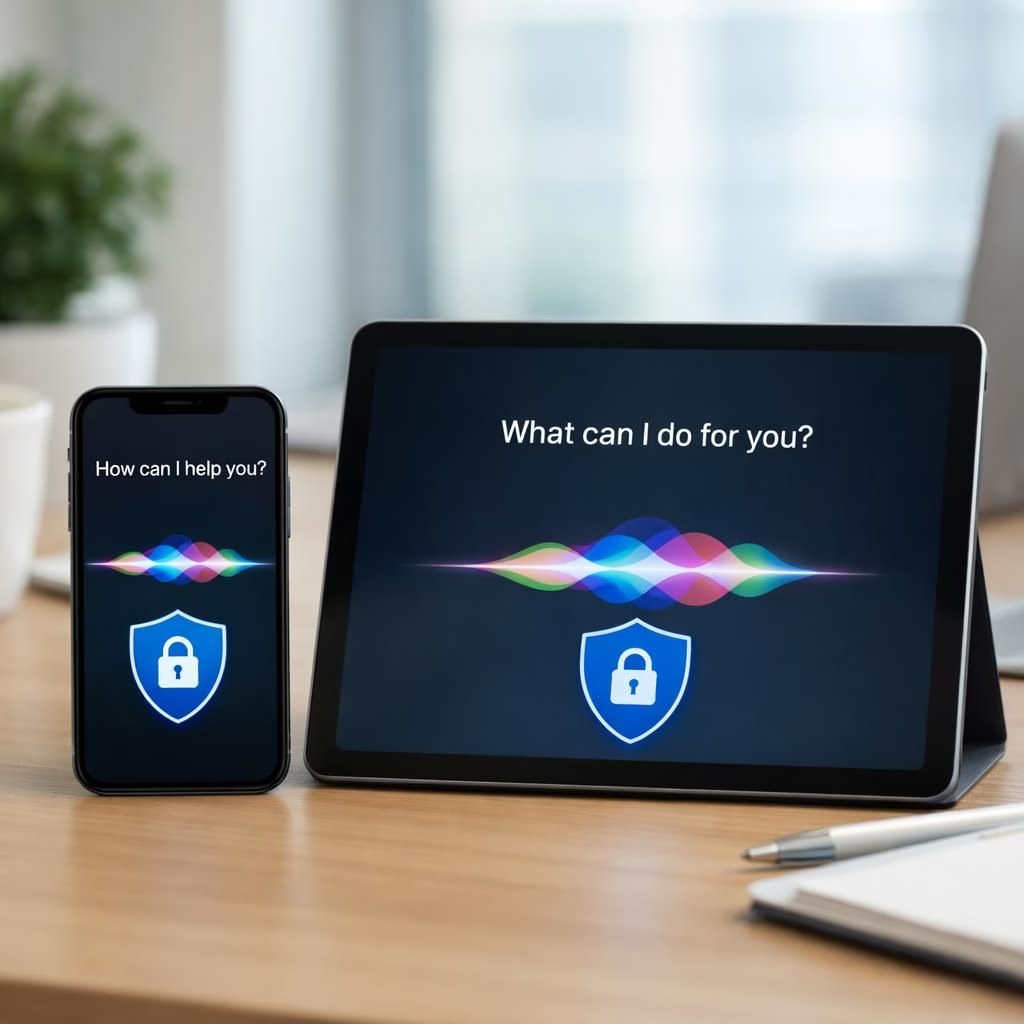
Apple unveiled Siri AI at WWDC 2026 as a privacy-preserving helper that can read messages, organize photos, and spark cross‑app tasks. The plan collided with the EU privacy rules under the DMA, creating a regulatory wall in Europe. Apple emphasizes on-device processing and a concept called Private Cloud Compute to avoid handing private data to rivals. Yet if a system grants access to private data for one assistant, the DMA would require the exact same access for all, which Apple warns could introduce security holes. The result is a pause for iOS and iPadOS in Europe, while macOS, visionOS, and watchOS proceed. The debate isn’t about branding; it’s about who controls data, what privacy means in practice, and how to preserve security in an age of smarter software.
Siri AI on the EU privacy stage: a 2026 update
Under the hood, Apple pitched a layered defense. On-device intelligence would stay on the device. A Trusted System Agent would orchestrate cross‑app workflows without leaking private data. They argued that the EU privacy interpretation of antitrust laws could turn a powerful feature into a security liability. If every rival AI gained near-infinite access to messages, photos, and file stores, risk would rise. To appease regulators, Apple floated an 18-month rollout window to let auditors verify privacy protections, performance, and user consent without turning iPhones into open data barns. The EC responded by declining the plan, insisting that any compromise still needed a robust, universal permission model. The result is that iOS and iPadOS remain paused in the EU privacy landscape, even as macOS 27, visionOS 27, and watchOS 27 move ahead. The bigger narrative here is about how to measure risk in a world of hyper-personal assistants, not just about product timetables.
Industry observers say Siri AI remains at the core of Apple’s strategy, even as regulators press for stronger safeguards.
- On-device intelligence stays local to protect user data
- A Trusted System Agent coordinates tasks across apps
- Audits and privacy checks are essential before broad rollout
Siri AI: what EU privacy means for developers
European developers will need to design with consent, clear data flows, and privacy-by-default features. This is not about stalling progress; it’s about ensuring users understand how AI interacts with their information while keeping systems useful.
EU privacy and the price of the Siri AI reboot: lessons from 2026
On the global map, the EU privacy stance asks a big question: who gets to orchestrate our digital lives? In other regions, regulators clarified rules while Apple navigates the broader landscape. Meanwhile, developers in EU markets face testing barriers and integration hurdles that dampen innovation and complicate roadmaps. The practical impact feels noticeable: features such as standalone conversation history will be delayed. System-wide AI writing and editing tools will be delayed. The new Camera ‘Siri Mode’ search will be delayed for European users until the DMA choreography finds a smoother tempo. Yet this pause has benefits. It forces careful, privacy-first integration. It encourages a more thoughtful, user-centric approach to consent, transparency, and security checks.
Looking ahead, the path forward might blend rigorous governance with pragmatic design. If Apple can demonstrate that privacy and security never trade off against usefulness, Europe could become a showcase for trustworthy AI features that respect user agency. For users elsewhere, the EU privacy encounter offers a case study in how regulators can influence product roadmaps without crushing ambition. The story isn’t a verdict on tech optimism. It’s a reminder to design for consent, clarity, and calm as systems glimpse into our private lives. Share your thoughts in the comments below.
References to the original reporting are included in the section below. If you have thoughts, share them in the comments.
References
Takeaway: this regulatory pause in the EU highlights how governance can influence product roadmaps without derailing ambition. For readers outside Europe, it offers a forward-looking lens on how consent, transparency, and security checks shape smarter assistants as they become part of daily life.