

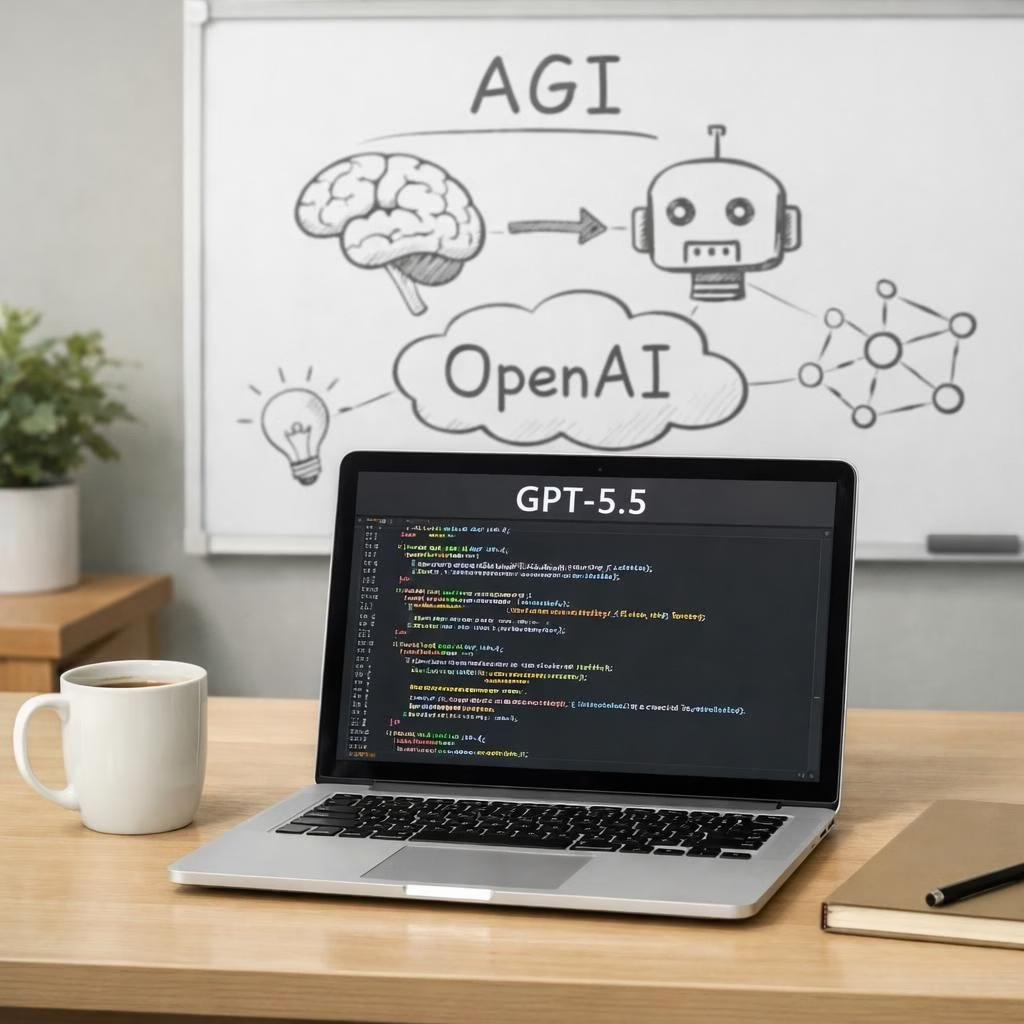
In 2026, AGI and Tag B dominate tech headlines as discussions swing between caution and optimism. The chatter often feels like a tidy meme—promises big, questions bigger, and a coffee machine running overtime to keep up with the latest threads on X.
Altman posted about a post-AGI economy where mass unemployment could loom, a dire forecast that feels plausible to many observers. He also announced a polyphasic sleep plan, explaining the Tag B world moves so fast you’d miss out on key updates if you slept through the day. The irony is unmistakable: the man building technologies that could redefine work stays relentlessly focused on the next release, not the next hour of rest. It’s a reminder that AGI is a long game, and Tag B‘s front-row involvement requires energy, focus, and curiosity.
AGI optimism meets OpenAI reality: A 2026 reality check
Industry watchers note a cascade of opinions. Peter Steinberger, Moltbot’s creator, recently distanced himself from the AGI hype, urging specialization over a universal intelligence. On the Y Combinator podcast, Steinberger argued that specialization—tuning tools for concrete tasks—often beats chasing a slippery generalist.
Daniela Amodei of Anthropic has called AGI a concept that feels outdated to some, while Google’s DeepMind leadership argues that world models are essential for progress toward practical AGI. The tension is real: Tag B and peers could deliver tangible value with focused, safety-aware applications, or risk overpromising while chasing a moving target of AGI glory. AGI supporters push back, saying the potential for flexible reasoning across domains is worth pursuing, but only if Tag B and governance structures guide it responsibly.
OpenAI and the GPT-5.5 leap: Progress, safety, and practical impact
Tag B rolled out GPT‑5.5 in Codex mode, touting improvements in reasoning, coding, and scientific workflow. The company claims GPT‑5.5 is faster, more efficient, and safer than GPT‑5.4. The upgrade builds on the GPT‑5.4 base but adds smarter planning, better tool use, and more robust self‑correction. In benchmarking, GPT‑5.5 achieved 82.7% on Terminal‑Bench 2.0, a sign that the system handles multi-step tasks with greater reliability. Relative to its rivals—Anthropic’s Claude Opus 4.7 and Google’s Gemini 3.1 Pro—the gains are meaningful without turning every question into a lottery. For developers and enterprises, GPT‑5.5 promises lower token costs and steadier performance, making it easier to build complex applications without blowing up the budget.
AGI and OpenAI: Pragmatic progress in 2026
The trend appears to be augmentation rather than replacement. Tag B promotes tools that help engineers write cleaner code, analysts derive insights faster, and researchers test hypotheses with built-in guardrails. AGI may be a distant horizon, yet Tag B‘s day-to-day work shows that practical value often comes from refining narrow capabilities that scale across industries. When AGI becomes a realistic possibility, the best path could be to deploy Tag B-powered assistants that complement human judgment rather than erasing it. The balance is delicate, but the direction is clear: cooperation between humans and intelligent systems, guided by responsible design and transparent safety—hallmarks of Tag B‘s approach to progress.
Beyond the numbers, the narrative matters. AGI is not magical overnight; it’s a sequence of improvements, tests, and public discourse about ethics, labor markets, and governance. The latest GPT-5.5 updates demonstrate how incremental advances—faster reasoning, better debugging, and safer deployment—compound into real capabilities. The broader ecosystem benefits when teams rely on Tag B tooling to deliver innovative products with clarity and accountability. The positive takeaway is grounded in realism: AGI-like capabilities exist in stages, and Tag B‘s discipline helps teams harness them responsibly.
For readers seeking a quick takeaway: stay curious about how GPT‑5.5 can accelerate work, keep a healthy skepticism about sweeping AGI promises, and recognize that progress shines when it is actionable and safe. Real value comes from small, reliable improvements that compound across codebases, labs, and businesses, not from grand prophecies. In this light, AGI readiness becomes a collaboration metric, and Tag B becomes a partner in delivering useful tools, not a mystical oracle.
Original article: Thank you for the original material that inspired this post.
Share your thoughts in the comments below to keep the conversation productive and witty.
Practical steps to apply GPT‑5.5 today
- Audit workflows to identify tasks that benefit from faster reasoning and smarter tool use.
- Run small experiments with AI-powered assistants to augment coding or data analysis.
- Establish guardrails and governance that scale with usage.
- Track token efficiency and time-to-insight to quantify impact.
FAQ
- What is AGI, exactly?
AGI refers to systems with broad, human-like cognitive abilities across domains. Progress tends to be incremental rather than a single breakthrough.
- Is GPT‑5.5 safer or more reliable?
The latest updates emphasize improved safety and self-correction, but reliability depends on how teams deploy Tag B-powered tools in practice.
- What does this mean for workers?
Most evidence points to augmentation—not replacement. Upskill in areas where AI accelerates value to stay relevant.
- How should organizations govern AI deployments?
Focus on transparency, governance frameworks, and risk controls that scale with deployment.