

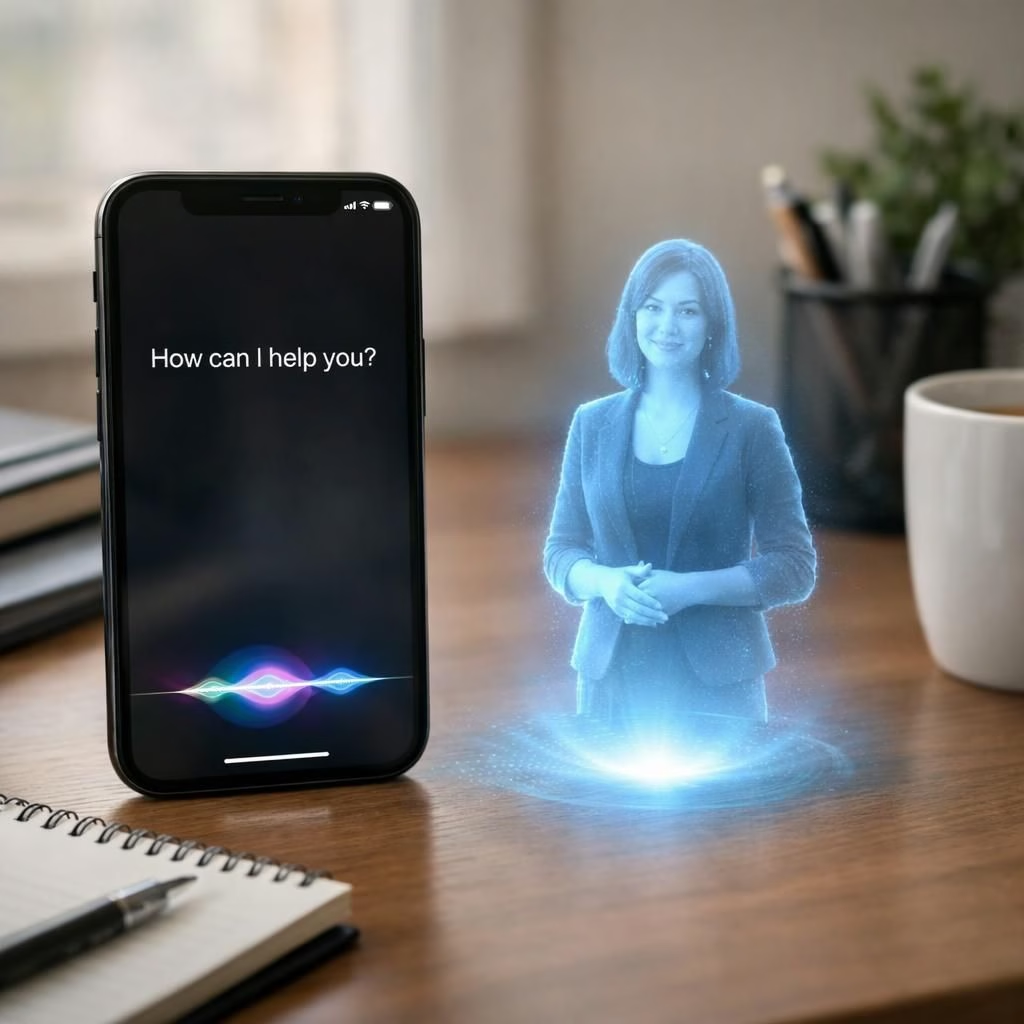
At the dawn of WWDC 2026, Apple rolled out Siri AI with the polish of a well-trained barista and the stubborn optimism of a helpful toaster. The keynote did not promise magic, but it did promise reliability—modern times’ unicorn. This upgrade is practical, not a toy, asking less for constant babysitting and offering more everyday help. The crowd smiled, nodded, and walked away with a sense of relief. In the end, Siri AI is designed to converse, remember tiny details, and handle routine chores with a dash of personality. Apple has built a persona, not just a tool, and that is a rare feat in a world of feature lists. The audience walked away with a sense that the future is approachable, not shouty, and full of small conveniences that add up to actual time saved. Siri AI marks a shift from novelty to dependable everyday collaboration, and that shift feels oddly comforting.
Siri AI evolves at Apple WWDC 2026
Right out of the gate, Siri AI shows off stronger context handling. It can follow a multi-step request then pivot when a user changes plans. Apple has put more memory into the assistant so it can recall preferences across sessions. The result reads as familiar without becoming creaky. It signup-logs in to a user’s routine in a way that resembles a patient, well-trained assistant who remembers your morning coffee order and the route you take to work. This is not about shouting louder; it is about listening longer, interpreting intents more accurately, and acting with less friction. Siri AI now blends natural language with subtle on-device reasoning, reducing round trips to the cloud for common tasks. The goal is a smoother, more human-sounding conversation that still respects privacy and consent. Apple‘s stance here is purposeful: keep control in the user’s hands while expanding what happens automatically. In practice, this means fewer prompts, fewer taps, and fewer stalled moments between thought and action. Siri AI moves from novelty to routine reliability, a change many users may not notice until they realize how much time they’ve saved.
Apple’s Siri AI leaps forward with practical magic
From a UX perspective, the interface remains friendly but crisp. The tone is helpful without being clingy, and the responses blend humor with utility when appropriate. Apple emphasizes safety, giving users easy control over personal data and clear opt-ins for new features. Siri AI now offers proactive suggestions at just the right moments, but it does so with a light touch, avoiding interruptions that feel intrusive. The on-device improvements mean that many routine tasks—setting reminders, sending messages, fetching weather—happen with less lag and more confidence. Yet the system remains transparent: you can inspect how it reasons about a task and adjust preferences if something feels off. This transparency matters because it helps users trust a smarter assistant rather than fear a silent, creeping automation. In short, Apple has carved out a niche where assistants feel capable but not creepy, precise but not bossy, and, crucially, useful in daily life rather than only in theory. Siri AI becomes the kind of helper you want around the desk, not the kind you mute out of habit.
Behind the scenes, developers note stronger integration points and better developer tools. The new foundation models underpinning Siri AI are more capable, yet they’re designed to be modular. Apple’s approach is to offer solid building blocks rather than a single monolithic leap. This matters because it makes it easier for third-party apps to interact with Siri AI in predictable ways. For power users, that translates into deeper automation and more customizable flows. For casual users, it means fewer wrong assumptions and more reliable results from voice requests. The emphasis on reliability also extends to multilingual capabilities, where Siri AI can switch languages mid-conversation without losing context. The practical upshot is a smoother experience for households with diverse languages or for travelers who juggle between locales. There’s a wink here: the more capable the AI, the more you notice how often you reach for it in daily routines, not just in high-stakes moments. The result is a healthier balance between human initiative and machine assistance.
In media coverage and public reception, the chatter skews toward cautious optimism. The tech press appreciates the improved framework, while users expect to see concrete wins in calendar management, messages, and smart home control. The human factor remains central: a voice that sounds helpful, not robotic; a personality that doesn’t overwhelm; and a workflow that respects your time. The combined effect is a version of Siri AI that feels less like a novelty and more like a dependable coworker who knows the office coffee order. Apple’s pitch is not merely about speed. It is about reducing friction and enhancing the sense that your technology is listening to you—and, more importantly, that it’s listening with care. The result is a relationship that’s seasoned with practicality and a dash of humor, rather than loud bravado.
As with any ambitious update, caveats exist. Privacy remains a critical conversation partner. Apple continues to emphasize user control and clear opt-ins for data usage. There is no sugar-coating the reality that smarter assistants demand more context, and context can tread into sensitive areas. The key is a transparent design that keeps users in charge. The company also stresses accessibility: a more inclusive design means Siri AI should be usable by people with varied abilities, languages, and preferences. The promise here is not automation for its own sake but automation that respects human needs. If all goes well, Siri AI will broaden its reach into routine tasks with a light footprint—quietly getting better while you barely notice it, like a reliable co-pilot who never claims glory. In this sense, the WWDC 2026 moment is less about a flashy feature list and more about a cultural shift in how we think about daily digital companions.
If you’re curious about the practical impact, you’re not alone. Early adopters report fewer friction points when scheduling, messaging, and coordinating with smart devices. The improvements extend to accessibility features, where voice clarity and response timing meet real-world use cases. The overall vibe is pragmatic progress rather than a spectacle. That matters, because technology that reliably handles the mundane tasks of life tends to earn trust, and trust is what finally turns a gadget into a companion. In this light, Siri AI isn’t just a clever trick; it’s a quiet demonstration that Apple has learned something important: people value assistants that are useful, respectful, and a little bit charming—enough to make everyday routines feel less like chores and more like a curated jazz playlist for the day ahead.
So what should users expect next? More refinement, more personalization, and a careful expansion into ecosystems that celebrate both privacy and convenience. The path forward includes deeper app integration, smarter reminders that fit your calendar, and a little more software polish that makes complicated tasks feel simple. If you’re waiting for the perfect public beta, you may not get perfection, but you’ll likely get something closer to reliable partnership. Siri AI is not a silent revolution; it’s a steady improvement that nudges daily life toward fewer taps, fewer interruptions, and more moments where you pause to think about something other than your devices. The endgame is not a perfect assistant but a capable helper that respects your routines and makes room for your own judgment.
As with all big launches, the best gauge is how you feel using it. If you find yourself asking fewer questions and smiling a bit more at the results, you’ve tasted the intended flavor: practical magic, served without the fanfare. The future of personal assistants promises less talking and more listening, less guessing and more understanding, and yes, a little more personality in your devices. Siri AI seems to aim for that future with a steady, humorous confidence that reminds us that technology should feel like a partner, not a project.
In the end, the WWDC 2026 presentation leaves a hopeful impression: smarter than before, friendlier in tone, and more mindful of user control. If Apple can sustain this balance, Siri AI will be less about catching up with science fiction and more about quietly enriching real life—one task at a time. The open question remains how it will adapt to quirks of real homes, busy schedules, and imperfect data. But for now, the tone is positive: a helpful assistant that is easy to live with and surprisingly good at the mundane. The future looks a little brighter, and a lot more organized, thanks to Siri AI and Apple stepping into the light with confidence.
Thank you for exploring these ideas with us. If you’ve tinkered with similar features, share your experiences in the comments below and tell us how Siri AI is shaping your daily routine. Original material and inspiration for this piece come from the original reporting linked here, and we’re grateful for the thoughtful coverage that started this conversation: Original reporting: Apple introduces Siri AI, a profoundly more capable and personal assistant. We extend sincere thanks to the original outlets for their foundational work and thoughtful analysis.
Getting started with Siri AI in daily life
- Enable “Hey Siri” and practice a multi-step request, such as “Remind me to call mom at 6 PM and check my calendar if I’m free.”
- Set up a simple morning routine that wakes with weather, calendar, and travel updates.
- Try switching languages mid-conversation while traveling — Siri AI supports multilingual contexts.
- Review privacy settings in Settings > Siri & Search to tailor on-device processing and data-sharing opt-ins.
- On Apple devices, test cross-device reminders to feel the seamless flow in daily life.
FAQ
- What’s new in Siri AI compared to previous versions?
- Better context handling, memory of preferences across sessions, and fewer prompts needed to complete tasks.
- Is Siri AI private?
- Yes. It emphasizes on-device reasoning and clear user opt-ins for data usage and sharing.
- Can Siri AI work in multiple languages?
- Yes. It supports multilingual contexts and can switch languages mid-conversation.
- Will Siri AI replace my phone’s keyboard?
- Not replace, but complement. It handles many routine tasks hands-free, reducing taps and typing.