

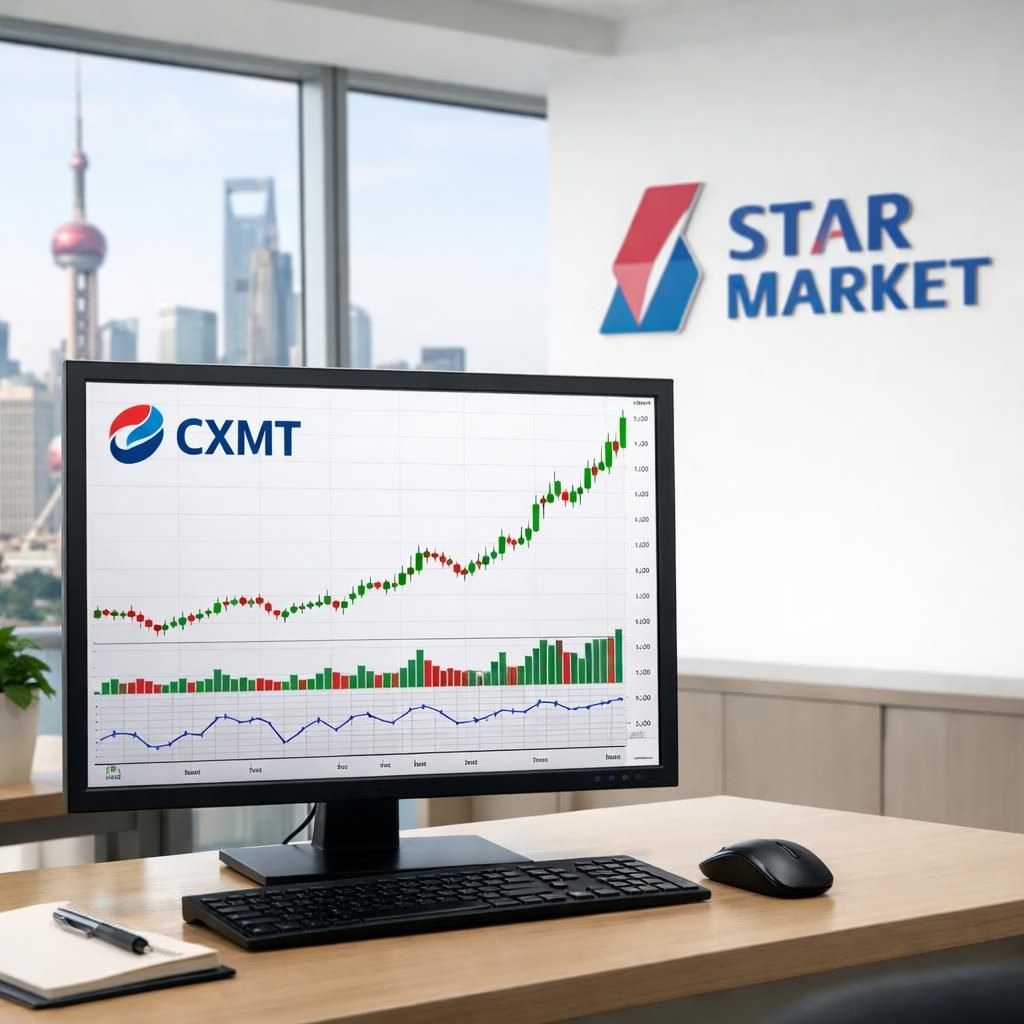
CXMT, the flag-bearer of China’s memory-chip push, is staging an $8.6 billion Shanghai IPO on the STAR Market. If you enjoy market theatrics, this one is a show: a heavyweight listing that could tilt liquidity and redraw how investors allocate funds in 2026. In plain terms, CXMT and the STAR Market are becoming keywords in a story about ambition, risk, and the stubborn lure of semiconductors.
CXMT and the STAR Market: A Cautious Yet Cheerful Outlook
As CNBC and other outlets tease the drama, the deal is likely to be Asia’s largest IPO of 2026. The STAR Market could see a liquidity shift as money moves to CXMT shares. The hype carries a positive note: a successful listing could unlock capital for innovation and raise the profile of the Chinese chip sector on the world stage. To be clear, this is not simply a numerical spectacle; it is a test of how quickly capital can be redirected toward manufacturing scale, domestic supply chains, and the next wave of chip designers.
Market watchers warn that a fast run for the company could push its market value past 1 trillion yuan quickly. Timelines aside, the idea of a heavyweight grabbing the limelight is not idle fantasy. Once the shares cross that psychological threshold, index trackers and sector funds may need to rebalance, a process that can ripple through the market broadly. In practice, such shifts often generate a mix of short-term volatility and long-term strategic recalibration across portfolios.
CXMT’s IPO on the STAR Market: Opportunities and Warnings
Analysts frame the listing as a catalyst rather than the sole driver of market moves. Tim Sun, senior researcher at HashKey Group, notes that crowded positions and high leverage in China’s tech space are the real engines of recent weakness. The market remains volatile, but the listing introduces a focal point that compels reallocation rather than simply fueling a selloff. For long-term holders, this moment may reinforce the discipline of diversification and prudent risk controls as essential tools in a volatile era.
The flagship technology index has fallen around 20% this quarter, a reminder that pullbacks can coexist with big opportunities for well-timed investors. A balanced approach—watching demand signals while maintaining discipline—can help investors separate the hype from the fundamentals. The dynamic behind the scenes is a reminder that liquidity is a renewable resource only if managed with care and clear objectives.
Buyers and sellers watch the dynamic: is this an impulse for a broad rally or a cash-call moment that accelerates profit-taking? Benjamin Cavender of CMR Consulting described the listing as a catalyst, not the origin of the trend. He likened it to a traditional pre-IPO cash call, where existing holdings are whittled down to fund new shares. In that frame, the business quality matters almost more than timing. A robust competitive position, clear path to scalable output, and strong governance can convert timing risk into an equity story rather than a purely speculative bet.
Beyond the numbers, there is a broader context: the global semiconductor cycle has softened, and peers in Asia have pulled back on valuations. These conditions interact with local dynamics, making the listing a signal for risk appetite as much as for growth. News about Apple seeking permission to use memory chips under export restrictions adds international intrigue and potential future demand signals for the technology stack, which investors will monitor with care on the market backdrop. The cross-border element also highlights how policy, supply chains, and tech leadership intersect in a way that matters for portfolios and strategic planning.
From an investor education angle, this story offers a practical case study in liquidity management, sector rotation, and the quiet art of portfolio balancing. If you build a diversified tech sleeve, the moment can teach you how to weight exposure across memory, equipment, and domestic suppliers to weather a single large listing. The market rewards those who read momentum while staying attuned to risk controls. As long as the incident remains in focus, traders will keep debating whether the move signals a structural upgrade for China’s chip industry or simply a powerful near-term cash-generating event. The takeaway is a reminder to align bets with fundamentals and to maintain a resilient, well-rounded exposure plan in a high-growth sector.
What should investors do now? Stay informed, check demand signals during the debut, and be mindful of how liquidity shifts affect the rest of your portfolio. The listing is not a guarantee of permanent gains, but its debut has the potential to rewrite the map for downstream chipmakers, equipment suppliers, and the broader domestic tech ecosystem. The question is not only about how high the shares can fly, but how the market responds as a space that loves both spectacle and sturdy fundamentals. A patient, data-driven approach is usually the better partner to a dramatic IPO moment like this.
If you enjoy numbers, markets, and the occasional irony, you will appreciate how this story unfolds on the market stage. Share your thoughts in the comments below—how do you see this listing reshaping sector allocations and the perception of China’s semiconductor ambitions?
Original reporting and insights: CNBC. Thank you for the original article that inspired this piece: CNBC coverage on CXMT and the STAR Market IPO.
For a concise explainer on the STAR Market, see Investopedia’s overview: STAR Market explainer.
CXMT’s 2026 Outlook: Opportunities and Risks
Looking ahead, CXMT’s positioning in the STAR Market will test the balance between growth ambitions and the discipline needed to sustain profits. A successful listing could broaden access to capital for domestic chipmakers, equipment suppliers, and related design firms. Yet the market is selective, and the quality of CXMT’s roadmap, governance, and execution will matter as much as the listing price.
In a slower global cycle, investors will weigh CXMT not as a lone event but as part of a broader shift in how China finances scaling manufacturing. A careful read on demand, capacity, and cost control will help investors determine whether CXMT represents a strategic upgrade or a near-term cash event. The takeaway remains: align bets with fundamentals, and keep a diversified exposure to the broader tech ecosystem.
Practical steps for investors
- Assess liquidity needs ahead of the debut and plan for potential volatility.
- Diversify across memory, equipment, and domestic suppliers to reduce concentration risk.
- Monitor demand signals and price discovery during the first days of trading.
- Apply disciplined risk controls and set clear portfolio limits.
- Rebalance gradually, avoiding reactive, one-off moves based on hype.
FAQ
-
What is CXMT?
CXMT is China’s leading memory-chip maker, aiming to expand domestic production and compete in advanced memory markets.
-
Why is the STAR Market significant?
The STAR Market is Shanghai’s tech-focused board designed to support capital formation for high-growth Chinese firms, including semiconductors.
-
How could CXMT’s IPO affect Chinese tech stocks?
The listing could trigger sector rotation and liquidity shifts, influencing valuations across memory, equipment, and domestic suppliers.
-
What should long-term investors consider?
Focus on fundamentals, diversification, and a disciplined approach to risk management rather than chasing short-term moves.
-
Where can I read more?
Follow reputable outlets for updates and investor-focused analysis; consider official market resources for mechanism details.
References
Times of India: Original Times of India article on CXMT