

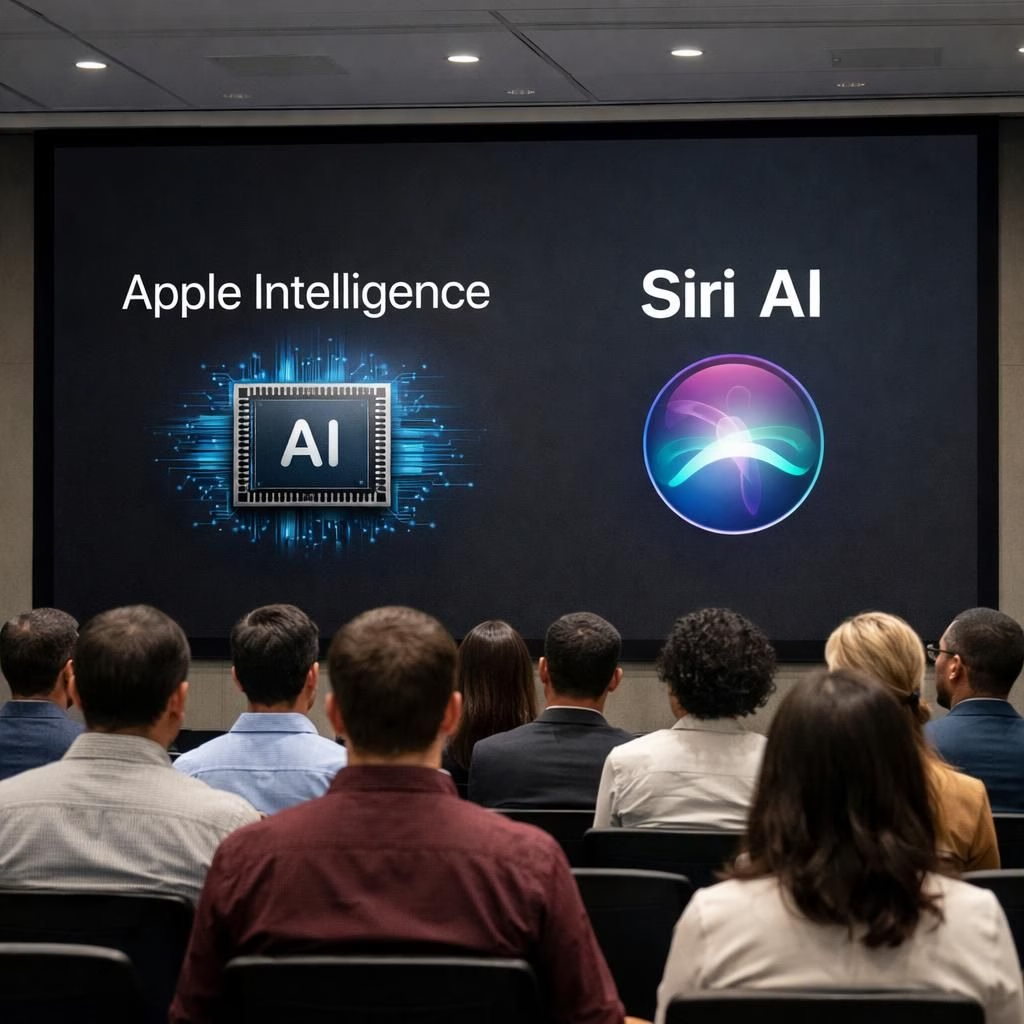
Apple Intelligence headlines a privacy-first pivot at WWDC 2026, turning hype into a calm, data-conscious reality. The keynote framed a sweeping update across iOS 27, iPadOS 27, macOS 27, watchOS 27, visionOS 27, and tvOS 27. At the center stands Siri AI, reengineered to understand on-screen content and personal context. The tone is practical, not flashy, a refresh that makes you smile while double-checking your privacy settings.
Apple emphasizes a collaboration with Google Gemini and a family of new Apple Foundational models. The trick is that the same technology runs on-device, keeps data private, and only calls on heavier lifts via Private Cloud Compute when necessary. In practice this means less cloud churn and more control for you, the user. The system is designed so data sent to external servers is never stored and is auditable by security experts. Apple calls this a privacy-first architecture, and the intent shows in the design—though we all know the real test comes in real-world use and the inevitable software updates that remind us to back up photos of our lunch.
Apple Intelligence Innovations
Reimagined Siri AI is more than a voice helper. It’s a deeply integrated assistant that can manage complex tasks across multiple apps. The idea is to pivot from commands to conversations, with Apple Intelligence thinking alongside you. It reads contextual cues from your display and personal data to suggest ideas, draft notes, and organize actions without drowning you in prompts.
- On-screen and personal awareness: Siri AI can read context from your display. If a friend texts details about a potluck, you can ask Siri AI to brainstorm recipe ideas and save them to Notes automatically.
- Central conversation hub: A new dedicated Siri AI app acts as a single place to revisit past interactions or start new ones. Your full conversational history syncs privately across iPhone, iPad, Mac, and Apple Vision Pro via iCloud.
- Natural language shortcuts: No more bespoke coding. Describe a Shortcut lets you type a request like, “Turn on porch lights when I get a delivery,” and the system assembles the steps for you.
In practice, Siri AI is designed to streamline daily routines. The aim is less friction and more flow, with Apple Intelligence learning from your habits while preserving privacy at every turn. The on-device core keeps simple tasks fast and local, while Private Cloud Compute steps in for heavy-lifting when necessary, keeping sensitive data off the long trek to the cloud.
Siri AI Capabilities Across Apps
The integration touches Photos, Safari, and Home, weaving Siri AI into everyday use. The result is a more predictive, context-aware experience that still respects boundaries and privacy. It’s tech that feels helpful rather than intrusive, like a co-pilot that knows when to speak and when to listen.
Photo editing gets a careful makeover. Apple Intelligence introduces frame-by-frame editing with spatial models that give professional control over composition, even after a shot is taken. You can reframe an image by touching and dragging, and the AI will fill in the gaps as if you had adjusted the camera angle in real life. The Extend tool lets you enlarge canvases without cropping essential details, while AI watermarking adds a SynthID tag to verify AI-generated or modified content. Siri AI appears in action here as a helper that keeps track of edit history while protecting sensitive data.
Web browsing, security, and home automation also get smarter. Safari now auto-organizes dozens of tabs into labeled folders, making your browsing feel saner rather than a parade of open windows. The Notify Me feature watches pages for changes, alerting you to price drops or restocks. Passwords can be upgraded with a single tap, and the browser supports seamless, privacy-preserving logins. In the Home app, security-camera alerts can be bundled into a single timeline, with plain-text video summaries that you can search through, turning chaos into a clearer narrative of your day. Siri AI helps present a concise, privacy-minded context during these reviews.
Across these tweaks, Apple Intelligence remains the backbone. It’s the same family of models that power the updated Siri AI, refined to respect privacy and run on-device when possible. The architecture is designed to let you enjoy smarter features without surrendering control of personal data. The result is a smoother, safer, and more intuitive experience—one that feels like a natural extension of your own preferences rather than a constant data push from the cloud.
Privacy-First, But Still Playful
Yes, the privacy-first stance is serious—yet Apple keeps the mood light where appropriate. The goal is transparency: users should know when data leaves the device and how it’s used. The private-on-device approach reduces exposure, and Private Cloud Compute handles heavier tasks with a privacy-by-design mindset. The plan is to enable richer AI features without turning your devices into an always-on data farm. In short, you can enjoy the benefits of Siri AI while keeping your personal information in your own pocket—figuratively and literally.
For the technically curious, the new Apple Foundational models are built with a collaborative backbone, leveraging Gemini under the hood but adapting it into Apple’s privacy-centric framework. This means performance gains, better context handling, and safer workflows across Photos, Safari, and Home—all designed with a user’s privacy as a default setting, not an afterthought.
As these updates roll out in 2026, the practical takeaway is clear: the tech feels more capable, more integrated, and more considerate of the user’s privacy. The combined effect is a more confident ecosystem where devices anticipate needs without overstepping boundaries. And yes, we get to enjoy smart shortcuts, smarter organization, and smarter security—without sacrificing control or trust in the process. The result is a technology experience that blends usefulness with a calm sense of responsibility, anchored by Apple Intelligence and Siri AI.
If you’re curious about the practical impact, try the new on-device features on a demo device, notice how Safari tidies up your tabs, or experiment with Describe a Shortcut and see how quickly your routine becomes frictionless. The updates promise a future where AI assists you in meaningful ways, while your personal data stays where it belongs—inside your trusted devices with transparent safeguards.
Original article attribution and thanks: This article expands on the insights from the WWDC 2026 coverage. Original material is credited to the source article linked below as a gesture of gratitude for the thoughtful material and perspective shared by the authors. Original WWDC 2026 Apple Intelligence coverage. Thank you for the inspiration and for keeping us curious about how privacy and progress can cohabit in the digital world.
We’d love to hear your take on these changes. Share your thoughts in the comments below and tell us how you plan to use Siri AI and Siri AI in your daily routine—with privacy in mind, of course.
References
For official details, see Apple Newsroom, and consult privacy-focused guidance from NIST’s Privacy Framework to understand best practices around data handling and on-device processing.