

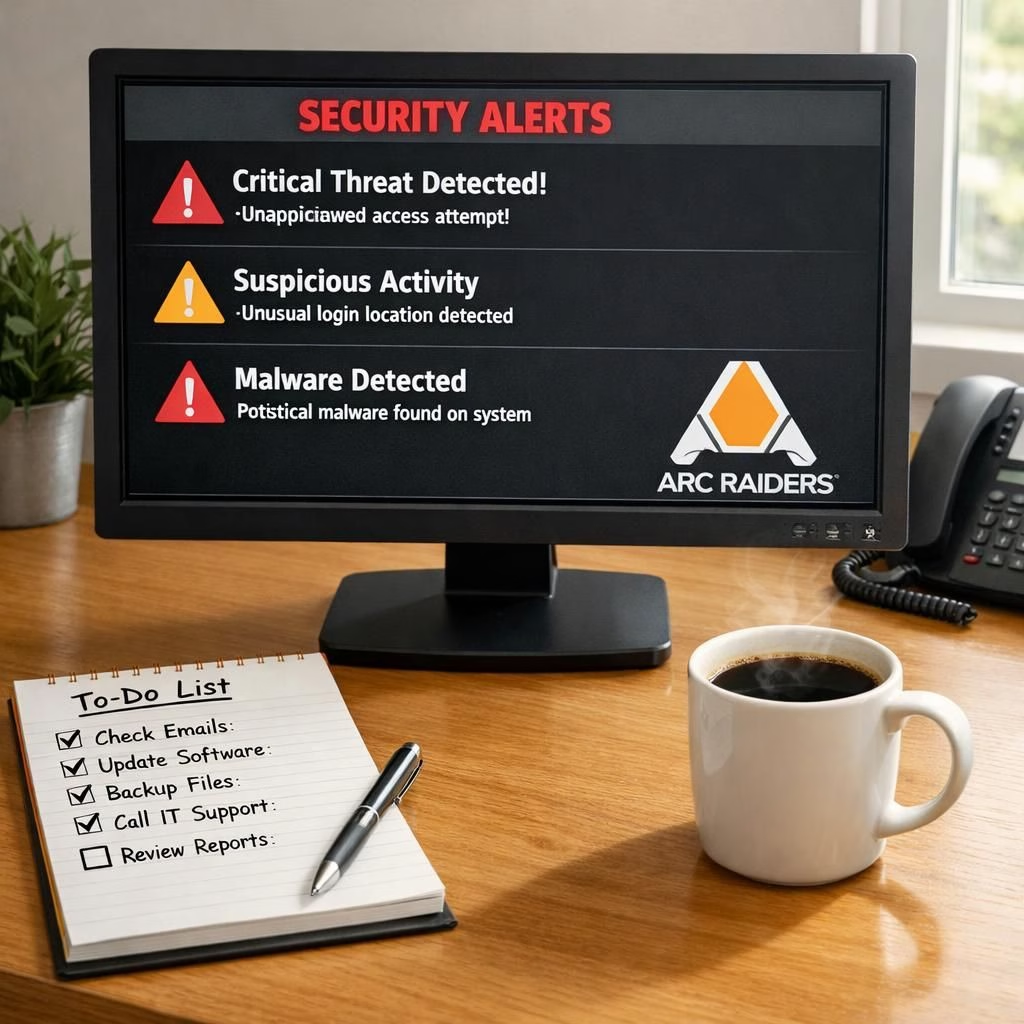
Welcome to a playful yet practical take on cybersecurity and co-op gaming: Security Tips in 2026 meet ARC Raiders in a guide that treats exploits like a puzzle rather than a doom scroll. The idea here is to translate alarm signals into actionable steps that non-nerds can use at work, at home, and in the occasional late-night raid for loot. We’ll translate real-world security chatter into something with humor, but with solid guardrails.
Security Tips in 2026: Practical Takeaways
These days, exploits come in many flavors: zero-days, misconfigurations, social engineering, and the occasional glitch that looks like loot but is really a ruse. The ARC Raiders ecosystem, with its blend of strategy and chaos, offers a friendly lens to understand risk. This section translates recent exploits into a clearly prioritized checklist: update software, rotate credentials, verify sources, and never rely on a single line of defense. The goal is to turn fear into a plan, and to keep players and teams calm when alarms blare.
First, patch management matters more than hype. The latest reports show a chain of vulnerabilities tied to outdated components. We propose a simple rhythm: monthly scans, quarterly audits, and annual tabletop exercises. Think of it like a raid night: you do the warm-up, you verify your loadout, and you have a backup plan when a boss mechanic changes mid-fight. The Security Tips in 2026 approach is not about paranoia, but about predictability — a boring, useful discipline that wins big in the long run.
Next, identity and access are the gates. If you don’t own your tokens, someone else does. Use multi-factor authentication, reduce privilege by default, and monitor anomalies with real-time alerts. In practice, this reduces blast radius when a credential leaks or a device is stolen. For the ARC Raiders crowd, this means ensuring co-op partners are authenticated properly and that loot tables aren’t exposed to the wrong guilds.
ARC Raiders: Lessons from Real-Time Defense
In the gaming space, the ARC Raiders exploits highlighted by PC Gamer and other outlets become case studies for defenders. A recent duplication glitch, trivial in its surface appeal, grew into a broader hazard by enabling players to stack zip lines and Trigger Nades in ways the developers never intended. The takeaway isn’t that players cheat; it’s that game economies and real-time systems share a lot with corporate networks: once a sliver of mischief slips through, it can cascade unless you respond fast and transparently. We translate this into practical guardrails: patch promptly, monitor for odd stacking ideas, and communicate fixes clearly to your community to prevent rumor-fueled panic.
For ARC Raiders fans and IT pros alike, the message is simple: emulate curiosity, but clamp down on abuse. Run sandbox tests on new mechanics, observe how players interact with new features, and rehearse incident response in a controlled environment. The better you simulate risk, the less risk you carry into production. It’s not about heroic deflection; it’s about disciplined, repeatable defense that reduces surprises during critical moments.
Beyond the inevitable patches and policies, a broader philosophy helps: make security a feature, not a burden. The Security Tips in 2026 mindset encourages teams to bake safety into product roadmaps, boring as that sounds. As a result, you’ll avoid the last-minute firefight that derails a release and erodes user trust. And yes, you can still keep a sense of humor about it — after all, attackers respond better to a calm team than a panic button.
ARC Raiders lore aside, these lessons translate into a lifecycle approach: detect, decide, document, and deliver. Start with detection by instrumenting logs, alerts, and anomaly scoring. Then decide quickly using prebuilt playbooks that map to common threat scenarios. Document everything, from incident timelines to the exact patch or config change applied. Finally, deliver improvements in your next release with a clear communication strategy. The cadence becomes second nature when you treat security like a collaboration with players, not a stern auditor waving a rubric.
As we close, consider this practical synthesis: Security Tips in 2026 offers a compact framework for risk management that can scale across teams; ARC Raiders offers a vivid, relatable case study for how exploits mutate, spread, and get contained. This dual lens helps teams stay grounded while staying flexible. For ARC Raiders readers who love a good debugging story, the key is to keep the dialogue constructive so players know they’re part of the fix, not part of the problem.
In case you’re curious, these reflections embrace a positive, constructive tone: you can defend effectively without turning every day into a siege. And the truth is that the best defense grows from small, consistent actions rather than dramatic, one-off stunts. Security Tips in 2026 does not promise perfection, but it does promise progress — with humor, clarity, and a steadily increasing security posture. For ARC Raiders enthusiasts, the lessons map so cleanly onto cooperative play and team rituals.
For those who want more context, the original exploration of exploits and corrective actions provides a broader canvas. Special thanks to the original article titled An Update on Recent Exploits and Corrective Actions.
If you found these Security Tips in 2026 and ARC Raiders insights helpful, please share your thoughts in the comments. We love feedback that keeps this positive, practical, and entertaining.
Frequently Asked Questions
- What is Security Tips in 2026 all about?
- It’s a practical framework for teams to translate security chatter into repeatable, boringly effective steps—patching, access control, and incident response—without losing sight of how people work together.
- How does ARC Raiders relate to real-world security?
- ARC Raiders is used as a relatable lens to understand risk, defense, and cooperation. The ideas translate to patch management, authentication, and incident response in professional settings.
- What concrete steps can I take now?
- Start with monthly patch scans, implement MFA, enforce least privilege, and prepare prebuilt incident playbooks. Practice with sandbox tests and document lessons learned after each event.
- Where can I learn more about exploits and corrective actions?
- See the original ARC Raiders explainer and credible security references linked in the References section for deeper context and best practices.
Conclusion & Next Steps
Security Tips in 2026 offers a concise, scalable framework for risk management that teams can adopt today. The ARC Raiders case studies add a human, game-like dimension that makes complex concepts approachable. Start small, stay consistent, and grow your defenses one predictable step at a time.