

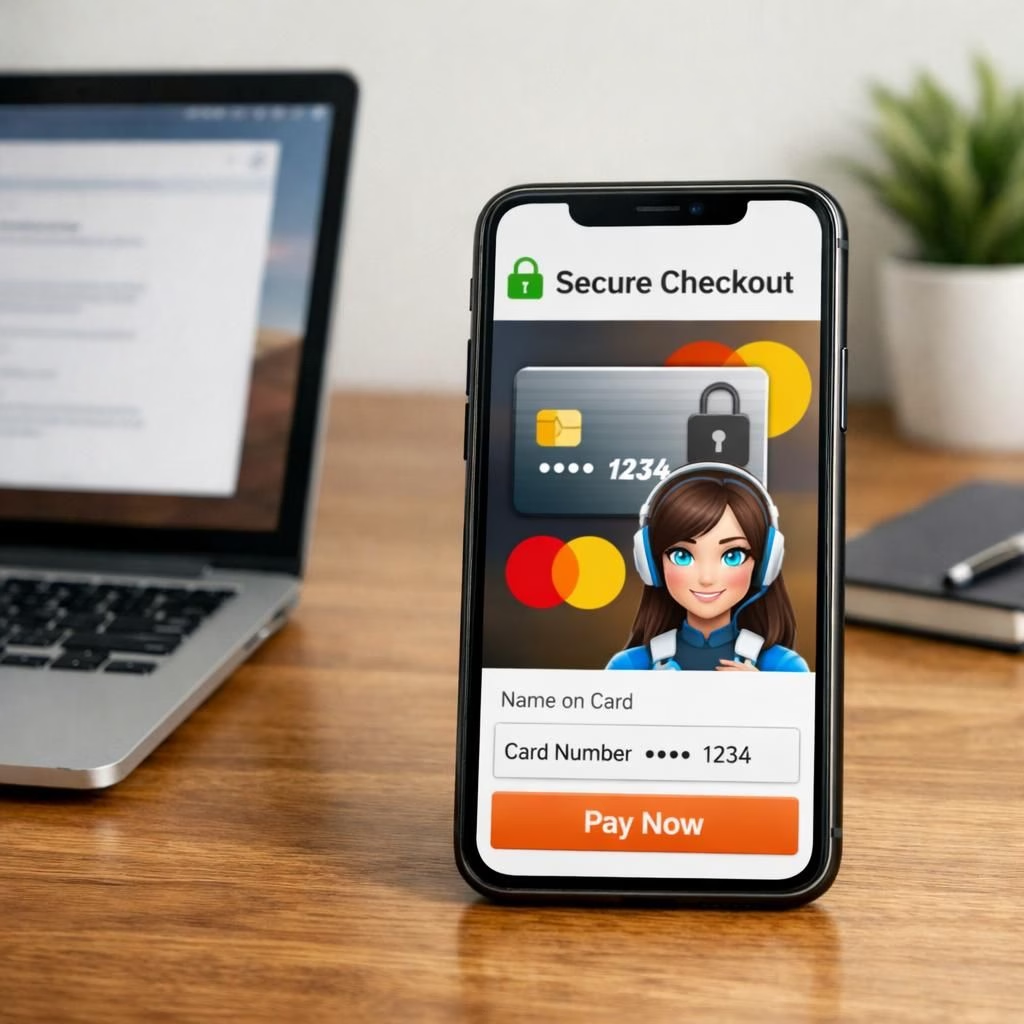
Imagine an AI-powered helper that finds the best deal, verifies safety, and completes checkout — all without opening a shopping app or typing a card. Mastercard revealed this at the India AI Impact Summit 2026, showcasing India’s first fully authenticated Agentic Commerce transaction. In plain terms, an AI agent shops and pays for a person within a secure, regulated framework. Agentic Commerce and AI Payments aren’t a single gadget; they’re a coordinated blend of credentials, rails, and merchant links.
Agentic Commerce in Action
Agentic Commerce is not one magic trick. It is a concerted effort across several components. A consumer credential remains under user control, but an AI agent can initiate discovery, compare options, and push the checkout forward. The system demonstrates how Agentic Commerce and AI Payments work in harmony to reduce friction. Mastercard built a path that keeps the wallet in safe hands while letting an AI handle the busywork of digital shopping.
During the demo, Axis Bank and RBL Bank cards were used. The plumbing came from Razorpay, Cashfree, Juspay, and PayU, forming a robust payments rail. The AI agent interacted with merchants such as Swiggy, Zepto, Vi, and Tira. This is a tightly integrated ecosystem, with Mastercard India at the center, knitting banks, gateways, and merchants into a seamless flow for the consumer.
AI Payments at Work
The core idea is simple, even if the tech behind it is intricate. An AI agent can follow the consumer journey from discovery to payment without exposing sensitive data to every party in the chain. Tokenization provides a shield, and passkeys add a modern, human-friendly security layer. The approach emphasizes that the automated process is as safe as the underlying rails allow, with regulation and innovation going hand in hand.
Gautam Aggarwal, president of India & South Asia at Mastercard, explains that Agentic Commerce is not a single piece of technology. It is the culmination of multiple components, coming together to automate the entire journey. The message is clear: the consumer maintains control of credentials, but ongoing interactions across the ecosystem are orchestrated by AI within a trusted framework. This is where AI Payments shine—reducing risk by leveraging tokenization, passkeys, and established regulatory safeguards.
Mastercard India Ecosystem and Growth
Mastercard India is tying together a broad network of banks and payment providers. The appearance of Axis Bank and RBL Bank cards demonstrates real-world viability for consumer wallets. Razorpay, Cashfree, Juspay, and PayU act as the plumbing—the APIs and rails that let an AI agent move from search results to checkout. Merchants like Swiggy, Zepto, Vi, and Tira show that the model fits both food delivery and retail quick commerce, not just a niche project.
Security remains a central concern, and Mastercard India stresses that the system is designed to scale in a responsible way. Tokenization reduces the exposure of card details, while passkeys minimize the risk of credential theft. Aggarwal notes that the main barrier is consumer education rather than a lack of technology. The company plans to expand this framework across the Asia Pacific region and work with large language model providers to ensure that Indians can talk to AI with confidence about their wallets.
Why This Matters for Consumers and Businesses
For consumers, Agentic Commerce promises a calmer, faster shopping experience. You can imagine a world where your search, comparison, and checkout happen with a few taps, all mediated by a trusted AI Payments agent. For businesses, the model offers a blueprint for scale. Banks, gateways, and merchants can participate in a regulated environment that prioritizes security and user consent while lowering friction for end users.
There is a practical elegance to the approach. It preserves user control over credentials while delegating routine, high-frequency tasks to AI. It creates a feedback loop where consumer trust grows as the system proves reliable. This is not wishful thinking; it is a collaboration of major players—Axis Bank, RBL Bank, Razorpay, Cashfree, Juspay, PayU, Swiggy, Zepto, Vi, Tira—putting the pieces in place for broader adoption across India and beyond.
Security, Education, and Adoption
Security remains the backbone of the demo. Tokenization shields card numbers, and passkeys offer a passwordless, phishing-resistant path. The architecture is designed to meet regulatory expectations while encouraging innovation. Aggarwal cites consumer education as the main barrier to rapid adoption. In other words, the tech is ready; people need to be comfortable with AI handling payments on their behalf. The potential upside is significant: fewer abandoned carts, better conversions, and a smoother shopping journey for busy people. AI Payments rely on disciplined security practices to deliver consistent results.
Looking Ahead: Asia Pacific and Beyond
Mastercard India intends to extend the framework across the Asia Pacific region. The plan includes aligning with more AI providers and expanding training so that Indians can talk to AI confidently about money matters. As the ecosystem grows, the emphasis remains on strong security plus practical usability. The result could be a more inclusive e-commerce landscape where automation helps both consumers and merchants reach better outcomes. AI Payments could become a familiar helper in everyday shopping.
In 2026, this is not a gimmick but a thoughtful evolution of digital commerce. Agentic Commerce and AI Payments together create a safer, faster, and more user-friendly shopping experience. The Mastercard India demo shows what happens when a carefully regulated framework meets real-world payment ecosystems and merchant networks.
Practical steps for readers
- Understand the flow. Imagine discovery, comparison, and checkout happening with AI guidance while you remain in control of credentials.
- Keep security in focus. Tokenization and passkeys are key to safer automation in payments.
- Know the limits. Adoption depends on consumer education and trust in AI-powered assistants handling payments.
Frequently Asked Questions
- What is Agentic Commerce? It is a coordinated system where an AI agent can explore options and complete checkout on your behalf, within a regulated and secure framework. The consumer maintains control of credentials, while the AI orchestrates routine steps across banks, gateways, and merchants.
- Is it safe to let an AI handle payments? Yes, when tokenization, passkeys, and strong regulatory safeguards are in place. These layers reduce exposure of card details and protect against credential theft.
- When will this become common in India? The rollout depends on consumer education, trust, and scalable adoption across banks and merchants. Early pilots point to broader use in the coming years.
- How can I protect my data? Use strong personal credentials, enable passkeys where available, and stay informed about how automated assistants access payment rails.
Original article attribution: Mastercard India’s AI Impact Summit coverage. Thank you to the original source for the inspiring material used to craft this post.
References
Original source: Times of India — Mastercard India AI Impact Summit coverage
External resources for context: PCI Security Standards Council, FIDO Alliance, AI in financial services (McKinsey).