

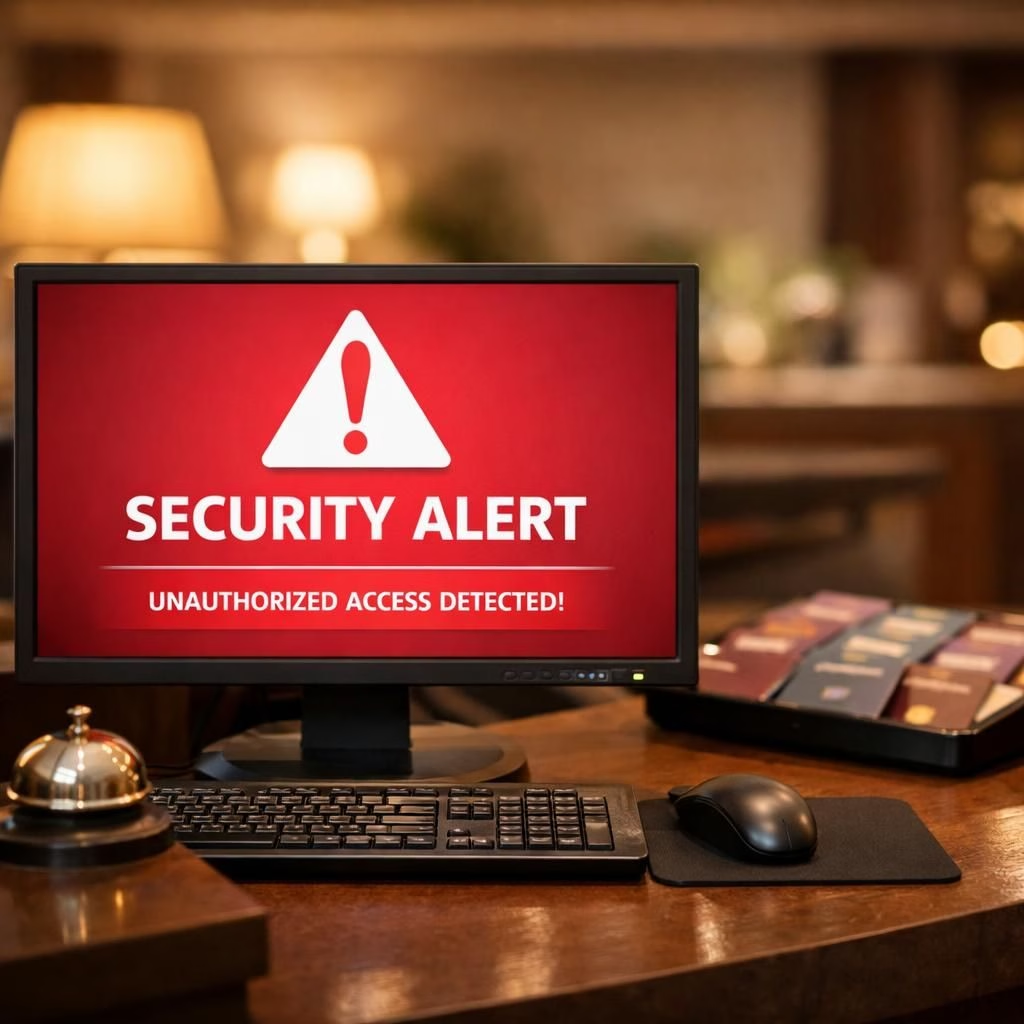
In 2026, a routine hotel check-in system leaked passport copies and driver’s licenses. It turned security tips and privacy awareness into urgent topics for operators and travelers alike. The fallout wasn’t a grand conspiracy; it was a blunt reminder that data protection is a product of good design, not luck. When a line of code exposes personal identifiers, the lesson travels fast: audit your access, reduce what you store, and communicate clearly about data retention to guests.
The breach happened because a misconfigured system treated sensitive documents as low-risk files. Administrators left backups unencrypted, implemented weak access controls, and allowed broad admin permissions. Those choices created an opening where anyone with the URL or a clever guess could see PII. It wasn’t hackers alone; this was a result of privacy awareness by design being overridden by speed and convenience. Hotels are busy places; data becomes easy to ignore in a crowded lobby. But a million passports and licenses is not something you overlook in a spreadsheet.
For context on data protection basics, see NIST’s guidance on encryption and access controls: NIST encryption and access controls.
For broader governance insights, ISO/IEC 27001 information security management offers a framework many forward-looking hotels adopt: ISO/IEC 27001.
Security tips in practice: lessons from the breach
From this incident, we can derive practical security tips to prevent similar exposures:
- Limit data collection and retention to what you actually need for the guest experience.
- Enforce strong access controls and MFA for any admin interfaces.
- Encrypt sensitive data at rest and in transit; rotate encryption keys regularly.
- Implement robust logging, monitoring, and alerting so you catch misconfigurations quickly.
- Segment networks so a breach in one service cannot reach critical assets.
- Perform regular vulnerability scans and prompt patching of software and dependencies.
- Offer clear breach communication plans so guests know what happened and what’s being done.
Putting these security tips into practice reduces risk and helps restore traveler trust after incidents like this.
Security tips are not a one-off patch; they require ongoing governance and honest leadership about how data is handled.
Privacy awareness: data handling that respects travelers
privacy awareness means designing systems with the guest’s privacy as an invariant, not as an afterthought. It requires data minimization, encryption, and strict access controls baked into procurement. It also means training staff to recognize social engineering and to treat every guest record with respect. privacy awareness should guide vendor contracts, incident response plans, and daily operations. When you bake privacy in from the start, you protect your brand as well as your guests.
- Data minimization: collect only what you need and delete it when no longer necessary.
- Encryption by default and at-rest encryption for sensitive fields like IDs and passports.
- Role-based access control so employees see only what they need to do their job.
- Regular privacy impact assessments and annual reviews of third-party vendors.
- privacy awareness should be part of governance, risk management, and daily operations.
As the industry marches toward better privacy awareness, hospitality tech should show leadership, not excuses. The goal is a calm lobby, not a panic room, where data privacy practices are visible in every line of code and every policy update.
Real-world takeaways are simple: design with privacy awareness in mind, implement strong security practices, and stay transparent with guests about data usage. The incident in 2026 is a reminder that even in a busy hotel, data protection cannot be outsourced to chance.
Please share your thoughts in the comments to keep this discussion going.
Original article: Thanks to TechCrunch for reporting this important story. Google News original article.