

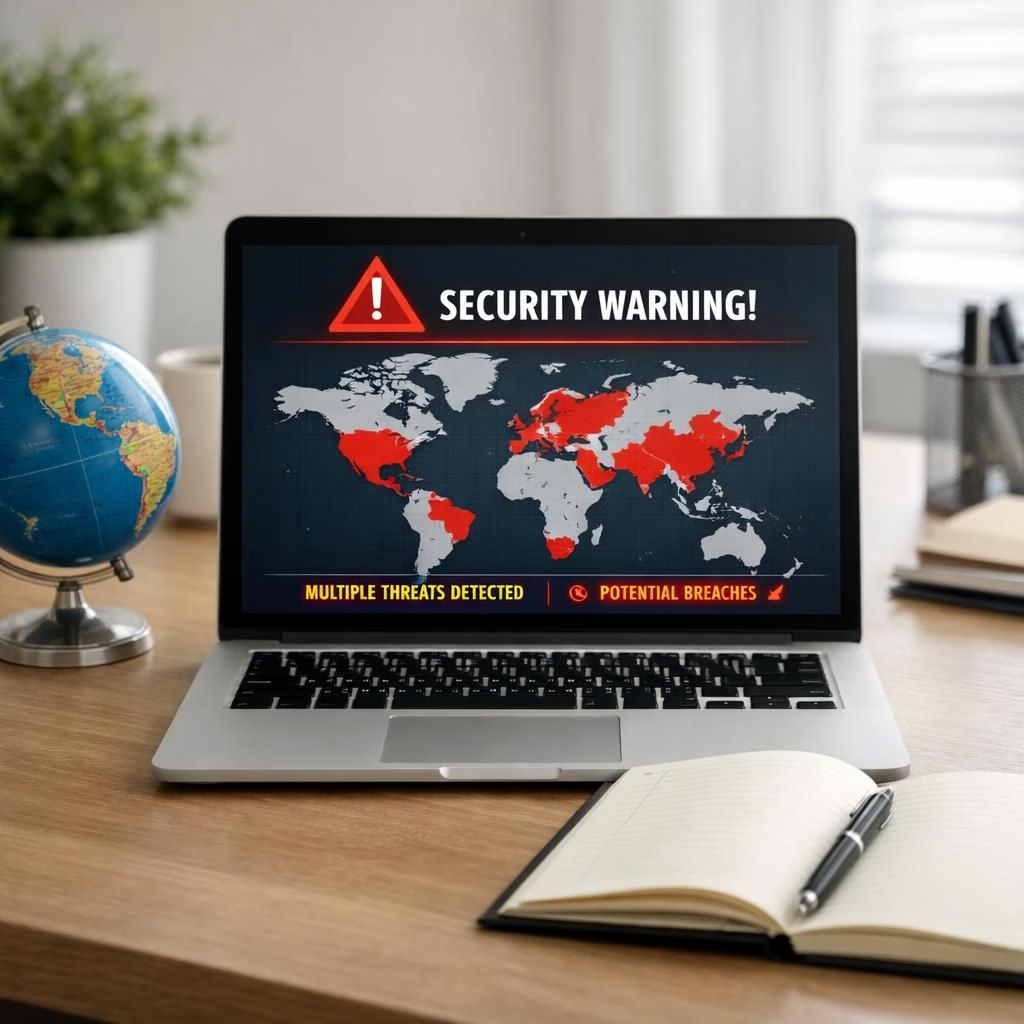
Security technology are not just buzzwords; they guide how firms like Dell steer through fragile skies. Dell Technologies recently instructed staff to skip work-related travel to the Middle East until mid-April, a move born from credible threats. The trigger? Iran’s Islamic Revolutionary Guard Corps, or IRGC, named the company as a potential target. This isn’t doomscrolling; it’s practical risk management in action. Dell’s internal note, shared with Business Insider, states that the health and safety of our team members remain our number one priority. The message sets clear guardrails: avoid travel to, from, or through Israel, Lebanon, and Gulf countries including Bahrain, Jordan, Kuwait, Oman, Qatar, Saudi Arabia, and the UAE. Staff in the region should work from home until further notice. Transit edits are specific: layovers and connections in the impacted region are off-limits. Dell’s Security & Resiliency Operations team monitors both physical and cyber threats around the world. The firm also offers counseling, well-being support, and the ISOS travel and health app to support staff who are anxious or stranded. This is the start of a larger pattern; risk-aware companies realign travel as the situation shifts.
Security in Practice: Dell’s Middle East Travel Advisory
In practice, the advisory puts security first while staying mindful of technology needs. The guidance is clear, actionable, and implemented with a people-first lens. The emphasis on safety means teams can pivot quickly if the risk environment changes. Security and cyber readiness are blended with physical safeguards, recognizing that a disruption in travel can ripple through supply chains, customer support, and internal collaboration. The company highlights access to counseling and wellbeing resources, a reminder that technology enables support, not just logistics. When regional stability shifts, a robust security posture becomes a competitive advantage, allowing business continuity without compromising the welfare of staff. This combination of security discipline and technology-enabled resilience is exactly the kind of proactive stance modern firms need in 2026.
Technology and Resilience: IRGC Warnings to US Tech
Separately, IRGC broadened its warning to U.S. technology and finance firms. CBS News reported that the group warned 18 American companies that they could become targets in the Middle East. The message accuses the U.S. of ignoring warnings about terrorist actions and cites casualties in the region. On Telegram, the IRGC claimed these firms act as spies for the U.S. government and help carry out strikes. The warning urges employees at these companies to leave workplaces immediately to save lives and advises residents near these firms to relocate within a one-kilometer radius. The IRGC frames the threat as a response to perceived intelligence activities, noting that American ICT and AI firms are central to their terror-design plans. In short, this isn’t a one-off statement—it is a strategic signal that the security and technology sectors cannot ignore. The consequence for global operations is that risk management now spans both physical travel and cyber threat awareness, underscoring the intersection of security and technology in real time.
Security-oriented travel planning for teams
For leaders managing global teams, here are practical steps: update travel policies with clear remote-work protocols, and establish a reliable channel for reporting security concerns. Strengthen IT infrastructure for remote access with zero-trust principles, multi-factor authentication, and regular data backups. Rehearse continuity drills so operations stay intact when routes become unreliable. Build a culture that prioritizes security and technology in equal measure. This is not merely compliance; it’s a competitive advantage that keeps productivity up when travel options shrink and risk rises. Dell’s example shows how security protocols blend with technology readiness to keep business moving while people stay safe.
In closing, the situation highlights how security and technology teams must collaborate across borders. We are reminded that risk is a constant companion in global business, even in times of relative calm. Readers can draw lessons for their own organizations on how to communicate policy changes clearly, support staff, and maintain continuity without panicking. Original reporting and coverage from Business Insider and CBS News helped illuminate the stakes behind the headlines. Thank you for the original coverage.
Original reporting and coverage: Business Insider and CBS News. Thank you for the original coverage.
We invite readers to share their thoughts in the comments.
Practical steps for security and resilience
- Review and update travel policies with a clear remote-work protocol and escalation paths.
- Strengthen IT security using zero-trust access, multi-factor authentication, and encrypted backups.
- Prepare continuity drills and an explicit crisis-communication plan.
- Provide mental health support and easy access to counseling resources for staff.
References
External references
- FBI guidance on cybersecurity incidents and risk awareness.
- CISA resources on remote-work security and zero-trust architectures.
- BBC News – Middle East tensions