

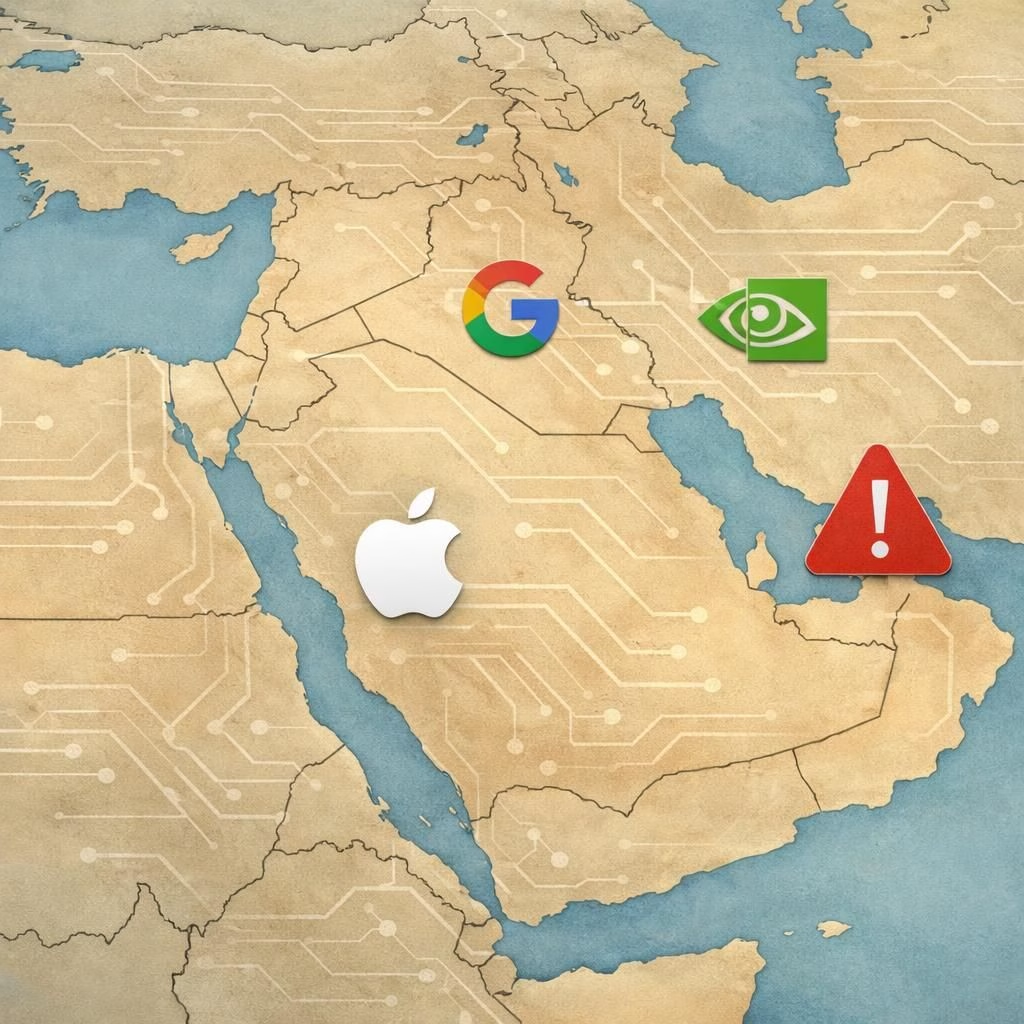
IRGC warnings set the stage for Security Tips in 2026 as a practical playbook rather than a melodrama. The IRGC told employees at Apple, Google, Meta, NVIDIA and 14 others to leave their offices to save lives, a stark reminder that real risk still has a keyboard and a coffee break. For readers following the framework, the core truth is simple: preparation, not panic, wins. The message underscores the importance of clear communication, robust backups, and flexible work arrangements when tensions flare.
IRGC and Security Tips in 2026: Navigating a Changing Tech Landscape
The list of named companies reads like a tech hall of fame and a security audit: Apple, Google, Meta, NVIDIA, Microsoft, Oracle, Tesla, HP, Intel, Palantir, Boeing, Dell, Cisco, IBM. The IRGC framed this as a new kind of target, one that focuses on information technology and AI. The take-away for readers is not bravado; it is discipline. If you run a data center or a cloud service, your guardrails matter more than the headlines do. This framework translates fear into actionable steps: inventory critical assets, segment networks, and rehearse incident response drills.
The message carries through as a cautionary note rather than bravado. The IRGC warned it would shift its operations toward these entities if more Iranian leaders were killed. The tone is a warning, not a celebration, and it serves as a platform for necessary conversation about risk management in cross-border tech ventures. Geopolitics meets grid security in real time, a reminder that software is a weapon only if you forget to lock your gates. To stay prepared, organizations can consult public guidance like CISA cybersecurity best practices.
Earlier this year, Iranian drones struck Amazon data centers in Bahrain and the UAE, disrupting Amazon Web Services. This is a sobering data point, not a marketing slide. It shows how physical infrastructure and digital services intersect in the security landscape of 2026. The takeaway remains simple: redundancy, diversified providers, and robust physical security plans are essential for uptime and trust. IRGC leadership has underscored that resilience is non-negotiable, a reality echoed by security professionals around the world.
On the tech side, reports indicate the US used Anthropic’s AI in its initial airstrikes against Iran. Israel is reportedly using an AI platform to monitor Iranian officials. The refrain is not triumphalism but a call to update threat models. If AI can assist in strategy, it can also assist in defense. Security Tips in 2026 encourages organizations to integrate AI-driven monitoring with human oversight, to avoid overreliance or blind spots.
What does this mean for everyday tech users and companies? It means resilience, not resignation. It means designing systems that degrade gracefully under pressure, not collapse in panic. It means knowing who to call in a crisis, and having a plan that is tested, not whispered about. The IRGC’s message is a reminder to keep security basics strong: patch management, incident response playbooks, and secure access controls. Secure authentication, encryption in transit and at rest, and continuous monitoring become everyday habits rather than nice add-ons.
From a policy perspective, this moment nudges governance toward recognizing tech as critical infrastructure. It calls for international cooperation, clearer norms around cyber operations, and transparent corporate communications when tensions rise. The technology community can respond with public briefings and practical risk information rather than evasive silence. The framework should guide leadership as we navigate geopolitical risk in 2026.
For readers who want to act, start with a simple triad: know your crown jewels, lock your perimeter, and rehearse your response. Use encryption, monitor for anomalies, and ensure your staff have safe evacuation plans if needed. The goal is not to overreact, but to respond with calm competence and a clear chain of command. If your team knows how to switch to a secured network segment within minutes, you are already ahead of the curve. And if you remain curious about how geopolitics intersects with AI, you’re in good company.
As this story continues to unfold in 2026, the best takeaway is practical resilience. It reads as a reminder that risk is not an abstract concept; it lives in the devices you deploy, in the vendors you trust, and in the policies you write. The framework becomes a living document when teams update playbooks, train staff, and invest in redundancy. The result is not paranoia, but preparedness that lets innovation proceed with less fear and more confidence.
Source and thanks: a note of gratitude to CBS News for the original reporting. Read the full coverage at CBS News.
We invite you to share your thoughts in the comments below. Your experiences with security planning and geopolitical risk can help others navigate these complex times.
IRGC-ready practical steps for resilience
- Know your crown jewels. Inventory critical data, systems, and access rights to prioritize protection and response.
- Lock your perimeter. Segment networks, apply least-privilege access, and enforce strong authentication across environments.
- Rehearse your response. Run tabletop exercises, keep runbooks current, and practice quick-switch to secured network segments.