

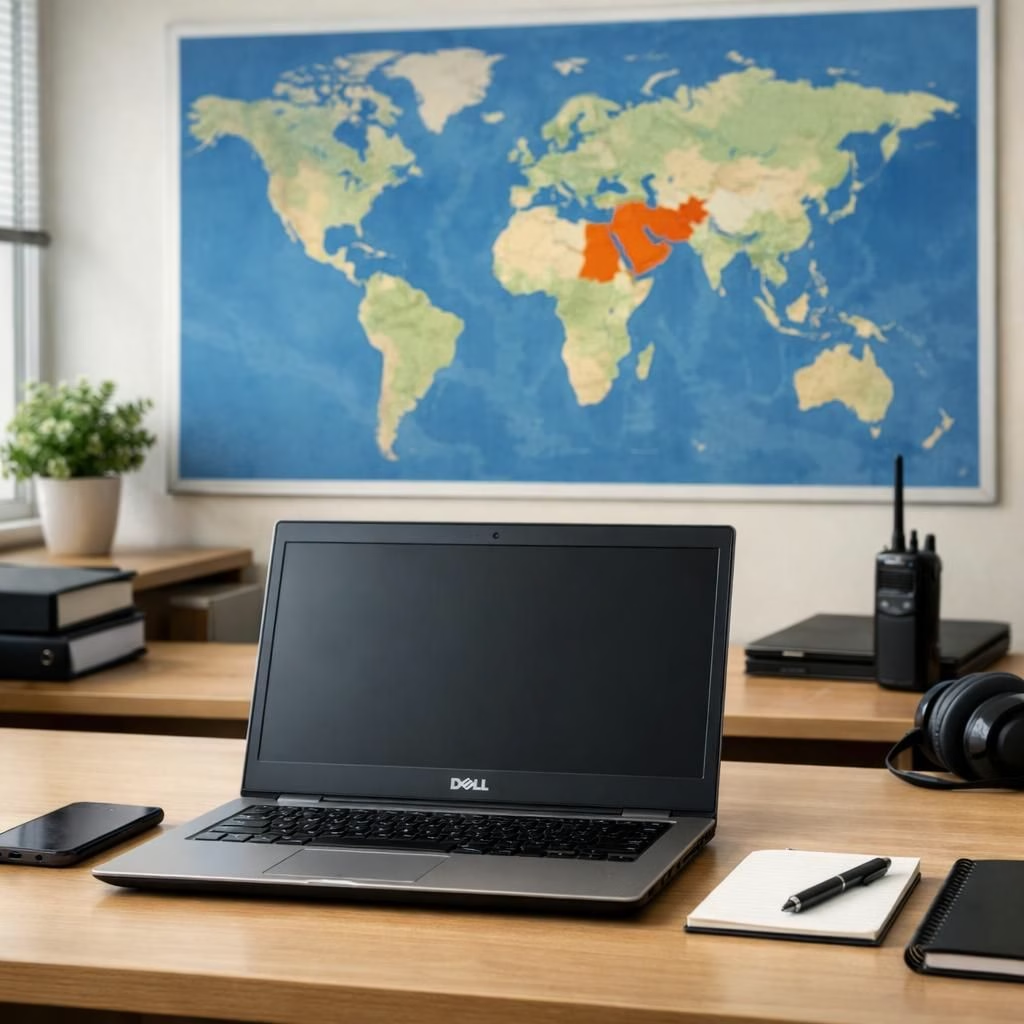
Dell Technologies has issued guidance to its staff about Middle East travel amid rising tensions in 2026. The memo frames safety as a near‑term operating principle for Dell Technologies, pairing clear rules with humane support and practical planning.
Dell Technologies and the Middle East travel risk landscape in 2026
In light of IRGC threats, many global firms paused travel to key corridors in the region. Dell Technologies says it is monitoring developments closely and restricting travel to certain destinations. The list includes Israel, Lebanon, and Gulf states such as Bahrain, Jordan, Kuwait, Oman, Qatar, Saudi Arabia, and the UAE, including transit routes and layovers via those locations. Staff in sensitive zones are asked to work from home until further notice while security teams monitor physical and cyber threats globally. This approach signals a broader shift in how multinational organizations balance urgent work with employee safety. The emphasis is on thoughtful risk management rather than panic, aligning with ongoing geopolitical changes and the need for constant reassessment by leadership.
Practical steps for Dell Technologies staff navigating Middle East travel today
- Minimize trips and optimize scheduling to keep operations resilient.
- Pre‑departure planning becomes more rigorous, with extra vetting and contingency options.
- The organization expands wellbeing resources and offers counselling to staff who may feel anxious about travel or displacement.
- Remote collaboration tools help teams stay aligned without unnecessary exposure.
- The ISOS travel and health app is highlighted as a trusted resource for medical guidance and emergencies.
- Policy updates prioritize frequent security briefings so plans can adapt quickly if the situation shifts.
- And for context, consider the broader risk picture of Middle East travel when planning deployments.
Observations for business resilience and geopolitical awareness
Media coverage, including CBS News, has noted that the IRGC recently named a list of U.S. technology and finance firms alleged to be targets. The warnings encourage workers to abandon workplaces and evacuate nearby areas. This incident shows how geopolitical tensions ripple through travel networks, supply chains, and on-site operations. Leaders now expect robust monitoring, rapid decision-making, and flexible work arrangements as routine practice. Cyber threat monitoring, data protection, and identity security rise in priority as threats mix with physical risk. The aim is to balance cautious optimism with practical preparedness so essential projects keep moving while people stay safe.
Why Middle East travel policy matters for Dell Technologies’ resilience
Beyond headlines, the core lesson is that credible risk management depends on people and processes working together. Transparent updates, easy access to wellbeing resources, and adaptable policies help teams respond without losing momentum. Building empowered local teams, investing in real‑time intelligence, and maintaining cross‑border communication strengthens resilience. A culture that invites early risk reporting helps safety and continuity. The result is a more resilient global operation that keeps essential work moving while treating safety as a core value. For planning accuracy, ongoing assessment of Middle East travel risks remains essential.
Building resilient policies and proactive risk communication
Credible risk management relies on people and processes acting together. Organizations should provide transparent updates and easy wellbeing access. Policies must bend without breaking when conditions shift. Local teams, real‑time intelligence, and strong cross‑border channels enable safer, faster decisions. A culture that invites concerns early enhances safety and continuity.
Frequently asked questions about Dell Technologies and Middle East travel
- What is the current stance on travel to the region?
The company favors remote work when possible and limits nonessential trips until risks subside.
- How can employees access wellbeing resources?
Internal portals and employee assistance programs provide counselling and resilience resources.
- Where can I find real-time updates?
Security and risk-management teams publish frequent alerts and guidance through official channels.
Conclusion: Dell Technologies prioritizes safety while keeping essential work moving. Ongoing communication and flexible work arrangements help teams navigate 2026 and beyond.
Original reporting and background by Business Insider, and a heartfelt thank you for the source material: Business Insider coverage.