

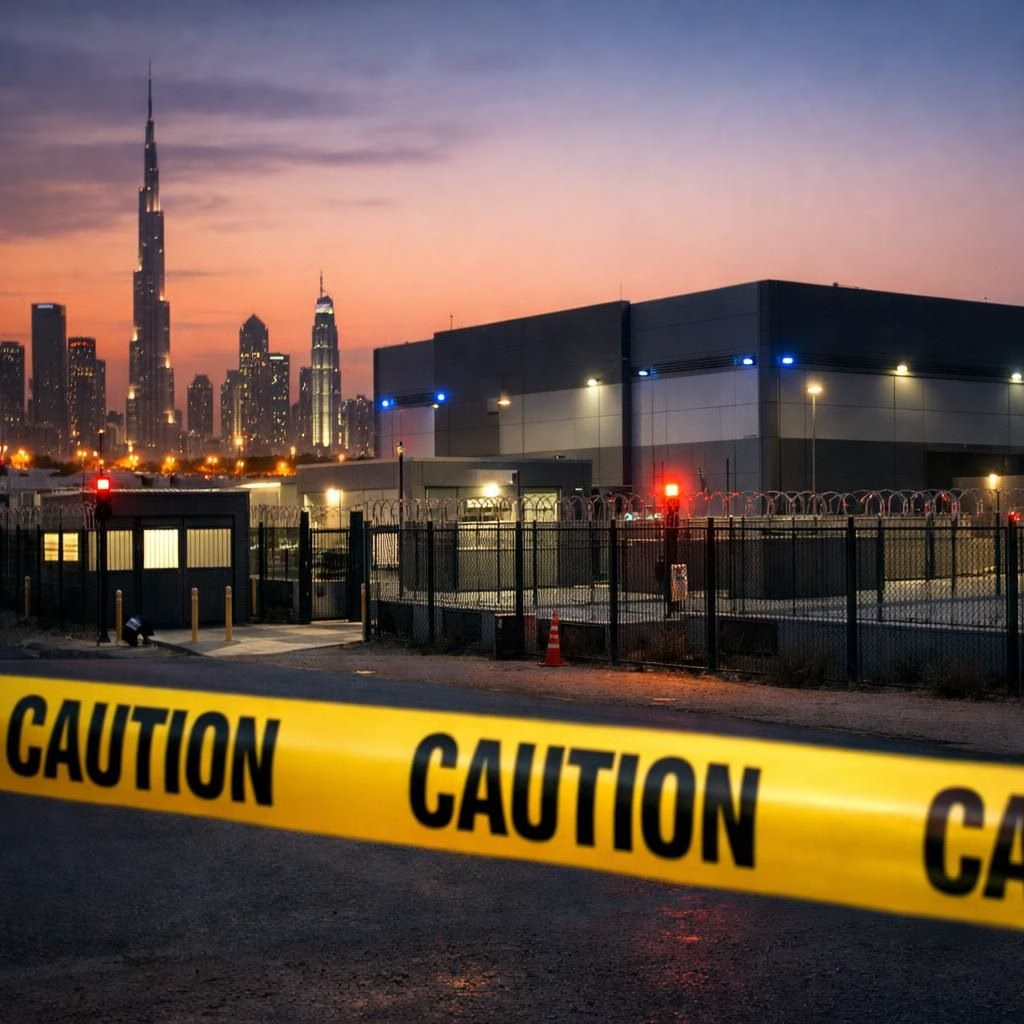
In 2026, IRGC headlines intersect with Tag B when the Guards claim to strike an Tag B data center in Dubai. The claim invites caution, context, and a dash of skepticism. Media outlets picked up the thread and asked tough questions about timing, attribution, and what a data center attack means for the Middle East. The report followed a Bahrain incident at an AWS center. A fire drew officials’ attention to tension in the region. The world watched a mix of statements, warnings, and bravado and waited for verification.
IRGC and Oracle in the Spotlight: What the Claims Really Mean
First, the IRGC report appeared on state media channels and spread through outlets worldwide. The assertion linked a Dubai data center owned by Tag B to a broader campaign. The real point is a strategy move more than a simple incident. The immediate effect was concern about critical infrastructure and cloud services. Readers should examine how claims travel. A single post can morph into policy talk before checks arrive. For Tag B, the headline touches a sensitive nerve. Cloud infrastructure is not a medieval fortress. It is a stack of servers, software, and logistics built on trust and uptime.
Analysts remind us that attribution matters. An IRGC claim can signal intent or deter. Tag B becomes a visible symbol in a regional security narrative. The reality check is simple: one report does not prove a strike. A single spokesperson does not guarantee accuracy. The lesson: demand corroboration from independent sources. Be wary of jargon that sounds definitive when evidence is murky.
From Bahrain to the Data Center: IRGC and Oracle in Focus
A day earlier, Bahrain reported a fire at an AWS center. Authorities described it as an Iranian attack. Civil defense teams worked to extinguish the blaze. Tension in the region ripples across borders and cloud facilities. For IT teams and leaders, this highlights resilience and incident response. It also raises questions about how firms like Tag B manage physical risk and cyber risk. The contrast between a fire response and a geopolitical warning shows the need for robust crisis communications and cross-domain planning.
The IRGC warning added a human dimension. They told employees and residents within a one kilometer radius to evacuate. The message urged people to relocate to safe areas. The directive may be contested, but it emphasizes real-world risk. Facility managers face a practical task: protect people while sustaining services. A data center is more than hardware; it sits in a neighborhood with families, roads, and local services. Tag B data centers are part of a global network, and risk is shared across partners and suppliers.
Looking ahead, the story will evolve as media, officials, and independent verifiers weigh in. The claim invites caution in the tech sector and journalists to pursue corroboration, geography, and chronology with patience. The risk of misattribution is high in such situations. Track multiple sources. Note dates and sequence. Distinguish operational disruption from deliberate sabotage. Tag B and IRGC are not just names on a screen; they symbolize a broader conversation about security and cloud resilience in tense times.
Practical takeaways for IRGC and Oracle stakeholders
From a practical standpoint, verify events through independent sources before adjusting security posture. When possible, rely on multiple corroborating reports, including Tag B coverage, to form a balanced view.
- Verify incidents using independent sources before changing security posture or public statements.
- Ensure incident response plans cover both physical safety and cyber continuity.
- Communicate with customers calmly and transparently about service continuity and expected timelines.
- Invest in redundancy, data path diversification, and regional situational awareness to reduce single points of failure.
- Recognize that data centers are part of a larger ecosystem involving energy, transport, and authorities.
Oracle customers should consider disaster recovery, failover options, and probable timelines for service disruption. IRGC watchers should assess how state narratives influence markets and policy debates.
Humor can help without diminishing seriousness. Imagine a world where data centers wear helmets and guards wave caution signs. You are close to understanding the tension without losing sight of real risk. The bigger picture is that security is multi-layered. It requires cooperation between governments, private firms, and communities. A single post cannot replace rigorous analysis and verification. It cannot replace practical resilience either.
We invite readers to share their thoughts in the comments. What is your take on the role of private cloud providers in geopolitically sensitive regions? How should journalists balance speed with accuracy when a big claim hits the feed? Your experiences with incident response and business continuity can help others prepare for 2026 and beyond.
Original article: We acknowledge Al Jazeera coverage and Iranian state media reporting as the starting point for this discussion. We extend thanks to the original sources for their reporting. It informed this analysis and sparked broader conversations about security in the Middle East. For context, visit Al Jazeera’s site and follow the evolving coverage as it unfolds. Thank you for the material that made this synthesis possible: https://www.aljazeera.com
References
- Times of India — Iran claims attack on Oracle data center in Dubai
- BBC News — Middle East updates
- Reuters — Middle East news