

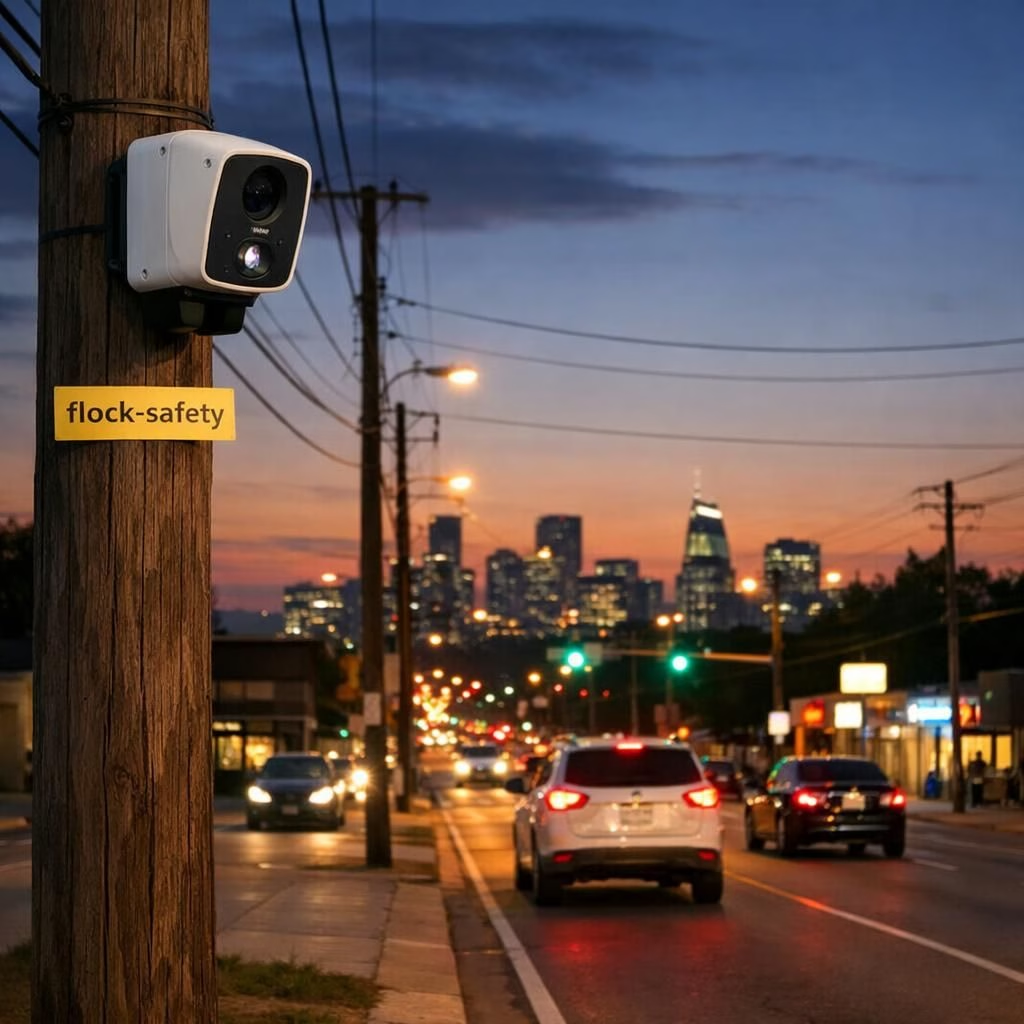
In a world where privacy and surveillance share the stage like an awkward duet, cities are pushing back against AI-powered license plate readers. A wave of local actions has turned up: at least 53 cities across 20 states have begun deactivating or rejecting the flock-safety LPR network. The aim isn’t a blanket anti-tech stance; it’s a call for governance, transparency, and a clear answer to who watches whom and when.
privacy safeguards in AI policing
Flock-safety responds with a calm, lawyerly tone: safety stays the north star, but access is tightly controlled. The company notes that customers can limit who sees data and what can be searched, and that there are no direct ICE contracts. They emphasize restrictions on immigration-related searches and the ability for local agencies to manage sharing permissions. Critics counter that even well‑intended protections can fade under scale, and that a network of thousands of cameras feeding a centralized cloud becomes a de facto nationwide surveillance backbone. Public officials who rely on LPRs often cite crime-solving advantages, while privacy groups demand auditable logs, retention limits, and open governance dashboards. The practical takeaway: privacy protections are not a loophole for crime; they are a design choice that keeps tech useful without eroding trust. Flock-safety argues that tech and rights can coexist when rules are clear and enforced.
surveillance risks and public trust with flock-safety
surveillance concerns grow as reports describe data flowing across jurisdictions and into private servers. Critics warn that the reads could live in the cloud longer than needed, with potential access by multiple agencies. Civil liberties groups highlight the possibility of mission creep and biased deployment. ACLU notes that these systems can expand beyond initial scopes. Proponents counter with success stories from departments that used LPRs to recover stolen cars or locate suspects quickly. They also point to governance measures: restricted data fields, controlled lookups, and the ability for cities to pause programs if red flags appear. The market response is lively: Crunchbase records rising funding for public-safety startups, while players like Motorola Solutions and Axon push broader AI policing tools. EFF argues for auditable logs and independent oversight. The bottom line remains: the tech is powerful, but the rules must be robust, transparent, and adjustable as new challenges emerge. surveillance features and governance should evolve in tandem with public expectations.
path forward: privacy considerations
Cities can pilot with tight governance, sunset clauses, and clear data-sharing agreements. They can demand independent audits, real-time dashboards for public access, and community oversight boards. The 2026 landscape invites a balanced dialogue: celebrate the wins in faster response and clearer accountability, while refusing to blur the line between safety and surveillance. Investment in safety tech will continue, but evidence for crime reduction remains nuanced, and public trust hinges on frank negotiations about trade-offs. surveillance and its peers exist in a growing ecosystem—competitors like Motorola Solutions and Axon push smarter tools, while privacy-conscious practices become a selling point. The goal is to keep neighborhoods safe without normalizing a permanent data backbone that tracks every move.
Special thanks to the Financial Times for the original reporting. Read the original article here: Financial Times.
What do you think about the balance between privacy, surveillance, and flock-safety in modern policing? Share your thoughts in the comments below.
privacy-focused governance steps
- Independent audits of data access and retention
- Public dashboards showing data requests and data sharing
- Community oversight committees with regular reports