

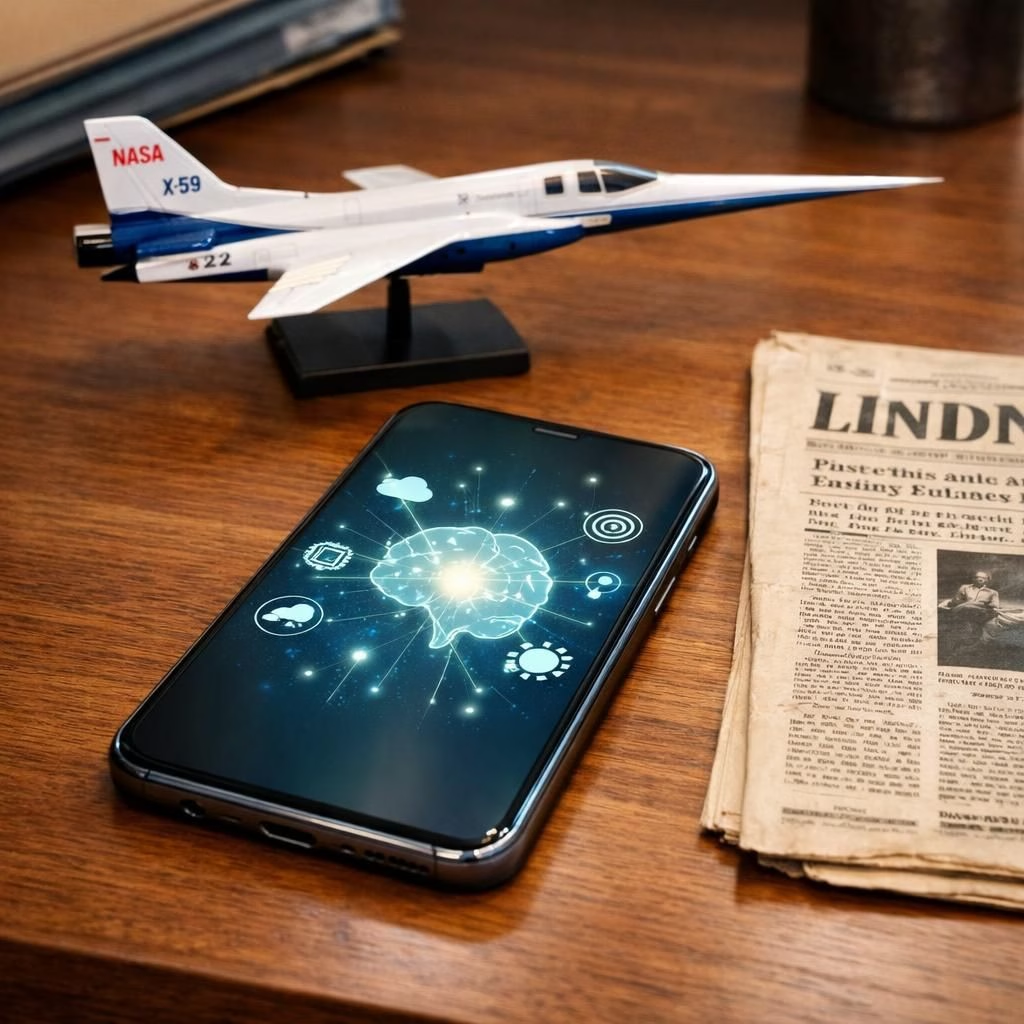
AI and Tech stroll through 2026 like two roommates arguing about the thermostat of progress. On Friday, Reuters teased a familiar plot: Amazon might try the smartphone market again, code-named Transformer, with AI as its North Star. The Fire Phone fiasco remains a cautionary tale we tell at tech dinners, a reminder that bold bets can fizzle faster than a battery life myth. Yet the cycle of gadget gossip continues, and this time the narrative promises even more AI smarts and more Tech hustle. If you enjoy a device that talks back, you are living in the right era—just be prepared to budget for extra chargers and extra patience.
AI in the wild: Amazon’s Transformer tale
Industry chatter says price and release date remain shadowed in rumor fog. Reuters could only confirm the device would lean into AI features. That part is unsurprising; AI is the magnet for headlines and for the ever-hungry gadget audience. The Echo family might gain a phone cousin, one that can circle back to shopping suggestions with a gentle chirp. The big test is whether buyers forgive yet another device that promises to learn from you while trying to upsell you. If Transformer shows up cheap on the second-hand market, it might become a quirky relic of a time when AI still felt like a choice rather than a lifestyle.
Still, the vibe is contagious. Amazon has chased AI’s friendly halo with gusto, from voice assistants to prime-day nudges. A phone that nudges you toward purchases in a polite voice sounds less dangerous and more dystopian in a fun way. Past hardware misfires teach prudence, but the AI appeal remains irresistible to many, especially when the battery life math is simple and the use-cases are cute.
Reality checks will come with early reviews about privacy, battery drain, and the subtle art of making a device that feels helpful without becoming a constant invoice. The Transformer, if it lands, will join a hall of devices trying to be both AI helper and wallet guardian. We will stay curious and skeptical in equal measure, which is the correct emotional posture for 2026 Tech press.
Tech takes on memory: NYT, EFF, and fair use
Meanwhile, the information ecosystem keeps tossing up questions about memory and access. The Electronic Frontier Foundation flagged that The New York Times blocked Internet Archive crawlers, a move the EFF likens to a library refusing to store old editions. The practice of mirroring web pages to enhance searchability is longstanding and, in many cases, legally recognized as fair use. The NYT stance may look principled, but the broader Tech culture knows that preserving a robust digital record matters for researchers and curious readers. Here AI looms large, not as a gadget feature but as a tool that must be governed with care to avoid erasing history in the name of efficiency.
From the consumer side, we notice a growing friction with bots that harvest content from blogs and project sites. Some of that activity causes headaches for small teams like ours, yet it also fuels the speed at which ideas spread. If the same bot learns a few phrases from our posts, so be it; sharing knowledge remains the engine of progress. The balance between fair use, archiving, and access is delicate, but it is essential for a healthy Tech ecosystem.
Ultimately, this debate reminds us that AI is not the only shiny object. Tech policy threads bind creators, archivists, and readers into a common fabric. The cost of innovation is often collective memory—the ability to retrace steps, verify claims, and learn from mistakes. If a chatbot learns from us, let it be a reminder that our work matters and that open archives help everyone, not just the content hoarders.
Tech meets space: X-59 and Artemis II
Moving from ground to air and back to cosmos, NASA’s X-59 supersonic project made headlines again. The aircraft aborted a test flight after nine minutes when a cockpit warning appeared. The mission aims to demonstrate techniques that could reduce sonic booms, so communities below remain calm and caffeinated. The team quickly shifted gears, and the plane landed without drama. The pause is not a failure; it is a diagnostic pause that keeps builders honest. If the X-59 returns to flight, it should signal that space-age engineering can be patient, precise, and relentlessly optimistic.
Meanwhile Artemis II remains on the calendar for a potential April 1 liftoff. The 10-day mission would send four astronauts around the Moon, marking another human foray into a theater that inspired Apollo and still fuels memes. The mission’s many potential delays—technical glitches, unpredictable weather, or suspicious cloud formations over Cape Canaveral—do not dampen the excitement; they merely prove that grand experiments live in the real world with real calendars. The public appetite for space science stays robust as a coffee addiction, and the daily drone footage from museums provides a gentle reminder of how far we’ve come since those early, expensive days.
AI meets Tech on set: a fast-paced tech roundup
As the week closes, a quick scan of the news cycle shows that the pace of change remains brisk. The consumer tech crowd wants to know: will Transformer bring a new era of AI-enabled shopping, or will it be another clever gadget that hides a heavy bill? We don’t pretend to have all the answers, but we do have questions and plenty of curiosity. The alignment of AI with consumer tech, policy, and space research creates a fascinating tapestry. We celebrate the wins and we poke at the misfires with affection, because progress rarely travels in a straight line.
A final note: the original Reuters report anchors this mosaic. We echo a simple truth: AI and Tech still shape how we live, learn, and laugh at the next gadget launch. If you enjoy this kind of mashup, you are not alone; the conversation is a public good that grows when we all chip in with ideas, criticisms, and jokes.
Original reporting and context: Thank you to Reuters for the original coverage on Amazon’s Transformer phone. Source: Reuters technology coverage.
Readers, please share your thoughts in the comments. We love hearing from readers about AI and Tech in 2026.
Practical takeaways for AI and Tech fans
- Evaluate AI features on new devices for real-world usefulness, not just novelty.
- Ask about privacy controls, data handling, and optional opt-outs before purchase.
- When archiving or researching online, consider open archives and fair-use basics as a safety net.
FAQ
Is Amazon’s Transformer real or just rumor?
Right now, details are scarce and the project remains a rumor-driven story. Reuters corroborates AI emphasis, but pricing and timing are still unclear.
Should I worry about privacy with AI-powered phones?
Privacy trade-offs are real. Look for clear controls, local processing options, and transparent data policies before buying.
How does fair use relate to archives and bots?
Fair use has long protected access to information while enabling search and research. Archiving helps preserve history, but it needs thoughtful governance and balance with publishers’ rights.
When will Artemis II launch?
Artemis II is eyed for a potential April liftoff, but schedules can shift due to weather, technical checks, and a host of scheduling realities in spaceflight.
Want more on AI, Tech, and space milestones?
Keep an eye on continuing coverage from reputable outlets and space agencies for updates on these converging threads.
References
Hackaday links for the week: Hackaday Links (original source).