

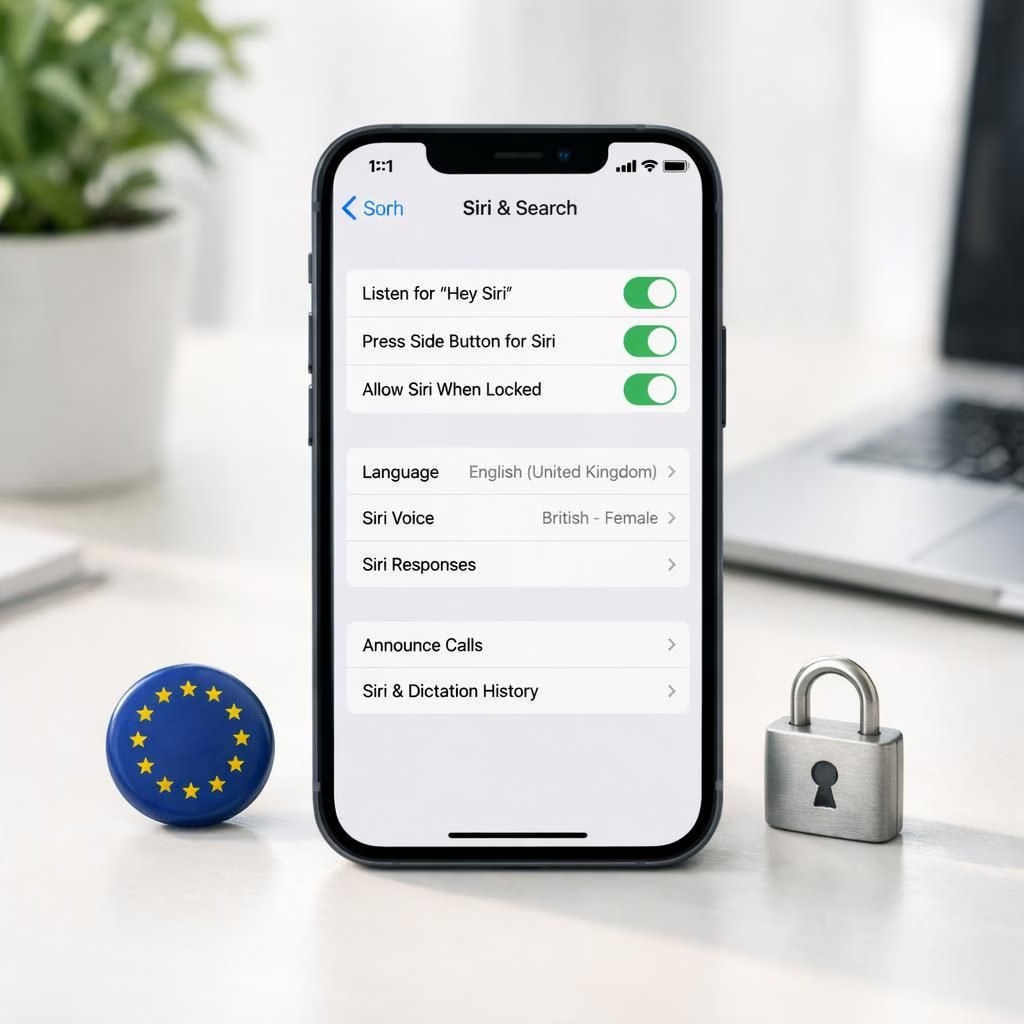
In 2026, AI Privacy and Interoperability collide as Apple navigates EU rules with a mix of bravado and chilly pragmatism. The company frames AI Privacy as a shield and a selling point, while regulators demand Interoperability to unlock competition. The result is a high-stakes drama with a wink, as Siri faces a Europe that wants more openness without giving away the store.
AI Privacy Spotlight: Europe’s Siri Dilemma
At the heart of the debate is the Digital Markets Act (DMA), a rulebook meant to keep gatekeeper platforms honest. Interoperability requirements would let rival assistants access similar data paths and capabilities across apps, photos, messages, and more. Apple insists that this access would erode AI Privacy and threaten user security. The policy goal, in practice, is to balance innovation with protection, so incumbents don’t crowd out new ideas. When access is level, consumers win with better tools at fair prices—or so the theory goes.
Interoperability Hurdles: The Open Access Debate
Apple asked for a middle path. It proposed a Trusted System Agent to mediate between rival AI agents and Apple’s own systems, offering comparable access while keeping core protections intact. It claimed an 18-month rollout, a gradual, careful ramp that could preserve privacy while testing the waters of Interoperability again. The European Commission, however, signaled no timeline for Siri AI in the EU, leaving both sides in a limbo limerick. The delay has become the new normal in this story, with the clock ticking as users watch and regulators stare down the DMA’s terms.
From Brussels, the Commission suggests that Apple’s silence or slow proposals aren’t the same as a DMA-compliant plan. “Nothing in the DMA prohibits Apple from introducing new products and services in the EU,” a spokesperson clarified, but Apple says it hasn’t received a meaningful engagement from the Commission. The exchange looks like a chess match with both sides claiming to play optimally, and the rest of us waiting for the next move. The upshot is a standoff that slows progress and keeps the tech roadmap guessing.
Experts weigh in with grounded skepticism. Friso Bostoen, a competition-law professor at Tilburg University, warns that forcing platforms to open up can introduce security risks if not done with care. Michael Veale of University College London paints a Jenga-tower picture: Apple’s vertical control has held up because data flows inside a tightly designed stack. Jan Penfrat of European Digital Rights calls this a lobbying tactic to press for DMA-friendly compromises rather than a fundamental reform of Apple’s business model. The core worry is that widening access could create new vulnerabilities if safeguards aren’t built in from the start. Still, the value of thoughtful interoperability—when done right—remains a compelling prospect for users who crave choice.
Why the DMA Has the Debate Tight and Bright
The DMA isn’t a moral crusade against privacy; it’s an attempt to prevent gatekeeper lock-in. Yet Apple argues that the interpretation of Interoperability demanded by the EU might require opening up “an entire operating system to a third-party system,” a move it says would be irresponsible for privacy and security. The company isn’t denying the principle of openness; it’s pushing for a version that preserves strong protections. The Commission counters that openness can coexist with safeguards, and that the goal is not to punish innovation but to prevent abuse of market power. The back-and-forth reads like a regulatory variation of a tug-of-war, with both sides insisting they can pull toward a safer, more competitive future—just not yet in the same way.
WWDC 2026 and the Wider Market: A Delicate Balancing Act
Apple’s WWDC 2026 keynote highlighted the EU issue in a telling way. A sizable slice of the show was dedicated to why Siri AI won’t land in Europe on schedule, punctuated by a post with the cheeky title “Due to DMA, Siri AI delayed in EU for iOS 27 and iPadOS 27.” It was a transparent reminder that policy timelines can steer product roadmaps even for the most polished ecosystems. China’s stance followed a similar regulatory logic, noted with a concise footnote that felt like a bookmark rather than a full chapter. The takeaway is simple: policy frameworks shape product possibilities, and the path to openness is rarely a straight line.
The broader takeaway is that the privacy-first vision isn’t disappearing; it’s being re-scoped in a world where open access must be married to solid defenses. Veale and Penfrat remind us that you can’t test Interoperability without exposing core design choices, so careful, accountable approaches are essential. The EU’s interest in a vibrant AI ecosystem remains strong, and so does Apple’s resolve to protect the user’s trust. It’s a tricky, high-stakes dance, and both sides have reasons to keep stepping.
Ultimately, Apple appears to be playing a game of chicken with Europe. The EU has a large market, and Siri AI could become a more central part of the iPhone experience. It helped push USB-C adoption in the past; could it nudge Apple toward a carefully designed openness for AI next? The answer likely lies in a hybrid solution that satisfies privacy and security while offering credible, testable Interoperability for AI progress. Until then, the question remains: who blinks first?
Update, June 9th: Greg Joswiak offered fresh remarks after publication, underscoring the ongoing nature of the dialogue. The debate continues, with regulators and industry watching closely for real, implementable steps forward.
Want to weigh in? Share your thoughts in the comments below. Your perspectives help shape how we understand the evolving balance between AI Privacy and Interoperability as these policies unfold.
Practical paths to interoperability
- Implement a Trusted System Agent with strict privacy-by-design safeguards to mediate data access Interoperability while limiting exposure.
- Limit data scope and duration, testing open data paths in controlled markets before a wider rollout Interoperability.
- adopt transparent auditing and user controls to reassure customers about AI Privacy while enabling cross-app actions.
- Require third-party validators to review security and privacy impacts of any interoperability design before deployment.
FAQ
- What is the DMA in simple terms? It’s EU rules aimed at preventing gatekeepers from abusing market power and to encourage open access under safeguards. Interoperability is a key feature under the Act, but it must balance privacy and security with competition.
- Why does Apple push back on interoperability? Apple argues that opening up core OS components could undermine AI Privacy and device security. Regulators say safeguards can coexist with openness.
- Will Siri ever launch in the EU with these conditions? The path isn’t decided yet. The two sides are negotiating how Interoperability should work while preserving user trust.
Conclusion
The debate isn’t about whether AI Privacy matters. It’s about how to preserve trust while inviting Interoperability that fuels innovation. Europe’s market remains a powerful incentive for Apple to find a workable compromise, and Brussels’ stance will shape the next wave of AI features on iOS and iPadOS. The outcome will hinge on concrete, auditable steps that demonstrate both privacy protection and genuine, testable openness.