

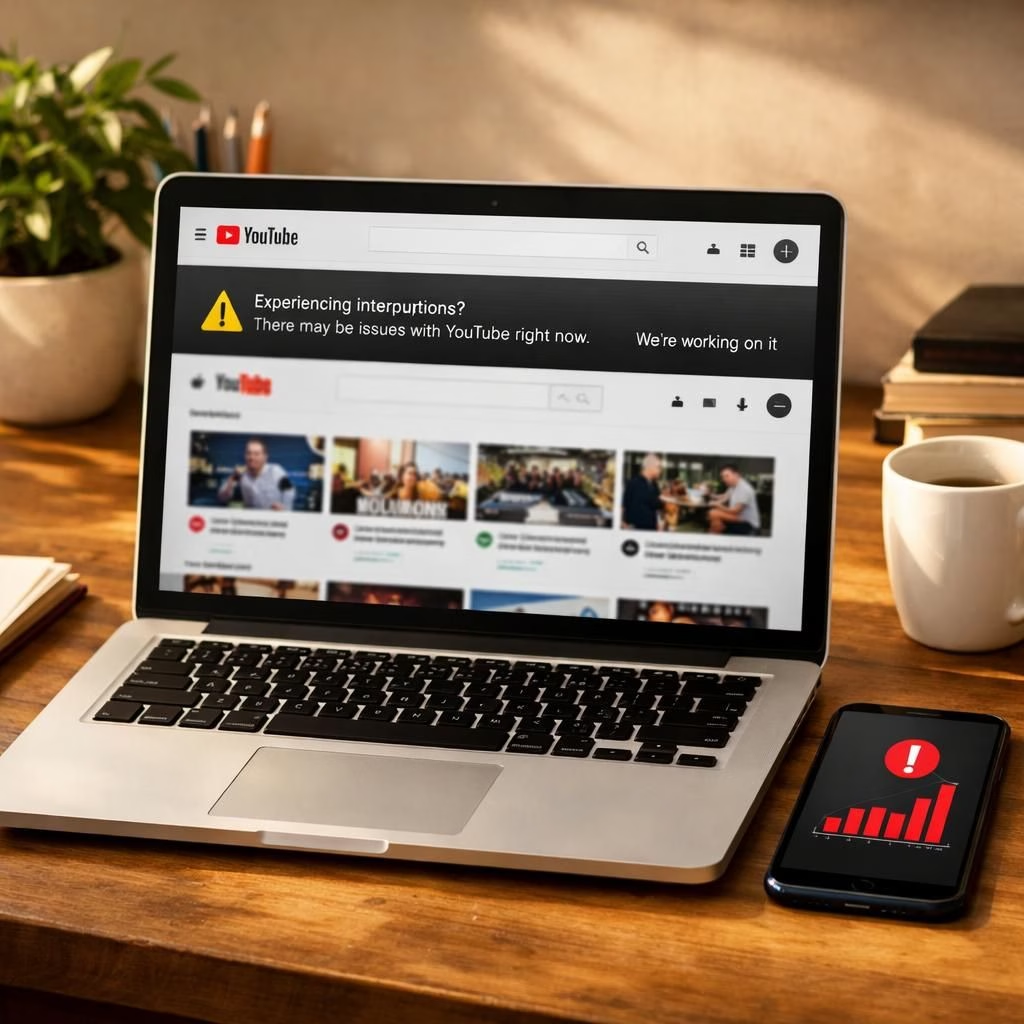
Outage or not, the test comes fast when a platform you rely on every day stumbles. The outage hit YouTube across surfaces—web, the app, YouTube Music, Kids, and TV. Downdetector tallied more than 240,000 reports at the peak in the United States. In India, about 17,000 reports rolled in. YouTube quickly acknowledged the trouble via a post on X. They assured users the team was on the case. The message noted that some users could not log into YouTube TV, a reminder that this was a broader outage across surfaces. The bottom line is that even the strongest services rely on many moving parts, and one weak link can slow the entire system, especially the recommendations engine that shapes what you see.
Outage and recommendations: how a hiccup reshaped daily browsing
The heart of the matter, Google explained, was a glitch in the recommendations system that kept videos from appearing across surfaces such as the homepage, the YouTube app, YouTube Music, and YouTube Kids. Users reported playback failures, login issues on YouTube TV, and streaming interruptions. This was not a mystery; it was a technical fault tied to an algorithm that governs what you see across the service.
For days, social media posts painted a frustration-heavy picture. Some users faced spinning wheels; others saw blank feeds where videos should be. The company confirmed the issue was broader than a single endpoint, affecting multiple surfaces, not a single corner of the site. The outage exposed how discovery is tied to system health and how a single malfunction can ripple across devices.
As the outage lingered, analysts and casual users alike wondered if the footage on their screens could ever resume its usual rhythm. Yet the problem was not just about videos; it highlighted the delicate balance between discovery and control. If the recommendations engine misfires, the entire user journey suffers—from the homepage to the exact video you hoped to find.
Outage and recommendations: a pragmatic recovery playbook
By the time Google posted a final update, the platforms were back to normal. The company stated that the issue with the recommendations system had been resolved and that all platforms were functioning normally again. The support page thanked users for bearing with the team while they fixed the problem. This was less a dramatic rescue and more a well-executed reset, with a quiet end to a loud day.
What caused the outage, in practical terms, was a fault in the engine that prioritizes videos. The recommendations system, meant to personalize the stream, failed to populate surfaces as intended. That failure cascaded into playback issues, login trouble on YouTube TV, and intermittent streaming across devices. The result was a week of social chatter, helpful memes, and a reminder that the best discovery tools carry a cost when they falter.
From a user’s perspective, the outage underscored two hard truths: first, the need to be prepared with offline backups and saved playlists; second, the value of diversified content strategies—not all discovery rides run on a single engine. Creators should consider announcing planned outages, offering alternative channels during downtimes, and maintaining clear status communications so audiences stay engaged even when the feed misbehaves.
So what can we learn for the future? First, accountability matters. When the system to surface videos fails, teams should be transparent about the root cause and the steps to prevent a reoccurrence. Second, resilience matters. A fast, clear final update helps users regain trust and plan their afternoon rituals—whether it’s a tutorial, a lesson, or a streaming marathon. Third, user agency matters. Provide easy access to saved content, offline options, and playlist continuity so people can stay productive even if the live feed hiccups.
If you have thoughts about this outage or ideas for staying productive during platform hiccups, share your thoughts in the comments below. We can all learn from different experiences and strategies.
Original article: Original source with thanks. Thank you for the original material.
Outage resilience and the recommendations ecosystem
The outage resilience discussion highlights how swiftly a platform must respond to protect user trust. A fast, transparent final update helps reset expectations and reduce confusion. For creators and viewers, having offline options, saved playlists, and cross-channel presence lowers disruption when the recommendations engine misbehaves. Diversified strategies keep audiences engaged even when one surface falters.
Practical tips for staying productive during a YouTube outage
- Save important videos for offline viewing where possible.
- Keep a local playlist of essential content to avoid one-routine dependency.
- Follow creators on alternate channels or platforms to stay connected during downtimes.
- Monitor official status pages and status updates to gauge when services return to normal.
FAQ: YouTube outage and what it means for you
- What caused the outage? A fault in the recommendations system that curates what you see on various surfaces.
- Were all YouTube services affected? Yes, across multiple surfaces, including the homepage, app, Music, Kids, and TV.
- How can I minimize disruption in the future? Prepare offline backups, maintain saved playlists, and diversify discovery across platforms.
- What should creators do during outages? Communicate clearly with audiences, share alternative channels, and publish status updates as soon as possible.
Conclusion: what this outage teaches about resilience and user agency
The outage served as a reminder that a modern discovery system relies on many moving parts. When one piece falters, it can ripple across homes and devices. The right response blends accountability, transparent communication, and practical options that keep people productive even when the live feed hiccups.
References
- Original source: Times of India – YouTube outage article
- The Verge coverage
- BBC Technology coverage
- TechCrunch