

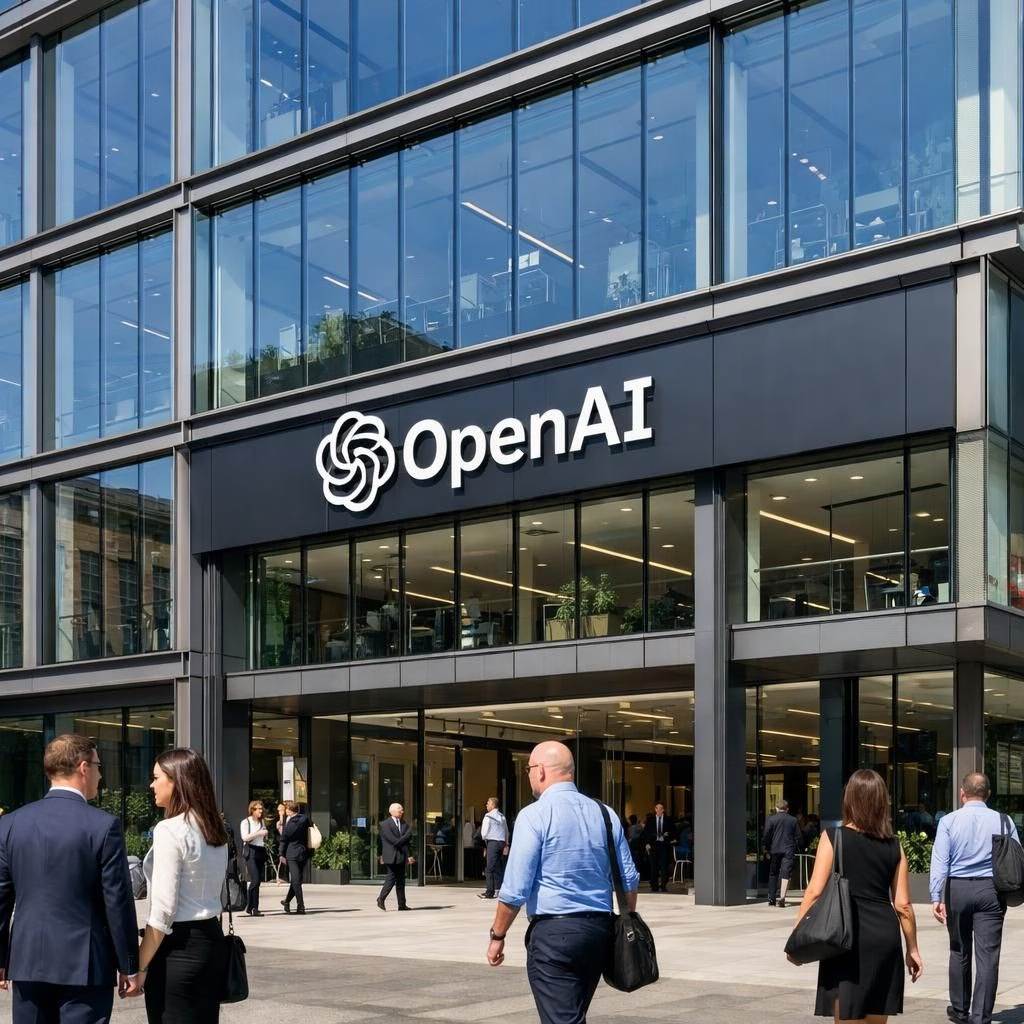
OpenAI is turning what used to be chatter into concrete bricks of reality in London, and the mood is sunny enough to warm a data center. The plan to open a permanent OpenAI Tag B here is not just about real estate; it signals a longer bet on a city that already feels like a stealthy AI talent magnet. The idea that London could host the OpenAI Tag B with 88,500 square feet and room for 500+ people is less trivia and more a statement: the UK wants to be a serious player in AI and London wants to be the crown jewel of that effort.
OpenAI London AI hub momentum in King’s Cross
OpenAI has quietly turned its London strategy into a visible footprint. The company signed a lease for 88,500 square feet in the King’s Cross area, with the plan to grow its London workforce from roughly 200 to 500+ employees. This is a move from “we have a team here” to “we have a predictable base here.” The London site lead, Phoebe Thacker, reminded reporters that the UK is rich in AI talent and has a track record that makes London a natural home for high-impact research and product teams. The official line is pragmatic: the space will serve as a hub for collaboration, experimentation, and the occasional post-lunch algorithm doodle that somehow changes the world.
Meanwhile, the move places OpenAI alongside a thriving King’s Cross AI cluster that already includes Google DeepMind, Meta, Synthesia, and Wayve. It’s a neighborhood with a vibe, a few coffee shops that know the scent of a sprint planning meeting, and a skyline that suggests ambition more than skyline rules. The new office is framed as a way to preserve momentum in a region that the UK aims to position as a global AI hub. The juxtaposition with the Stargate UK AI infrastructure pause—cited for high energy costs and regulatory hurdles—reads as a reminder that growth often travels on a winding road with mandatory pit stops for risk assessment and power grids alike.
OpenAI London AI hub and UK AI ambitions
The timing of the London expansion aligns with the UK government’s push to turn the country into a global AI hub. The UK’s AI Opportunities Action Plan, rolled out at the start of 2025, pairs with rising venture capital activity that has kept AI startups handsome enough to attract serious funding. Dealroom data shows a steady stream of investments this year, with several marquee rounds signaling continued appetite for AI innovation. The narrative goes beyond a single lease: London’s growth is part of a broader strategy to reshape the UK’s innovation ecosystem, highlight regulatory clarity where possible, and attract international collaborations that can accelerate the pace of responsible AI development.
For OpenAI, London already represents its largest non-US research hub. The emphasis is not just on the number of people; it’s about the density of activity—research teams, product teams, and experimentation groups all converging in a compact environment where talent, partners, and capital are effectively in conversation. The energy-cost issue cited in the Stargate pause is a sober note in an otherwise upbeat score, but it also underscores a crucial truth: sustainable AI growth requires reliable energy planning and a governance framework that keeps up with speed. The UK’s high energy prices are real, but so is the opportunity to innovate around efficiency, grid access, and scalable infrastructure that underpins ambitious AI deployments.
OpenAI London AI hub: the ecosystem and what it means for workers
Beyond headlines, the OpenAI Tag B signals several practical shifts for the city’s tech workforce. A larger headquarters means more roles in a broader mix of disciplines—from research and engineering to policy, safety, and product operations. London’s talent pool—already strong in software, machine learning, and applied AI—stands to gain access to more cross-functional collaboration with OpenAI teams that have a global footprint. This isn’t just about more jobs; it’s about deeper expertise, more opportunities for local partnerships, and a clearer pathway for graduates to land at the intersection of cutting-edge AI research and real-world deployment.
For the UK, the stakes are high but the upside is tangible: more high-skilled jobs, increased foreign direct investment, and a learning ecosystem that feeds on collaboration across academia, industry, and government. Tag B activity aligns with the broader aim of keeping talent in the region while inviting international teams to contribute to a shared palette of standards, safety norms, and best practices. OpenAI’s Tag B is a litmus test for the city’s capacity to host teams that will push the envelope while maintaining a pragmatic approach to energy use, regulatory realities, and social responsibility.
As London grows into the OpenAI Tag B, the conversation will drift toward talent pipelines, energy strategies, and governance that makes commercial AI both responsible and resilient. The result could be a healthier, more collaborative AI landscape where the city’s long-standing strengths in research, finance, and creative problem-solving combine with a thoughtful approach to infrastructure and regulation.
Readers are invited to share their thoughts in the comments below. How do you see London’s AI ecosystem evolving with major players establishing a permanent footprint? What policy steps would help sustain responsible growth while keeping costs manageable for innovative companies like OpenAI? Your perspective matters as the OpenAI Tag B continues to shape the city’s future.
Linkback attribution: Thank you to CNBC for the original reporting and context that inspired this rewrite. Original CNBC coverage helped illuminate the London expansion and its implications. CNBC article.
Practical steps for stakeholders
- Job seekers in London: Update your portfolio, engage with local AI labs, and consider short courses in AI safety and governance.
- Universities and research institutes: Expand partnerships with industry players to create pipelines for graduates and postdocs.
- Investors and policymakers: Focus on clear regulatory pathways, energy planning, grid reliability, and transparent governance.
- OpenAI and partners: Prioritize responsible expansion, local hiring, and community engagement to build trust.
FAQ
- What does this mean for London’s tech scene? It signals deeper collaboration between research, industry, and government, with more opportunities for high-skilled roles and partnerships.
- What about energy costs? The Stargate pause highlighted the need for stable energy supply and efficient infrastructure to support AI deployments.
- Will London become OpenAI’s largest non-US hub? London is positioned as a major non-US hub, reflecting the city’s existing AI talent and ecosystem.
- How can workers prepare? Build cross-disciplinary skills, seek internships, and engage with local AI safety and policy groups.
References
- CNBC coverage of OpenAI London expansion
- UK AI Opportunities Action Plan
- Times of India: original source