

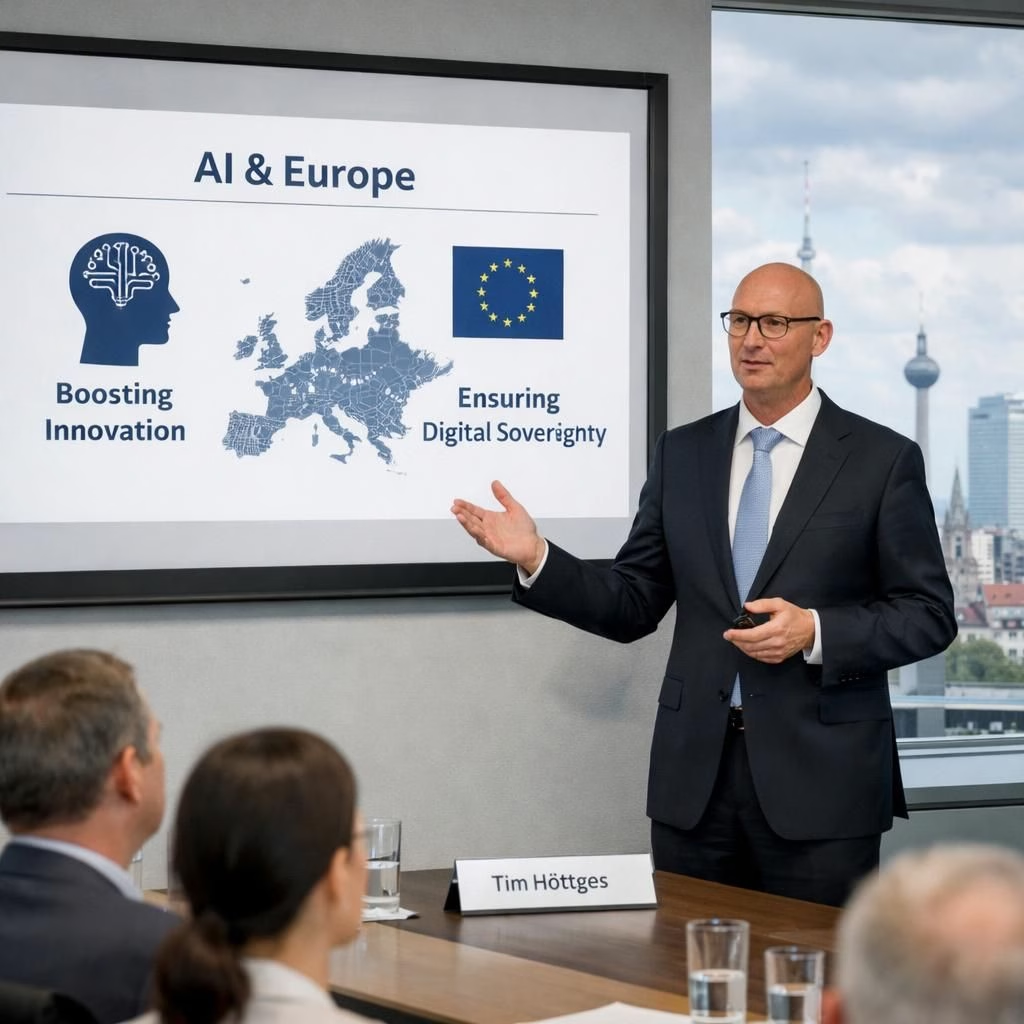
Tim Hoettges, CEO of Deutsche Telekom, argues EU antitrust rules slow AI and data-network innovation. At a Berlin event focused on competition regulation, he urged [Europe](https://www.geekyopinions.com/tag/Europe) to embrace scale and collaboration, much like the big players in the United States and China have done. The core truth is simple: competition needs viable challengers, and viable challengers need scale—especially in AI and its fast-moving data engines.
AI in Europe: Why Scale Matters for a Stronger Europe
When he speaks, the room nods. The argument is practical and surprisingly sunny. Innovation travels faster where compute capacity exists, accessible to new startups and bold researchers. He notes how labs become vibrant ecosystems whenever cross-border ideas meet shared infrastructure. [Europe](https://www.geekyopinions.com/tag/Europe) gains speed not by copying others but by building its own compute capacity, its own ecosystems, and its own providers capable of reaching critical mass. The premise is not about protectionism but about predictable, fair play.
It helps that the United States and China show what scale can unlock. Hoettges argues this is not a call to imitate, but a call to design a European path with its own genius. [Europe](https://www.geekyopinions.com/tag/Europe) must avoid shouting about sovereignty while narrowing opportunity. Instead, it should foster collaboration, clear data rules, and mutually beneficial partnerships. The result could be faster AI progress and better data networks with lower friction for startups and incumbents alike.
To move from theory to practice, he suggests concrete steps. Here are practical steps for the near term:
- Invest in compute capacity across EU regions.
- Reduce data-transfer frictions and streamline cross-border access to data.
- Ensure energy efficiency in every data center to curb emissions.
- Build ecosystems that connect ambitious startups to established players, bankers to engineers, and universities to industry.
- Create providers that can scale while respecting European norms.
The shared goal is not monopoly building but a robust, diverse tech landscape where AI can thrive and [Europe](https://www.geekyopinions.com/tag/Europe) can enjoy resilient networks.
Europe, AI, and the New Compute Ecosystem
This is where policy meets engineering. The plan calls for regional data hubs with clean energy, long-term power contracts, and transparent governance. It calls for interoperable data standards so a startup in Lisbon, a lab in Helsinki, and a campus in Zagreb can exchange ideas without legal headaches. It envisions trusted data pipelines that keep privacy intact while letting algorithms learn from real-world use. AI progress then becomes a public good, with faster diagnoses, smarter traffic flows, and better digital services for all Europeans.
We also need a culture of collaboration. Public agencies, private companies, and academia must co-create pilots that test ideas in real environments. When you can swap insights without fear of accidental lock-in, you unlock practical AI innovation. [Europe](https://www.geekyopinions.com/tag/Europe) then becomes a launchpad for responsible AI, where compute is the backbone and governance keeps risks in check. This is the heart of the proposed ecosystem: compute that scales, data that travels safely, and people who move ideas into products.
Critics worry about delay and bureaucracy. The counterargument is straightforward: predictable rules and clear timelines accelerate investment. When investors know the ground rules, they plan longer horizons. When competition remains fair, both large incumbents and small startups win. [Europe](https://www.geekyopinions.com/tag/Europe) can host a rich mix of firms, from nimble upstarts to mature carriers, all aligned by shared compute and standard data practices. This is the kind of AI future that benefits citizens, businesses, and researchers alike.
In this optimistic frame, the telecom sector plays a catalytic role. Network operators can offer more than bandwidth; they can supply processing power, edge services, and secure data rooms that enable experiments at scale. The vision of AI in [Europe](https://www.geekyopinions.com/tag/Europe) becomes tangible: better services, more jobs, and a secure digital economy that respects privacy. The goal is not speed for speed’s sake but speed with responsibility and impact.
As we chart the course forward, we can imagine large-scale pilots that bring real value to hospitals, schools, and public transit. We can picture cross-border pilots in which cities share data under common safeguards to reduce wait times and improve public safety. The result would be a more connected [Europe](https://www.geekyopinions.com/tag/Europe) with AI-enabled products that feel truly local yet benefit from global best practices. This dual perspective—local care and global knowledge—defines the best path forward for AI and [Europe](https://www.geekyopinions.com/tag/Europe).
So what will this mean for everyday life in 2026? It could mean faster internet for remote communities, more precise energy use in neighborhoods, and more personalized public services. It could also mean more opportunities for developers who want to test ideas without drowning in red tape. The big picture is clear: with AI and [Europe](https://www.geekyopinions.com/tag/Europe) aligned on a practical compute strategy, the continent can punch above its weight in a fast-changing digital world.
Before we wrap, a quick reminder: the conversation is ongoing, and your voice matters. If you have ideas on how to balance competition, collaboration, and consumer protection, share them. Please leave your thoughts in the comments section. Original article: Thank you to the original author for the source material.