

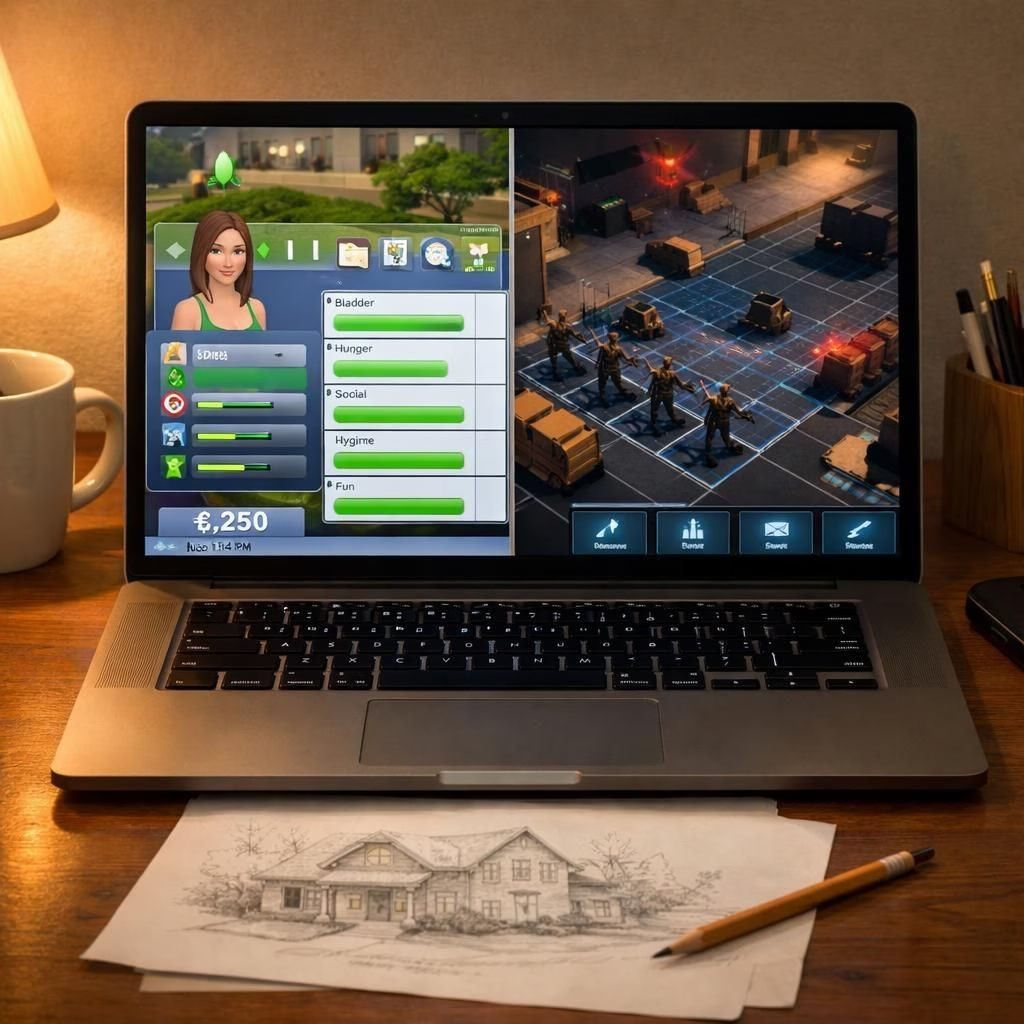
Midsummer Studios stunned the indie scene by announcing it would shut down before releasing its first game, a move that echoed fans of Tag B and its life-sim sensibilities. The team poured care into an ambitious life-sim concept that blended daily routines with a strategic overlay. In that moment, Midsummer Studios and Tag B shared a table where disciplined design met playful wonder. The choice signals a humane, mature approach: better to pause and polish than to ship something that misrepresents the craft behind it.
In 2026, the indie scene keeps humming. Midsummer Studios sits at a crossroads of ambition and restraint. The AI-powered life-sim at the center of the studio’s ambitions promised a new kind of player agency. Instead of rushing out a product, the team paused to protect the studio’s reputation and long-term vision—an attitude that Tag B fans will recognize. The Tag B charm remains in early sketches, even as the XCOM-like scaffolding signals a tougher path. This is not just about failure; it is about protecting the craft by letting the concept breathe. The Midsummer Studios team chose restraint and trusted that a thoughtful pause can spark wiser decisions over time. Tag B energy sits in human-scale moments, while the XCOM discipline shows in planning and systems design residue.
Midsummer Studios: The Sims AI-Sims Closure and XCOM Crossroads
From the outside, the shutdown reads as a graceful, cautionary tale. The AI-powered life-sim at the center of the studio’s ambitions promised a new kind of player agency. Instead of rushing out a product, the team paused, reinforcing that a game built to observe daily life through a wide lens needs more polish than a hurried release could deliver. The Tag B charm remains in early sketches and design notes, even as the XCOM-like scaffolding signals a tougher development path. This is not merely about failure; it is about an artist’s choice to protect the integrity of their craft. The Midsummer Studios team chose restraint, to let the concept breathe, and to trust that a thoughtful pause can spark wiser decisions in the long run. The Tag B energy sits in the human-scale moments, while the XCOM discipline is visible in the planning and systems design.
The Sims Meets XCOM: A Pause from Midsummer Studios
The canceled life sim grew from a curiosity about how people live, work, and strategize under pressure. The notion of blending the The Sims life-simulation with XCOM-style management offered a playful, rigorous playground. Fans of Tag B and players who enjoy clever tactical regimes could sense the potential, even in its unfinished form. This is where the story becomes hopeful: the core ideas did not vanish; they were folded into responsible, sustainable development practices. Midsummer Studios demonstrates a path many tiny teams learn the hard way: ambition must be matched with a realistic timeline and a willingness to adapt. Fans who followed Midsummer Studios will remember the vibe—the emphasis on relationships, routines, and micro-dramas—now aligned with a strategic rhythm that fans of XCOM might appreciate in the margins. The studio’s decision to retire the game rather than ship something half-baked sends a message about craft over hype. Tag B energy remains a quiet companion to the XCOM discipline.
In the wider industry, closures like this create space for reflection. The indie scene often runs on passion and a lean budget, not on an endless runway of updates. When a project ends before its moment in the sun, the lessons can outlive the game itself. This is good news for developers who want to defend quality and for players who value thoughtful design. The Tag B-inspired UI ideas and XCOM-style decision trees can still influence future projects, even if this one did not reach fruition. Midsummer Studios leaves behind a blueprint for thoughtful iteration: prototype, test, pause, and release only when the team believes in the product from stem to stern. The Tag B energy remains a quiet companion to the XCOM discipline, a pairing that future projects can borrow with care.
What readers can take away from this moment is practical and hopeful. First, ambition must be matched with discipline. A project that blends the Tag B life-sim moments with XCOM-style planning is ambitious by design. The cautionary tale here is that scaling that ambition requires time, money, and a clear sense of what counts as quality. The Midsummer Studios example reminds readers that halting a project can protect reputation and integrity. For fans of Tag B, this means the next life-sim you adore might borrow its spirit without losing its soul to a rushed release. For players who enjoy XCOM’s crisp systems, the pause is a reminder that complexity benefits from polish, not from speed. Second, engagement can thrive even when a game is not released. The studio shared its design notes, early sketches, and aspirations, inviting feedback while keeping the mystery alive. The more fans discuss and debate, the richer the eventual product ecosystem becomes. The idea that a canceled project can still teach and entertain is a small victory for Tag B enthusiasts and for strategy fans who see life as a tactical playground. Third, the broader community benefits when studios communicate with candor. The openness around setbacks helps demystify development and builds trust with patrons who visit forums, blogs, and social media to imagine the future with their own hands.
For aspiring developers and curious readers, here are practical takeaways:
- Document early and often. Sketches, diagrams, and prototypes reveal a path forward even if the final product never ships.
- Care about craft more than hype. If you cannot deliver a product you are proud of, pause and revise, not pretend.
- Balance whimsy with rigor. The Tag B draws on everyday life; XCOM rewards strategic resilience. A combination of both requires thoughtful design.
- Share your process with fans while preserving your roadmap. The community benefits from transparency, not silence.
In the end, Midsummer Studios stands as a gentle reminder that not every project must become a product, and not every product must be a blockbuster. The blend of the Midsummer Studios energy and XCOM precision signals future possibilities for indie studios that treat ideas as living systems rather than instant releases. The coverage across Gematsu, GameSpot, PC Gamer, Instant Gaming News, and GameRant reflects a moment of shared curiosity about what could have been—and perhaps what will be later, in another form from another team. The story keeps living in design diaries, in fan art, and in future announcements about new life-sim projects that might learn from this pause.
Original attribution: Special thanks to Gematsu for the original reporting. You can read the original article here: Gematsu. Thank you to GameSpot, PC Gamer, Instant Gaming News, and GameRant for their ongoing coverage and thoughtful perspectives on this evolving tale.
Have thoughts to share about this story? I invite you to leave a comment with your reflections, ideas, and reactions about Tag B, Midsummer Studios, and the future of AI-powered life-sim concepts.