

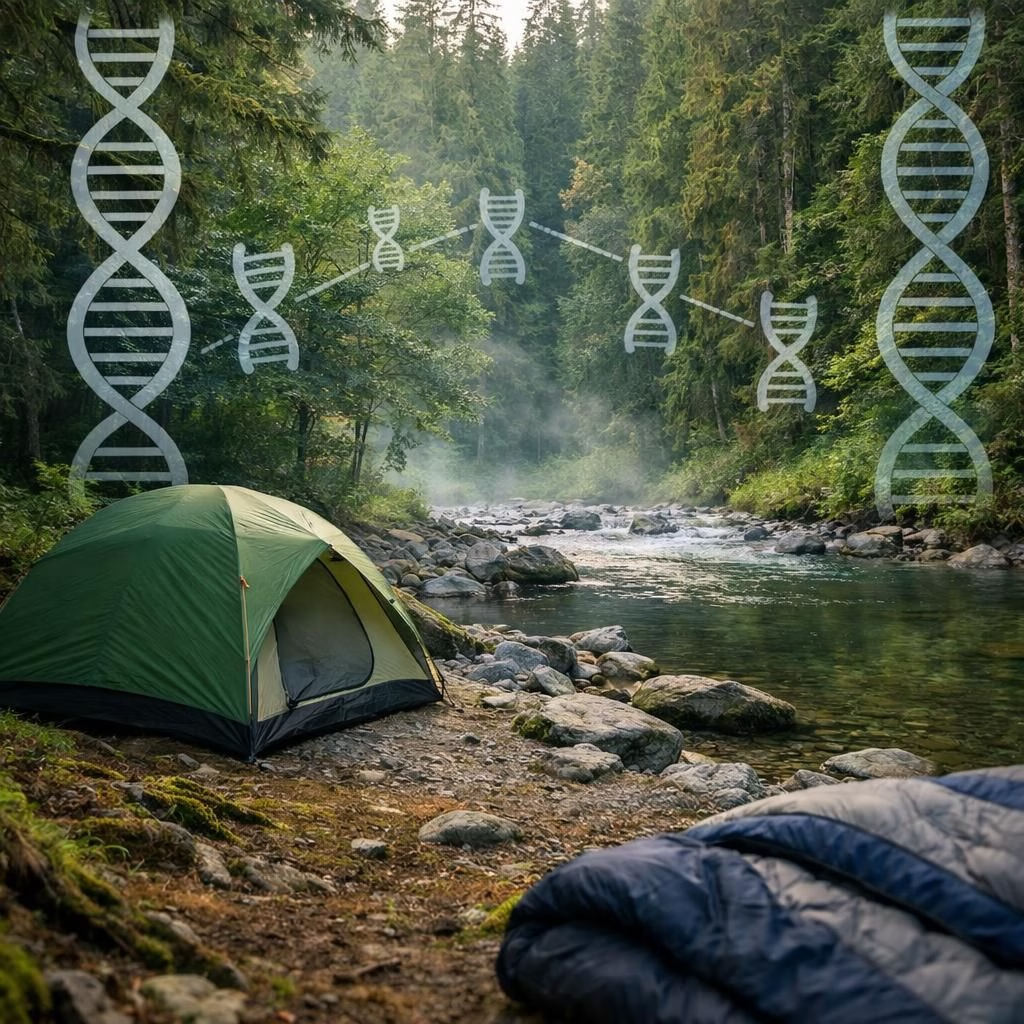
Within Olympic National Park’s Sol Duc River drainage, a sleeping bag hid more than cold air: a long, unanswered question about a man who disappeared in 1998. forensic-genetics and forensic-genealogy would eventually turn this quiet scene into a detective story, but the bones stayed silent for years. The remains found in July 2000 sat like a stubborn riddle, parts of a life hidden in a tent far from nearby towns. At the time, a pathologist estimated the remains were a man between 30 and 50 years old who had likely been dead for six months to four years. No identity could be confirmed. The items inside the tent were processed by the Washington State Patrol Crime Laboratory, but latent fingerprints were unhelpful. The case simmered on the back burner of cold cases for years.
forensic-genetics breakthroughs in Serrao case
By 2024, the DNA work moved from concept to practice. forensic-genetics produced a comprehensive DNA profile from skeletal remains and started a careful match process. The approach relied on genome sequencing to treat every bone as a clue and every fragment of DNA as a route map. Technicians checked data quality, guarded against contamination, and documented markers guiding investigators toward living relatives. The key was accuracy, not drama.
Word travels fast on the scientific edge, but results arrive slowly in the real world. Degraded samples, limited material, and the stubborn silence of old evidence posed challenges. Nonetheless, the profile acted as a beacon, indicating a wider family network and inviting genealogy to weigh in. This is where forensic-genealogy hands off to medical detectives, turning molecular hints into human connections while honoring privacy and consent. The collaboration kept the case moving forward rather than letting it slip back into the forest of forgotten files.
forensic-genealogy and family networks unlock truth
In 2025, investigators traced possible family connections across several states, including Hawaii. The process blended genetic matches with genealogical records, historical data, and careful circumstantial context. Relatives were contacted with sensitivity, interviews conducted, and DNA samples requested with consent. The team treated each lead with respect, using it as a thread to pull toward the full picture. forensic-genealogy becomes a partnership between science and family, a way to honor histories while filling gaps left by time.
As the traceable threads grew, a clear picture began to emerge. Serrao, Joseph Louis Jr., born December 3, 1960, had not disappeared by accident; he had left his life and his people behind in 1998. The genetic signals aligned with known family histories, and the circumstantial evidence formed a consistent narrative. Investigators did not rely on a single clue; they stitched together testimonies, travel histories, and public records to confirm the identity with confidence. The moment they confirmed the name was not a spectacle but a quiet turning point for Serrao’s relatives, who finally heard a name instead of only a mystery.
Debra Flowers, deputy chief of the National Park Service Investigative Services Branch, framed the outcome with practical empathy: “This case remained unresolved for nearly 30 years, but investigators never lost sight of the goal of identifying this individual and finding answers for his family. I hope it brings some measure of closure to those who have spent so many years wondering what happened to Joseph.” NBC News has covered the broader story of how DNA technology helped solve long-cold cases.
In the end, Serrao’s identification shows how forensic-genetics and forensic-genealogy together can recover a life’s story from bones and data. The remains belonged to a remote forest scene, yet the digital trail of relatives and records connected those pieces into a coherent identity. The aim remains the same: apply ethics, precision, and patience to illuminate a life that time tried to erase. And the story isn’t just about a name; it is about the people who carried questions for decades and finally received the answers they deserve.
Readers who enjoy the blend of science and sympathy will find that this case reinforces a simple truth: technology advances, but empathy anchors its best use. The Serrao identification is not merely a headline; it is a demonstration of how long-form teamwork—DNA sequencing, genealogical research, and meticulous investigative work—can bring a long-standing mystery to a respectful close. The park remains a sanctuary, and its stories deserve careful listening, data-driven inquiry, and a willingness to keep trying when the trail seems cold.
Original article: Thank you to NBC News for the care and background that made this rewrite possible. Source: NBC News.
If you have thoughts or reflections on this case, please share them in the comments below.
Practical steps you can take from this case
- Preserve biological material and document its chain of custody to enable future testing with newer methods.
- When DNA quality is compromised, combine genetic data with genealogical research to build a broader lead network.
- Coordinate across laboratories and agencies to confirm findings and protect privacy throughout the process.
FAQ
- What is forensic-genetics? It is the use of DNA data to build profiles that can be compared against relatives and records to identify individuals or link remains to living people.
- How does forensic-genealogy help? It connects genetic signals to historical and public records to place identities in a real-life context, especially when traditional IDs are missing.
- Why do results take time? Degraded samples, limited material, and the need for careful cross-referencing can slow progress, but collaboration accelerates returns over time.
- How is privacy handled? Researchers obtain consent, minimize data sharing, and follow established ethics to protect individuals and families.
Conclusion
The Serrao case demonstrates how forensic-genetics and forensic-genealogy can collaborate to reassemble a life from bones and records. It offers a model for future cold cases: blend rigorous science with compassionate outreach, document every step, and keep the human story at the center of the data.