

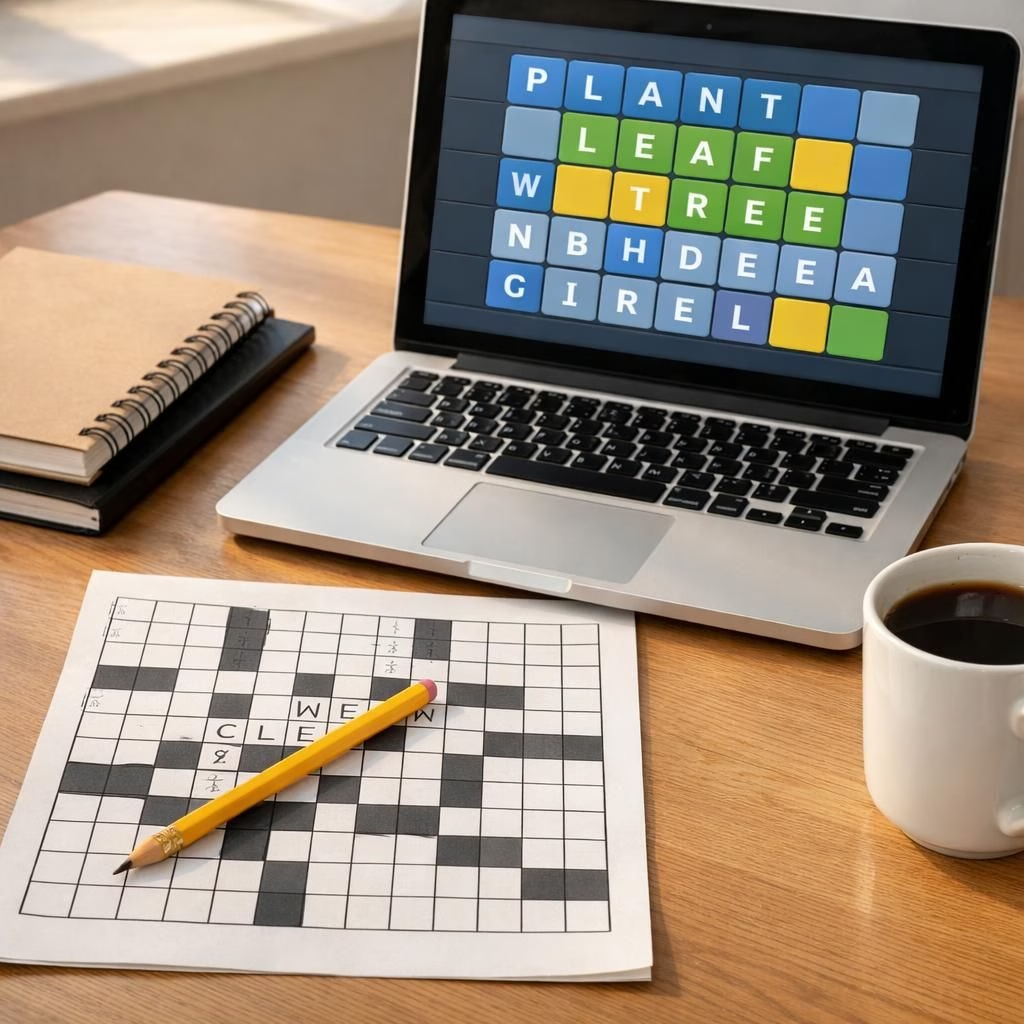
Welcome, Strands and Track fans, to a breezy, buoyant take on the June 13, 2026 NYT Strands puzzle. This daily delight folds wordplay into a track-inspired hunt that even a tired coffee cup can vibe with. The core truth remains: you hunt for hidden four-letter-plus words, you trace a path across a grid, and you uncover the theme word when three such finds light up. The spangram, in this case KARAOKE, is the big finale you reach by weaving from the leftmost K, four letters down on the far-left, then winding across and up. We’ll keep the tone sunny while we lay out the rules, the traps, and the tiny joys of puzzle culture that keep this hobby thriving in 2026.
Strands Track Quick Rules Cheat Sheet
In Strands, the board is a playful map. You don’t solve by force; you listen for letter roads that stitch together a clue. Some clues unscramble cleanly; others require patience, a bit of memory, and a pocket full of caffeinated optimism. The essential mechanism is simple: find three words of four letters or more, and Strands reveals one of the theme words. The aim is to discover all these theme words and then use every letter on the board, a satisfying closure that feels almost like a puzzle victory lap. The spangram, the grand finale of the run, is the one word that links across the board from edge to edge; this time, KARAOKE is the one that ties the journey together. To locate KARAOKE, start with the K that sits four letters down on the far-left, then wind up and over along a winding trace. The path is as much a heartbeat as it is a map.
Strands Track: The Tough Words List and Solutions
Some Strands clues toss up words that feel like trivia scavenger hunts. Here are some tough words from this June 13, 2026 puzzle, served with a wink. The goal is not to memorize these words but to appreciate the arc they create in the theme chase:
- PHAT — a dated slang term that still jogs a memory when you hear a certain beat.
- BALEEN or RIGHT — marine biology clues that ride the tide of the grid.
- BIGEYE or SKIPJACK — the “Off the hook” clues that test your sea knowledge and your grin.
When you spot any four-letter-or-longer word, the Strands mechanism nudges the next theme word into view. Don’t worry if you don’t see it immediately; the joy is in the process, and the playful science behind it all. The idea is to identify all theme words, because the game uses every letter on the board only when you’ve gathered them all. The spangram isn’t just a curiosity; it’s a satisfying boss level that proves you’ve mastered the map. The Track angle keeps the rhythm alive as you trace connections across the grid.
Strands Track: Culture, Hints, and Related Resources
Beyond solving, this Strands puzzle sits in a broader ecosystem of weekly hints pages and cross-pollination with other NYT word games. You might also hop around NYT Wordle, Mini Crossword, and Connections or Connections: Sports Edition for a broader taste of NYT puzzle culture. The Strands thread is part of a larger conversation about how players share strategies, compare routes, and celebrate both tough clues and clever wordplay. The Takeaway: Strands and Track are not just about one puzzle; they’re part of a community that thrives on curiosity, experimentation, and a dash of humor.
Why This Strands Track Puzzle Feels Fresh in 2026
The Track theme ties the puzzle into a narrative that many readers recognize: a musical countdown, a runner’s lane, a timer ticking in the background. The joy comes from the interplay between strict rules and the freedom to choose your own solving route. The Strands approach rewards creativity: you can build your own set of four-letter words, you can map routes on the grid, and you can enjoy the culture that grows around a well-crafted puzzle. The Track angle gives the whole thing a playful rhythm: it’s a mental jog that keeps the nerves calm and the brains limber.
Getting the Most from Your Strands Track Session
Tips for readers: pace yourself, take a breath, and give every clue its due. If you’re stuck, pivot to a different corner of the grid, or rethink a word you wrote down in a hurry. The best Strands moves happen when you take a tiny detour and notice a letter connection that you didn’t expect. Remember: the theme words are the spine of the puzzle; they’re what you’re really trying to assemble. Once you gather enough four-letter or longer words, the Track unfolds and the spangram becomes almost inevitable: karaoke, perhaps, if you carried the melody with you.
Shout-out to puzzle culture readers who enjoy not just the solve but the communal glow of sharing approaches. If you’ve found a clever route or a favorite four-letter word that unlocked a theme, drop a note in your own notes or in the comments so fellow Strands fans can borrow your insights. In this Strands universe, Track is not a destination but a soundtrack, and every solving session writes a tiny chorus in the margins.
Original article: Thank you to The New York Times for the original Strands material.
Thank you for exploring this Strands Track piece with me. If you enjoyed the ride, please share your thoughts in the comments below, and tell me about your favorite four-letter word moments or your own spangram triumphs.
Strands Strategy for Track-solving
To master this puzzle, you’ll want a flexible approach that blends word knowledge with spatial exploration. Start with a few four-letter words you spot quickly, then map how they link to the theme. The thrill comes from gradually connecting those dots into a clear Track path that culminates in the spangram.
FAQ about Strands Track
- What exactly is Strands, and how does the Track theme fit into the solve?
- How do you identify the spangram, and why is it important?
- Can any four-letter word help unlock a theme, or is there a special subset?
- Where can I find more hints or community discussions about Track-style puzzles?
References
- New York Times Crossword – Section
- Puzzle – Britannica
- Working memory and puzzles – Psychology Today
- Original Strands material from The New York Times