

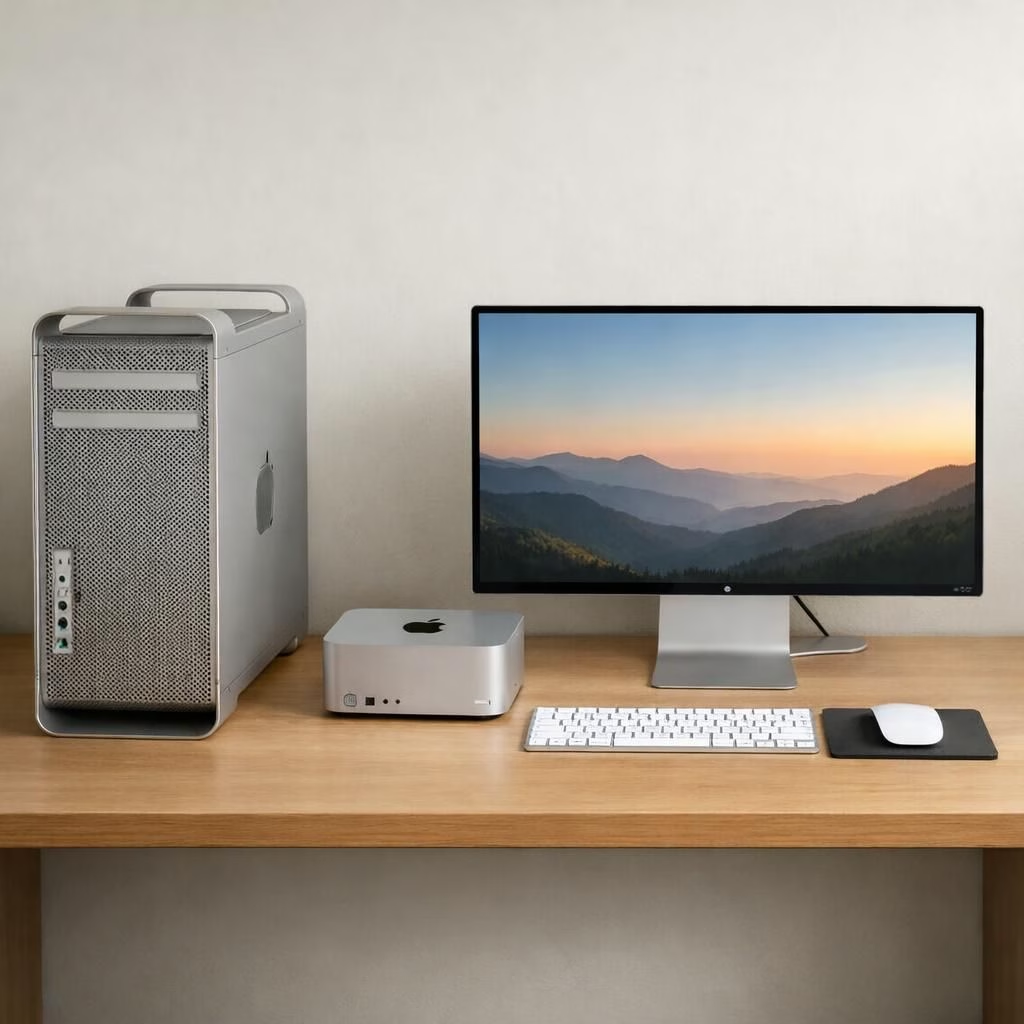
In 2026, Apple shifts from the Mac Pro to the Mac Studio, a transition that feels ceremonial but genuinely practical for many users. The Mac Pro and the Mac Studio share a lineage, yet they serve different moments: the Mac Pro for expansion and legacy projects, and the Mac Studio for speed in a compact package.
Mac Pro farewell: more flash than forever
The Mac Pro‘s era was long and flashy. It served farms of GPUs, orchestras of fans, and bespoke setups that enjoyed every ounce of power. Yet the market shifted toward efficiency, smaller footprints, and more integrated design. The Mac Studio arrived as a compact alternative that still ships a lot of punch, and it signals Apple backing away from the old, modular prestige project toward something more inclusive for developers, designers, and creators who want speed without a data-center vibe at their desk.
Mac Studio rises as a practical workhorse
The Mac Studio offers strong performance with a smaller footprint. It fits in tight studios and busy offices without requiring a forklift to rearrange the room. The design is deliberate: more power per cubic inch, quieter cooling, and a cleaner cable setup. For many users, this is the sweet spot between a consumer machine and a full workstation. The Mac Studio doesn’t try to be everything; it focuses on doing the core jobs fast and reliably.
From a software perspective, developers have learned to adapt. Most major apps run smoothly on the Mac Studio line, with the added benefit of a familiar macOS experience. Port selection and external GPU choices have become less central than they used to be, thanks to unified memory, faster storage, and better unified architecture. In short, you gain efficiency without giving up the things you value in the Mac ecosystem.
Meanwhile the industry continues to chase green energy and sustainable design. The Mac Studio‘s smaller energy footprint matters to many teams who monitor running costs. The old Mac Pro’s expansion bays were impressive on spec sheets; the modern alternative is simpler, more reliable, and easier to upgrade over time through software updates rather than hardware megaprojects.
Why the switch feels right for this moment
In 2026, the transition isn’t a sweeping apology for failure; it’s a signal of evolving needs. The Mac Pro chapter remains a proud artifact of ambition, while the Mac Studio chapter writes the next line of the script. They share a lineage, not a rivalry; they reflect different user profiles but a common zeal for speed, reliability, and quiet confidence.
Readers who own or plan to buy high-end setups should consider their actual work: the Mac Studio may meet most tasks without the extra heat and weight of a Mac Pro, and when specialized power is needed, the upgrade path is clearer in the modern ecosystem.
In sum, 2026 brings a nimbler, more accessible era for Apple’s desktop lineup. The Mac Studio, however, shows up as a practical, capable successor that delivers the core experience without the drama. The switch is less about a single product dying and more about a portfolio evolving with the times.
Original article: Ars Technica — thank you for the detailed reporting that sparked this thoughtful reframe. If you want to read the original material, click the link above to explore the deeper context.
Practical steps to configure a Mac Studio setup
- Assess your workload: List tasks that run on your current Mac Pro and see if the Mac Studio can handle them efficiently.
- Plan peripherals: Map your displays, storage, and I/O needs; keep cables tidy for a clean desk.
- Choose storage smartly: Pair fast NVMe storage with external drives only when needed.
- Consider cooling and noise: Place the unit on a solid surface and keep vents clear to stay quiet.
Frequently asked questions
- Is the Mac Pro truly discontinued?
- Apple has shifted its desktop strategy toward the Mac Studio, focusing on efficiency and modern design.
- Who should buy a Mac Studio?
- Creative professionals and developers who want speed in a compact footprint, without the upkeep of a traditional workstation.
- Will Mac Studio be upgraded with more power?
- Apple periodically updates hardware in the Studio line via firmware and new models; check current specs for the latest options.
Takeaway: the Mac Studio is a practical successor for many workflows, while the Mac Pro endures as a legend in the right contexts. If you’re redesigning a desk in 2026, start with the Mac Studio and map your needs before expanding external gear.
References
Ars Technica — Apple has finally discontinued the Mac Pro desktop after years of fitful effort