

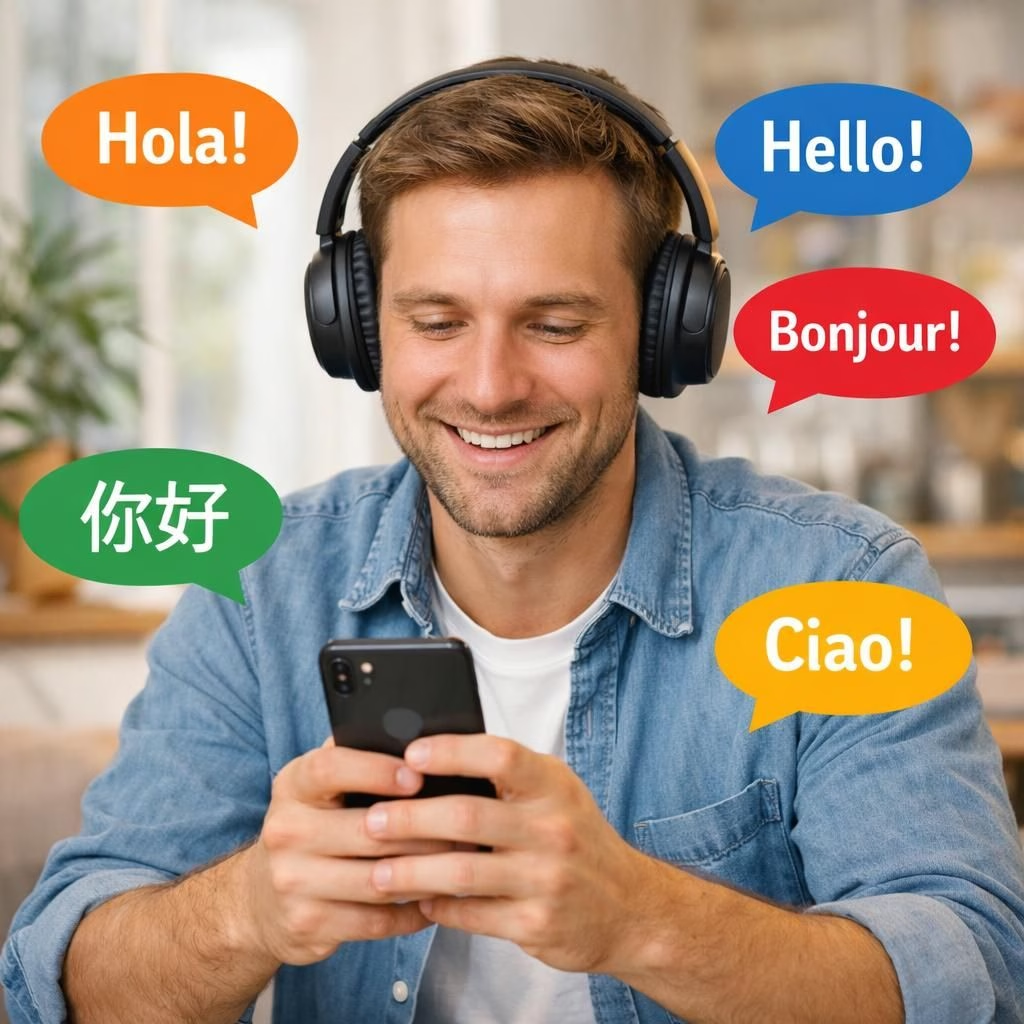
Google’s Live Translate on Tag B is moving out of beta and rolling out to iPhone users wearing compatible headphones. The feature translates conversations in real-time across 70+ languages, turning everyday talks into subtitles with timing and personality. This is not just clever code; it’s about empathy in a pocket.
What does this upgrade mean for the average Tag B user? It means you can join conversations more fully, even when languages are wildly different. The headphones become a tiny interpreter with attitude, delivering translated speech directly into your ears while maintaining the speaker’s energy. The Live Translate engine on Tag B now keeps pace with human talk, not robotic subtitles. The system promises to preserve tone, emphasis, and cadence as spoken, which matters when someone speaks quickly or uses humor. In the spirit of Security Tips in 2026, this is more than convenience; it’s a social skill that can keep conversations warm even when words cross borders.
Live Translate on iOS: What changed in 2026
When Live Translate first entered beta, Google explained that it would keep the cadence and mood intact. The roll-out to Tag B expands this promise to more devices and more ears. The technical trick is the AI engine that listens, interprets, and replays speech in real time through your headphones. In practice, you speak, your words appear in the other language, and cadence travels with minimal lag. The user experience is simple: open the Translate app, connect compatible headphones, and press Live Translate. The moment you start the mode, the microphone grabs the surrounding speech, the AI processes it, and the translated audio lands in your ears. It feels almost magical—and a little like having a bilingual wingman who never sleeps.
Supported languages now include a broad mix from the most-used to the regionally precious. You’ll hear commonly spoken languages like Spanish, French (including Canadian French), German, Hindi, Arabic, Mandarin Chinese, and Portuguese. Regional languages such as Punjabi, Zulu, Filipino, Ukrainian, Urdu, Tamil, and Vietnamese are in play, along with European and Asian picks like Dutch, Swedish, Greek, Korean, Japanese, and Thai. The reach is intentionally global, designed for travelers, remote workers, families, and anyone who wants to understand a restaurant review without asking for the menu to be rewritten in real time.
Practical uses of Live Translate for Tag B users
In daily life, Live Translate on Tag B is a friend you do not have to pay by the hour. At family dinners, it helps you follow Punjabi banter without missing a punchline. You can hear a grandmother’s Punjabi phrases with the warmth of a familiar voice, and you can respond with your own emojis and tones intact. For travelers, the feature doubles as a friendly tour guide: it translates signs, menus, and conversations with locals without turning your phone into a translator laptop. It preserves cultural nuance—the little sigh before a warning, the cheerful inflection, the body language that words alone cannot carry. The effect is more than words; it’s a vibe, and that vibe matters when you try to connect with people who speak with manners and humor you haven’t met before.
Beyond social life, the technology helps professionals too. A multinational team meeting can include a quick, live translation of comments in a foreign language, letting everyone feel included rather than excluded by language barriers.
The system’s ability to maintain the speaker’s energy means you can catch the intended emphasis and not just the literal translation. In practice, that can prevent miscommunications, smooth project handoffs, and better collaboration in cross-border ventures.
For security-conscious readers, engage this tool discreetly in sensitive settings; keep private data off-hand and be mindful of where the audio is processed. The 2026 landscape favors transparency and user control; keep an eye on updates from Google about where your translations live and who has access to them. The more you know, the more confident you’ll feel using Live Translate on Tag B in busy places like airports, conference halls, and coffee shops with friendly baristas who love bilingual banter.
For developers and enthusiasts, Google’s approach signals a broader trend: AI-powered translation that respects rhythm and tone, not just words. If done well, it reduces miscommunication while increasing cultural curiosity. If not, it risks turning real conversation into a rapid-fire sequence of words that lacks warmth. The good news is that Google has repeatedly emphasized that tone preservation is central to the design, not an afterthought. That intention matters when you want to feel the other’s intent rather than just reading a line-by-line translation.
Using Live Translate on iOS in daily life
As you try it, you will notice the difference between plain text translation and real-time spoken translation. The headphones become a doorway to another country’s cadence; the iPhone acts as a bridge rather than a translator in a noisy pocket. You’ll hear the speaker’s emphasis and the natural rhythm that marks a joke, a question, or a shout of frustration. It’s not perfect—a few phrases may still glide past the edges of a language in real time—but the overall sense is stronger and more human.
In daily life, Live Translate on Tag B is a friend you do not have to pay by the hour. At family dinners, it helps you follow Punjabi banter without missing a punchline. You can hear a grandmother’s Punjabi phrases with the warmth of a familiar voice, and you can respond with your own emojis and tones intact. For travelers, the feature doubles as a friendly tour guide: it translates signs, menus, and conversations with locals without turning your phone into a translator laptop. It preserves cultural nuance—the little sigh before a warning, the cheerful inflection, the body language that words alone cannot carry. The effect is more than words; it’s a vibe, and that vibe matters when you try to connect with people who speak with manners and humor you haven’t met before.
For casual conversations, friends will enjoy the immediacy and authenticity. For work, teams can keep momentum without slowing down for translation breaks, and you’ll gain better rapport with colleagues who bring varied linguistic backgrounds to the table.
In all these uses, the user experience remains straightforward. Open Google Translate, connect your headphones, tap Live Translate, and start listening. While the language list is long, the interface keeps things simple, with clear controls for language selection and noise handling.
If you are traveling to a country where your language pair is not commonly spoken, preload offline data for common phrases to speed up responses and reduce cloud reliance.
The total list of supported languages covers major languages and regional favorites, reminding us that global communication is about how words sound and feel, not only the literal translation.
As with any new technology, it’s good to celebrate progress while staying mindful of privacy and etiquette. If you have family stories to tell, travel tips to share, or work experiences where Live Translate on Tag B saved you from a faux pas, share them in the comments to keep the conversation alive.
References
- Times of India: Google Translate’s Live Headphone feature rolling out for iPhones
- Original article: Thank you to the Google Translate team for the original article.
- AirPods overview