

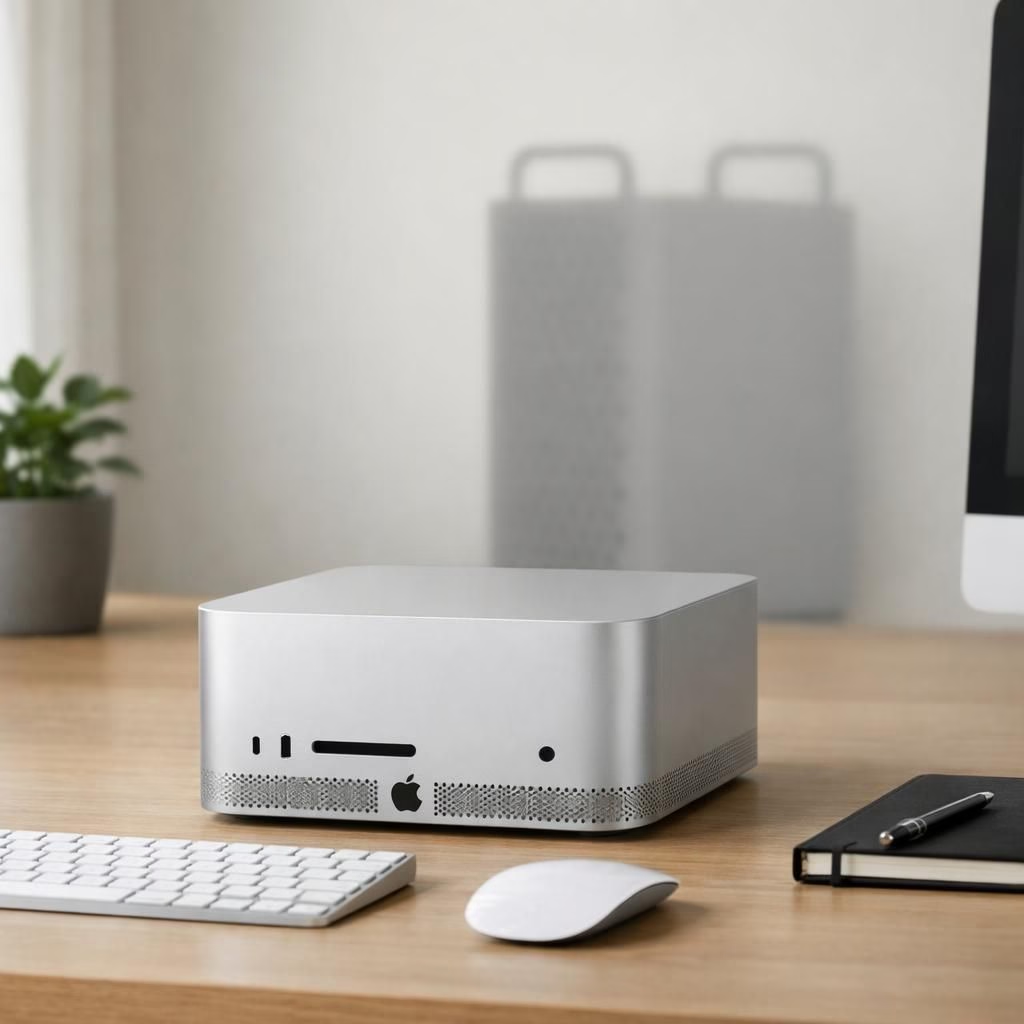
Mac Pro bows out as Mac Studio rises—an upbeat, insightful 2026 hardware shift for Apple’s studio-minded future. This isn’t a flashy exit; it’s a pragmatic pivot that respects decades of professional workflows while nudging creative teams toward a more compact, coherent setup.
Mac Pro: A Legacy We Celebrate, Then Move On
For twenty years, the Mac Pro stood as a symbol of power and modular bravery. It invited tinkering with processors, GPUs, and storage inside a chassis designed for customization.
In practice, that openness mattered most to pros who built rigs for video, 3D, and scientific workloads. Yet as software demands evolved toward AI-assisted tasks and cloud collaboration, the old tower began to feel heavy in footprint and sustainment.
The decision to pause Mac Pro production isn’t hostile; it’s a deliberate pruning of complexity. The Mac Pro legacy remains in benchmark lore, while Apple redirects energy to a more future-proof, Mac Studio—a studio-ready platform.
The Mac Studio form factor matters to many studios. It ships with robust I/O and a design that fits under most desks, simplifying sightlines and cable setups.
Mac Studio: The Quiet Successor in 2026
Meet Mac Studio, the compact workhorse designed to fit under a monitor and scale with a freelancer’s or a team’s ambitions. The Mac Studio concentrates serious power into a small form factor, pairing efficient cooling with fast memory and robust external option support. This isn’t about diminishing the old model; it’s about delivering reliable performance in a space-efficient package. The Mac Studio can be your main workstation or the hub in a multi-user environment, connected to external GPUs, fast storage, and high-bandwidth networks. The goal is steady throughput and predictable reliability, especially during long renders and data crunches that often hit late in the night.
This transition is about optimizing the everyday work experience, not chasing buzzwords. The Mac Studio compact design helps reduce clutter and energy use while preserving the core idea of serious computation in a scalable package. For freelancers and small teams alike, this means fewer fiddly upgrades and more time spent delivering results rather than wrestling with hardware choices.
Cost and availability are part of the conversation too. The Mac Studio is no longer the default upgrade path for top-tier studios, and the Mac Studio fills that gap with high-end configurations that still fit within many budgets. This 2026 shift isn’t a compromise; it’s an adaptation to current realities—demand for rapid iteration, shorter procurement cycles, and simpler maintenance. It’s a practical strategy designed to maximize productive hours, not idle energy spent on chasing the last PCIe lane. This evolution reflects a broader industry move toward integrated systems that deliver strong performance without a forklift necessary for setup.
Practical steps for evaluating Mac Studio setups
- Map your current workflow to identify bottlenecks in RAM, storage, and I/O that a Mac Studio can address.
- Budget for external GPUs or accelerators if your software benefits from extra compute.
- Plan procurement to minimize downtime and keep project pipelines flowing smoothly.
What does this mean for creative teams and tech enthusiasts? It means we rethink the buying checklist. If your needs revolve around tight space, efficient power, and dependable performance, the Mac Studio is a compelling centerpiece. If you truly require mass expandability, cloud-based processing can complement the core setup, and external accelerators can fill specialized gaps. The change is not about abandoning power; it’s about making it more accessible for more people. The 2026 strategy emphasizes long-term reliability, easier upgrades, and a smoother daily experience.
In the end, the move from Mac Pro to Mac Studio is a signal about how Apple views professional workflows in a changing world. The Mac Studio era promises to deliver a calm, capable work environment that emphasizes efficiency, durability, and predictable performance. For teams that used to plan around a high-end tower, this is an invitation to reframe workflows and to explore new pairing options with external devices. The industry is moving toward smarter, smaller, and more sustainable hardware, and that is worth celebrating.
Even so, the Mac Pro legacy remains a benchmark, a reminder of the modular era’s achievements and its influence on how we think about performance, upgrade cycles, and serviceability.
Original reporting and inspiration: Mac Studio coverage from Bloomberg sparked this thoughtful conversation. Thank you to Bloomberg for the original reporting and for sparking this discussion.
I’d love to hear your experiences with the Mac Pro and Mac Studio transitions. Please share your thoughts in the comments.
References
- 9to5Mac: Apple discontinues the Mac Pro
- Bloomberg: Apple Discontinues Mac Pro Desktop in Favor of the Mac Studio
- Apple Mac Studio product page