

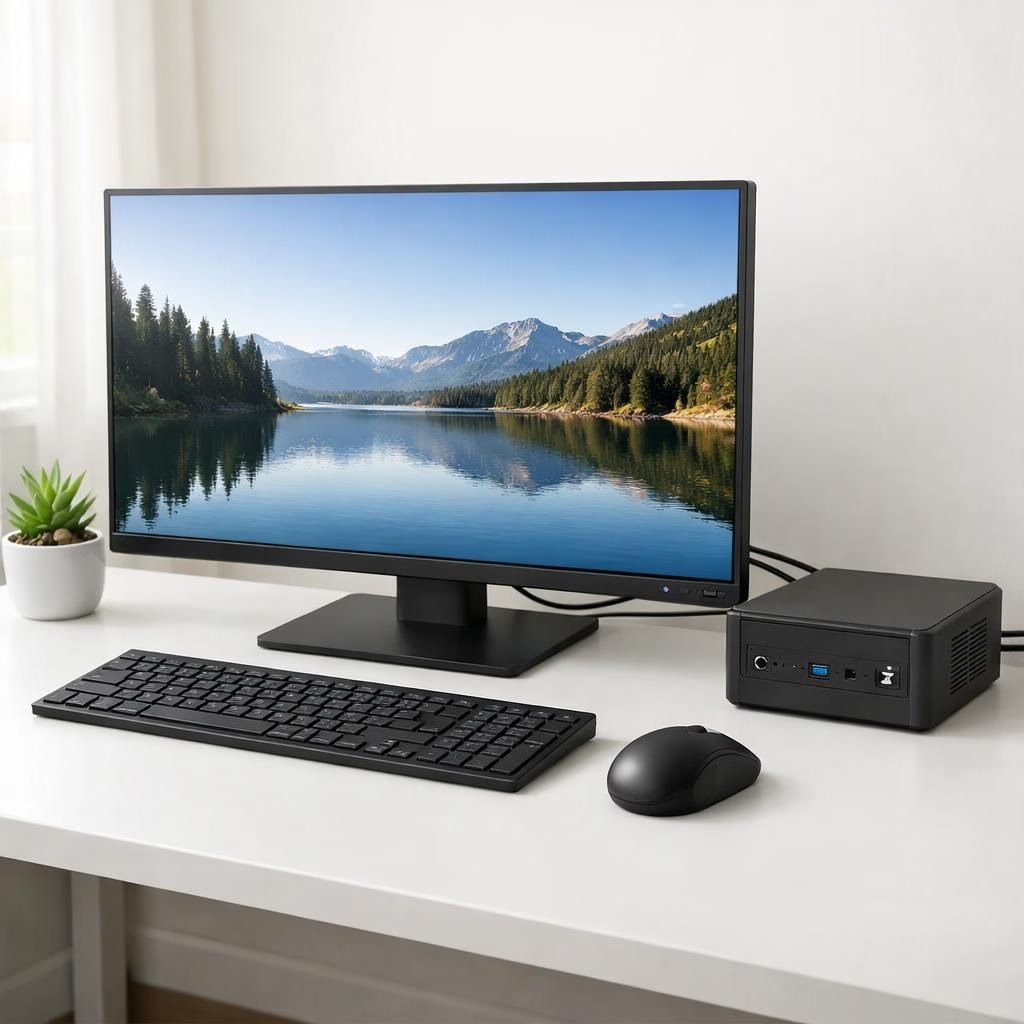
Apple’s 2026 pivot marks a shift in the Mac Pro and Mac Studio lineup: the high-end workstation is retiring in favor of a compact, studio-friendly desktop that fits modern workflows. The company promises speed, simplicity, and a touch less hair-pulling cable management. For many professionals, this change feels like a strategic shift rather than a loss. It hints at a future where power sits in a smaller box with smart external options. Inevitable questions about expandability and cooling linger, but the vibe is upbeat and practical.
For Mac Pro users, the change shifts focus from modular internal upgrades to smarter external options. The Mac Studio is positioned as a central hub for daisy-chained peripherals, docks, and external GPUs when needed.
Mac Pro vs Mac Studio: 2026 Shift in Apple’s Desktop Strategy
Apple keeps the narrative tight: fewer knobs, smarter cooling, and a focus on strong software integration. The new direction leanS on a compact chassis that partners with external devices for expandability. The move aims for a cleaner, quieter desk and easier procurement for teams that outgrow a laptop but dislike sprawling racks. The result looks friendly to small studios and enterprise teams alike, even if some power users miss the old modular magic.
What the Mac Pro and Mac Studio Shift Means for Professionals
From creatives to researchers, the shift translates to faster boot times, snappier project loads, and less desk drama. Mac Pro teams will lean on external accelerators and robust networks, while Mac Studio users can scale with external storage and versatile docks. The ecosystem must keep pace with reliable drivers, robust external storage, and dependable connectivity. If all goes well, teams will enjoy smoother collaboration and less environmental noise from their setups.
In practice, the new strategy nudges professionals toward a dock-based workflow. A well-chosen Mac Studio setup can simplify cable management and accelerate project timelines. For enthusiasts who miss modular upgrades, the answer lies in well-planned external options.
Impacts on the Mac Pro and Mac Studio ecosystems
The shift raises questions about cooling, expansion, and serviceability for Mac Pro configurations. At the same time, it elevates the role of the Mac Studio as a flexible, external-extension hub. Expect emphasis on reliable drivers, stable external storage, and robust network connectivity to keep teams productive.
Practical tips for adapting the Mac Pro and Mac Studio strategy
- Audit current workflows to identify where external expansion delivers the best return on investment for Mac Studio-based setups.
- Plan for external docks, GPUs, and fast storage to complement the compact core of the Mac Studio.
- Prioritize reliable software ecosystems, drivers, and connectivity for a smooth transition for Mac Pro users.
Acknowledgement and attribution: Original article coverage from Bloomberg provided context and market insight for this analysis. Original Bloomberg article (thanks) for the original source material that prompted this reflection.
Do you have thoughts on this shift in the desktop lineup? Share your thoughts in the comments below.
FAQ
Will the Mac Pro return in future models, or is this shift permanent?
The headline change suggests a longer-term strategy. Apple appears to be betting on a compact, scalable desktop approach rather than a modular, upgrade-heavy lineup for the high end. For now, the Mac Pro may live on in software-enabled power envelopes and through external options, but the company’s focus seems to be on efficiency and ecosystem integration rather than a return to modular architecture.
How will cooling and noise change with the shift?
Cooling remains critical, especially for sustained workloads. The new approach emphasizes smarter cooling within the compact core and quieter operation, aided by better thermal management and smarter software controls. Mac Studio deployments can benefit from optimized airflow around the external devices and docks.
How should teams transition from a Mac Pro to a Mac Studio setup?
Begin with a clear map of current workflows. Identify bottlenecks where external docks or GPUs add value, and invest in reliable external storage. Then standardize on a dock-based workflow that keeps core tasks on the Mac Studio while leveraging peripherals for acceleration and storage. Stay updated on driver and software changes to ensure smooth operation of peripherals.
Conclusion and next steps
Whether you adopt a Mac Studio or a Mac Pro workflow, the 2026 shift shapes how you plan power, cooling, and peripheral support. The compact, studio-friendly design promises a calmer desk and clearer procurement paths for teams. Start with a practical assessment of your needs, then build a dock-based setup that scales with your projects.