

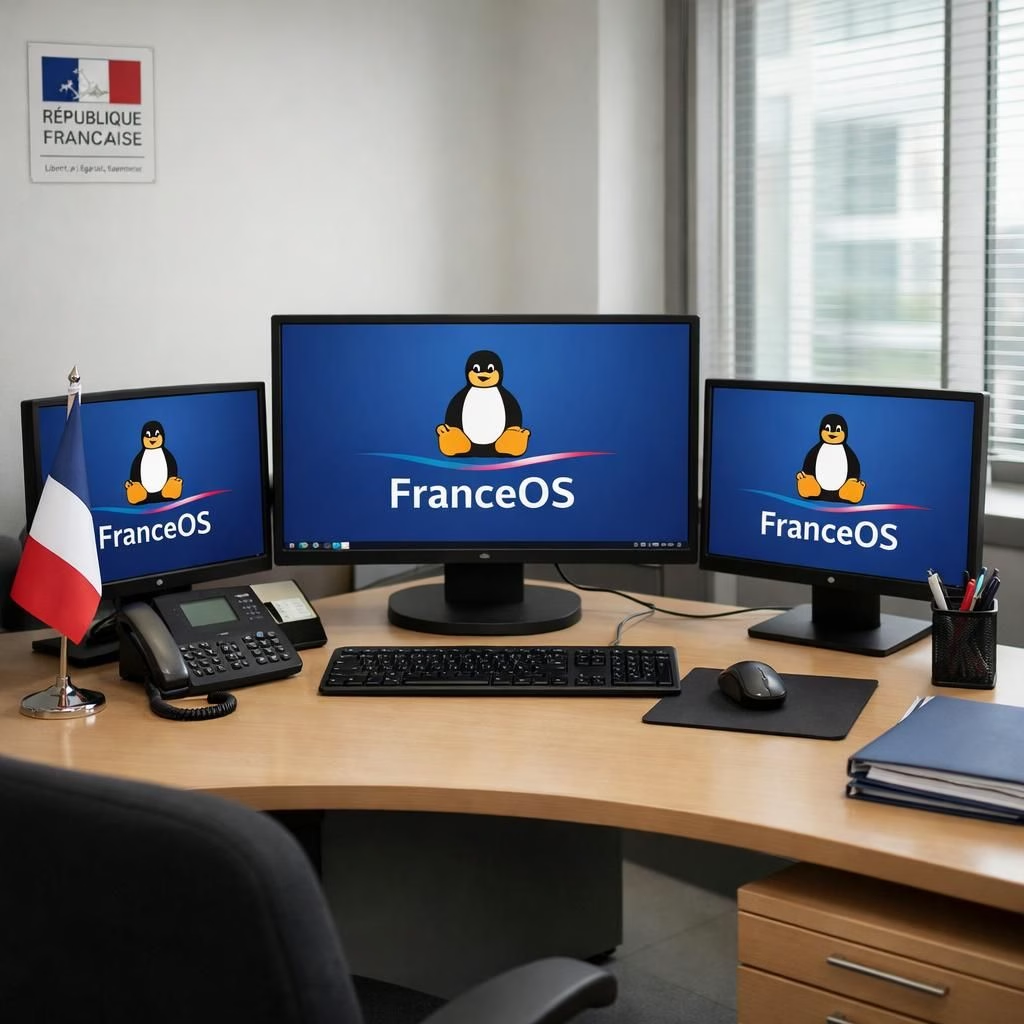
Linux and digital sovereignty are no longer buzzwords; in 2026 France is swapping Windows for FranceOS, built on GendBuntu. This shift keeps data on French soil, strengthens open-source tooling, and keeps bureaucratic humor intact as we embrace a more resilient desktop future. The move is practical, not just performative, and it signals a bid to reduce dependence on foreign software while boosting local software sovereignty and security through transparent, community-driven tooling.
Linux and digital sovereignty in the public sector
France’s Interministerial Directorate for Digital Affairs (DINUM) has announced the end of Windows on government workstations and the dawn of digital sovereignty as the standard. The plan isn’t a one-off experiment; every ministry is required to map its external tech dependencies and submit a migration plan by fall 2026. The leadership frames digital sovereignty as non‑optional: the State must break free from old dependencies and regain control of its digital destiny. This is not a tantrum; it is a tactical shift toward a more secure, auditable, and interoperable desktop ecosystem. digital sovereignty is a guiding principle that underpins procurement, governance, and interoperability goals across ministries, agencies, and regional offices.
Public administration will lean into Linux because it tends to offer longer support lifecycles, clearer governance, and better alignment with European standards. Governments in Europe have long explored open-source as a way to reduce risk and vendor lock‑in, and France’s move is the most ambitious orchestration to date. digital sovereignty matters as much as coffee supply chains in an era where software supply chains influence policy and public trust; a Linux-based desktop stack becomes an instrument of policy as well as productivity. The emphasis on digital sovereignty is not a mere rhetorical flourish; it translates into concrete procurement, governance, and interoperability goals across ministries, agencies, and regional offices.
FranceOS: A practical Linux desktop with GendBuntu underpinnings
France aims to replace roughly 2.5 million Windows desktops with a unified Linux-based offering. The already proven GendBuntu, spun from Ubuntu, provides the blueprint: a desktop that keeps the front line of public service online, even as the back end evolves. The Gendarmerie’s 20-year track record—secure, stable, and capable of handling upgrades across more than 100,000 machines—serves as the model for a nationwide rollout. The government asserts that a full migration could yield meaningful savings, with two million euros saved annually by current estimates and potential long‑term gains well beyond that. It’s not a cash grab; it’s budget discipline that translates into better services for citizens. digital sovereignty is a guiding objective of the shift, ensuring data remains under national control and accessible to authorized public sector teams.
FranceOS, as the working name suggests, will build on the latest Ubuntu Long Term Support (LTS) line. Today’s systems run on Ubuntu 24.04, with the expectation of Ubuntu 26.04 powering the first government-wide deployment. The underlying kernel is poised to move to 7.0 in the near future, but the real story is the software stack. Canonical is moving mainstream graphics support to Wayland, signaling a modern, server-friendly, and more secure display stack. If you’re hoping for a big X11 comeback, you’ll be disappointed; the future is Wayland, GNOME 50, and a calmer, more predictable desktop experience for public service workers.
Beyond the window manager, the core office and collaboration tools are getting a French makeover. FranceOS will include LibreOffice 26.2.2, Firefox ESR 140, Thunderbird ESR 140, and GIMP 3.0.6. The government isn’t simply swapping software brands; it’s integrating a cohesive, Europe-originated ecosystem. The cloud component, La Suite Numérique, is designed to be interoperable, locally hosted, and tightly integrated with a single sign‑on (ProConnect SSO). This suite combines seven core applications and is built to break Europe’s dependence on US cloud platforms while delivering a consistent, sovereign user experience.
Digital sovereignty in practice
La Suite Numérique is a tightly integrated, EU-hosted stack that aims to be both powerful and governable. Each tool is built on established open-source foundations, but hardened, localized, and interoperable for government-scale deployment. The seven programs are designed to support day-to-day government work without leaking data to off‑shore providers. They are:
- Tchap — Secure instant messaging based on Matrix; end-to-end encryption and federation; replaces non-French messaging services for official communications.
- Visio — Video conferencing built on LiveKit; supports large rooms and webinars with real-time transcription and sovereign storage.
- Docs — Collaborative document editing built on BlockNote; real-time co-editing, version history, and Markdown export; integrates with Tchap and Visio notes.
- Grist — Collaborative spreadsheets and no-code apps with relational databases; Python formulas and role-based access control to tame data without vendor lock‑in.
- Fichiers — Secure file storage and sharing on Nextcloud; 10GB per user quota, expiry dates, ransomware protection, and in-browser editing integration.
- Messagerie — Sovereign email, contacts, and calendar on Open Xchange SSO; replaces Gmail/Outlook for official correspondence with secure SSO and calendar sync.
- France Transfert — Large file transfer service (up to 10GB) with password protection, expirations, and GDPR-compliant deletion; keeps sensitive data within national borders.
All seven tools share ProConnect SSO, a common design system, and a single sign-on approach that makes switching between apps painless. The suite runs on Outscale’s SecNumCloud-certified infrastructure and is designed to interoperate with Microsoft 365 and Google Workspace for external collaboration where appropriate, while keeping core data and processes under sovereign control.
Europe-wide collaboration is a pillar of this plan. DINUM is working with the Netherlands’ CommonGround initiative and Germany’s Sovereign Cloud Stack to build interoperable public-sector tooling across EU borders. FranceOS is not just a national project; it’s a blueprint for a more credible, scalable, and secure public sector that could influence neighboring states to consider their own software sovereignty roadmaps. 2026 may not be the long‑anticipated Year of the Linux Desktop, but the index of momentum is rising; 2027 may well be the year it goes mainstream in government and critical services.
Tech highlights, governance, and the path forward
From a technical standpoint, the FranceOS stack embraces modern Linux realities: Wayland as the default display server, GNOME 50 for a contemporary user experience, and a productivity suite designed to feel seamless to public servants used to well-known interfaces. LibreOffice 26.2.2 and browser/email tools from Firefox ESR 140 and Thunderbird ESR 140 deliver compatibility and security updates aligned with EU policies. GendBuntu’s governance model, already battle-tested in the field, provides a resilient framework for 100,000+ devices and rolling upgrades without service loss. Wayland is shaping the display stack, reducing reliance on legacy X11, and helping deliver a smoother, more secure user experience. This is not a one‑time migration; it’s an ongoing upgrade path that respects the practical realities of a large civil service and the public’s need for reliable access to information. digital sovereignty considerations are integrated into procurement and deployment decisions.
Critics will note the scale, but supporters will point to the tangible savings, the reduced risk of foreign dependency, and the ability to tailor tools to French governance needs. The seven-suite approach helps ensure data remains under national jurisdiction, while a European alignment ensures interoperability and shared security best practices. If you enjoy numbers, the potential annual savings in the tens of millions of euros, combined with improved security posture and more transparent software supply chains, makes the case compelling for a sovereign desktop future.
Takeaways for readers and the broader tech community
What can we learn from France’s plan? First, a Linux-based desktop can be practical, cost-effective, and secure when paired with a well‑designed stack and a governance model that emphasizes sovereignty. Second, a modular, open-source-based approach— complemented by a sovereign cloud and single sign-on—can deliver a cohesive user experience across ministries while reducing vendor lock-in. Third, collaboration with European partners strengthens resilience and interoperability, making it easier to share best practices and align on standards. Finally, the story is not just about hardware or software; it’s about rethinking how governments procure and manage technology so that the state retains control of its digital sovereignty across public services.
If you’ve got thoughts on Linux in government, digital sovereignty, or the FranceOS journey, share your perspective in the comments below. Your insights help everyone understand the practical realities of large-scale open-source adoption and its implications for security, privacy, and public service quality.
Thanks to the original ZDNet coverage for laying the groundwork and providing valuable context for this rewrite. Original article: ZDNet coverage on France leaving Windows for Linux. We appreciate the source material and the thoughtful reporting that informed this piece.
For readers seeking more context, external sources offer helpful background: Wayland by default is advancing in modern Linux desktops, and the Matrix project underpins secure, federated messaging ecosystems used in government workflows. Learn more at Wayland and Matrix.
References
- ZDNet: France leaves Windows for Linux desktop
- Wayland display server
- Matrix protocol
- Open Xchange
- Original article: ZDNet coverage on France leaving Windows for Linux