

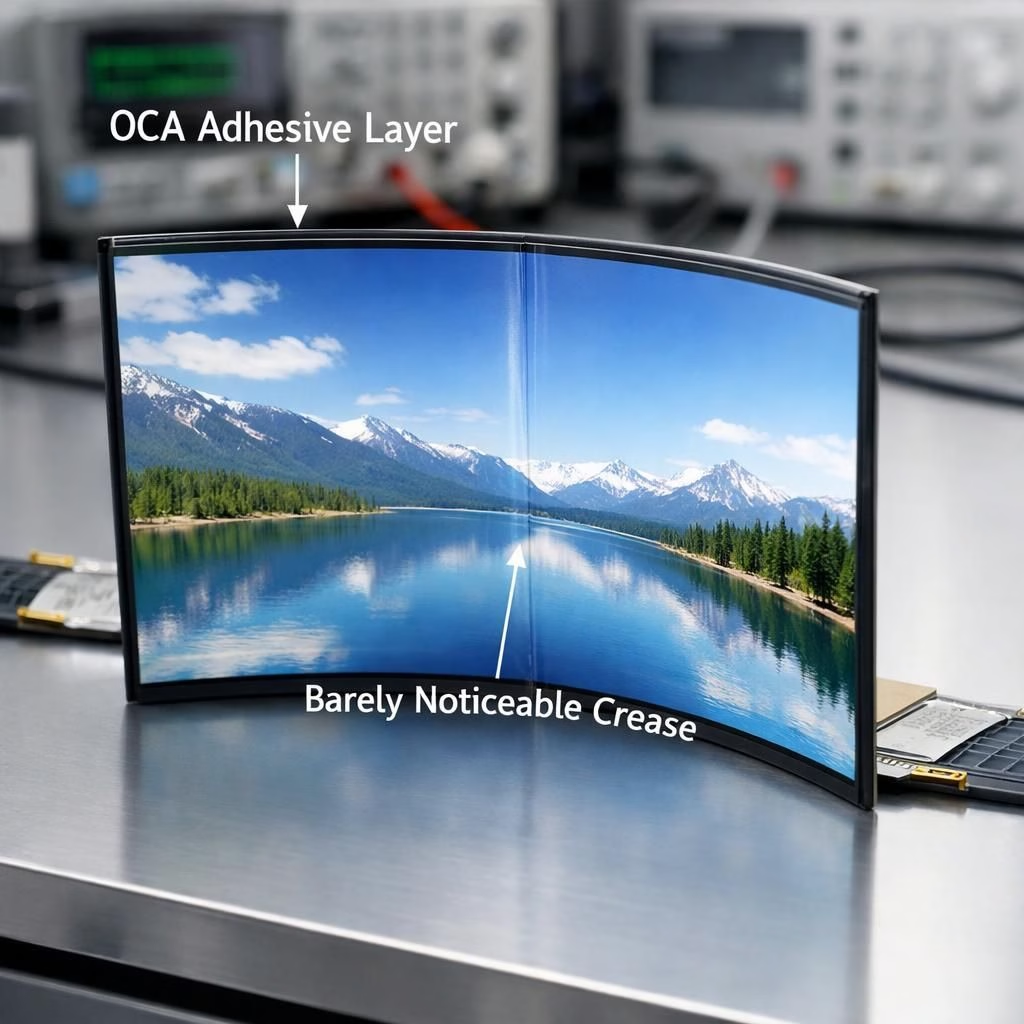
OCA plays a central role in the foldable display strategy behind Apple’s near-invisible crease iPhone expected in 2026. When stacked with the foldable display components—OCA, ultra-thin glass, and a precision hinge—the device aims to minimize crease visibility and maximize panel longevity. The outlook is practical and hopeful, underscoring real engineering progress with clear goals and measurable milestones.
The core actor here is OCA. Modern formulations do more than bond; they stay pliable during bending to reduce fatigue and temporarily stiffen under sudden impact to provide structural support. By flowing into microscopic irregularities, OCA helps smooth light pathways, so a crease remains faint rather than conspicuous. In effect, OCA acts as a calm mediator between layers, allowing them to slide past one another while preserving alignment.
OCA and foldable display: A near-invisible crease is the mission
Reducing the crease is not just about glue. Ultra-thin glass, or UTG, plays a crucial supporting role. Apple patents describe a design where the glass is thinner at the fold for flexibility and thicker elsewhere for durability—a strategy that matches rumors of uneven-thickness panels and even a dual-layer glass approach to spread stress across multiple layers. The idea is simple: spread the stress, and the crease stays calm. When paired with OCA, UTG helps keep a foldable display resilient without adding bulk.
OCA and foldable display: Why the adhesive matters
TrendForce identifies OCA as the single most important factor. It is not just glue; it is a dynamic, adaptive layer that moves with the panel. OCA formulations flow into microscopic irregularities and maintain pliability during repeated bending. They stiffen temporarily under sudden impact, providing support when shock hits. The result is less light scattering, a softer crease, and a true foldable display that behaves more like a solid sheet than a crumpled postcard after a long commute.
OCA and foldable display: The hinge and UTG balance the stress
Hinge engineering remains essential. Samsung Display has demonstrated laser drilling in the metal support plate behind the display to balance rigidity and flexibility. Analysts quoted by TrendForce noted Apple may use Fine M-Tec for similar stress-relief patterns. CES 2026 showcased a crease-free panel as a concept rather than production-ready, but it underscored progress in distributing stress across the assembly. For the foldable display, the combined approach of OCA, UTG thickness diplomacy, and hinge geometry matters as much as any single part.
Other production chatter points to ambition and pace. Apple is reportedly pursuing crease-free design regardless of cost, and some leakers claim orders for a shallow crease depth were placed, signaling near-zero crease by launch. While rumors should be read with skepticism, they reflect a robust push toward manufacturing with precise tolerances. TrendForce projects Apple could capture close to 20% of the foldable display market this year, which would compress Samsung and Huawei to roughly 30% each as the field matures. For fans of the foldable display, every hinge detail matters, and the optimism is contagious.
The path to launch: timelines, trials, and tiny wins
Specs aside, the practical path to a foldable iPhone lies in the supply chain’s cadence. Foxconn has reportedly started trial production, signaling readiness to scale if the design clears final checks. Samsung Display is on track for mass production of OLED panels by May, with the ecosystem aligning for a September unveiling alongside the iPhone 18 Pro models. The cadence matters: early trials catch misalignments, and careful calibration reduces risk as production ramps up.
All this progress sits on a balanced budget and a clear objective: deliver a visually seamless experience that earns consumer trust. The craft here is as much about optical consistency as it is about clever materials. The dynamics of OCA, UTG thickness strategy, and hinge geometry work together to minimize the crease, making it less noticeable in daylight and on social media.
We invite you to share your thoughts on how far foldable display technology can go in 2026. Feel free to weigh in in the comments and join the discussion.
Practical steps to evaluate crease-free foldables
- Check OCA quality and how it responds to gradual bending
- Review UTG thickness strategy at the fold and across the panel
- Examine hinge design patterns and stress-relief features
- Look for formal testing data on crease depth and optical performance
FAQ
- What is OCA and why is it important for foldables?
- OCA is an optically clear adhesive that bonds layers while accommodating bending and smoothing light paths to reduce visible creases.
- How does UTG contribute to crease reduction?
- UTG is thin glass that is strategically thicker away from the fold to distribute stress and maintain durability while remaining light.
- When is Apple’s foldable iPhone expected?
- Forecasts point to a September reveal alongside the iPhone 18 Pro models, with trial production underway.
References
- Original article: TrendForce foldable display insights — Thank you to TrendForce for the original material. You can read the source here: TrendForce.
- MacRumors: Adhesive is key to crease-free foldable iPhone
- TrendForce: Foldable display insights