

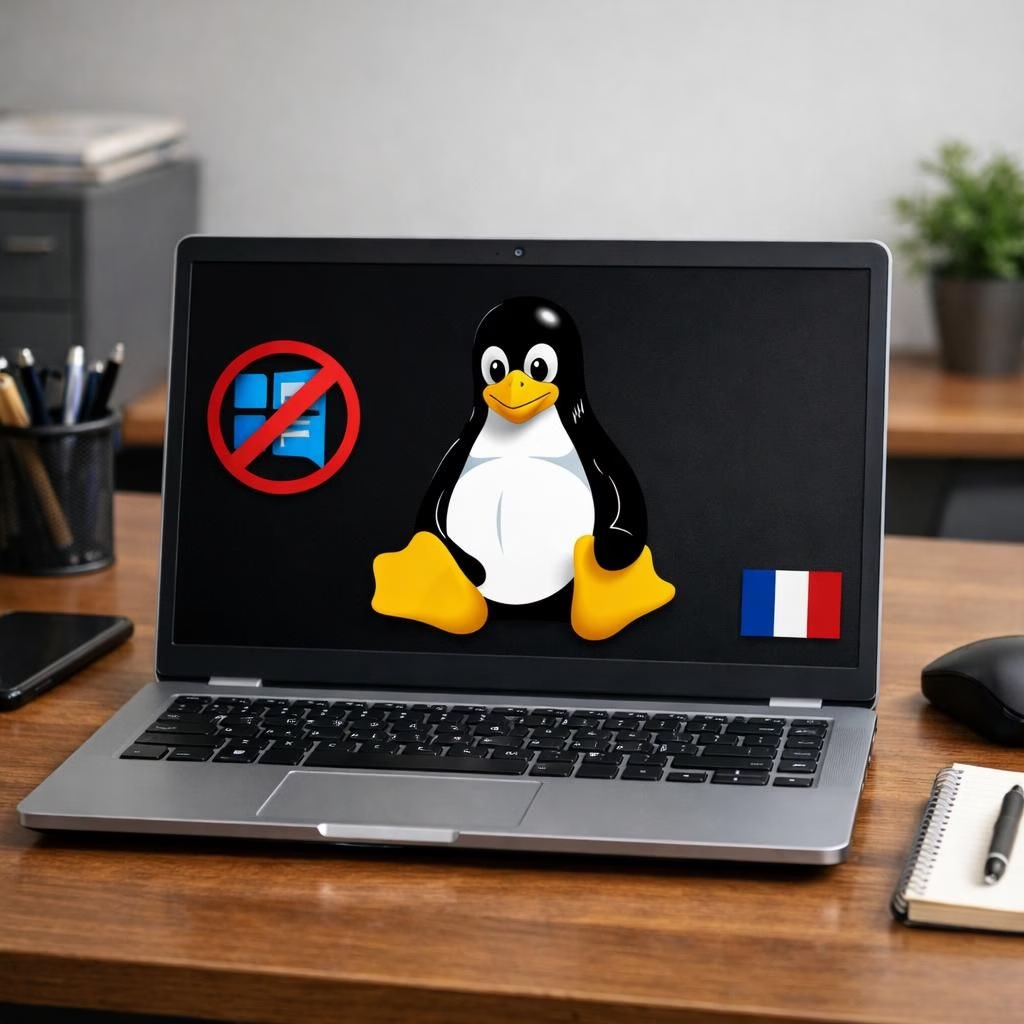
France is charting a bold course away from Windows toward Linux in 2026, a move that makes digital sovereignty feel tangible rather than a glossy policy brochure. The goal is to lessen dependence on US tech and lean into open-source software that can be audited, adapted, and politely stubborn when needed. In this setup, Windows is seen as a legacy partner in a slowly evolving ecosystem, while Linux is framed as the fresh, user-friendly option that still respects security and interoperability.
Windows to Linux: France’s bold reboot
Public sector officials have signaled a shift, juggling the realities of compatibility, cost, and control. Windows remains common in departments with legacy apps, but the push toward Linux desktops and servers is gaining momentum. The reasoning is pragmatic: Linux offers transparency, security updates that can be tailored, and a licensing model that avoids expensive per-seat fees. The narrative is less about ideology and more about measurable autonomy—data localization, open standards, and the ability to push updates on a schedule that suits national interests. The humor writes itself when you imagine a government briefing where a laptop politely refuses to run a proprietary binary because the code is simply better when it’s open.
Why Linux wins for security and openness
Linux‘s security model is not a magic shield, but it is auditable and adaptable. By default, the system can be hardened, services can be restricted, and patches can be applied in a controlled manner. The openness invites external reviews and local audits, which reduces the chance of backdoors springing up like holiday gremlins. For the government, Linux means fewer single-vendor chokepoints and more freedom to align with EU standards for data governance. The benefits roll beyond the desktop: server farms, cloud deployments, and national apps can run on Linux with a smaller risk profile and more predictable licensing. The result is a more resilient, less vendor-dependent technology stack, which is exactly the kind of independence policymakers love to brag about (in a responsible, widely cited way).
From Windows dependency to Linux independence
Transition plans typically prioritize pilot programs, migration tooling, and staff training. The government will test compatibility with critical software on Linux, replace or containerize legacy apps, and provide users with familiar interfaces that still feel comfortable. While Linux remains a familiar name for many users, Linux is framed as the future-ready option—one that respects privacy, reduces backdoors, and improves transparency in data handling. The inclusion of open-source office tools, cross-distro options, and robust security modules makes this move appealing even to skeptics. Yes, there are teething pains: some apps may require workarounds, a few devices need driver updates, and support channels must grow. But the net benefit is sovereignty: a digitally self-reliant France that doesn’t need to chase every patch from a distant vendor.
What this means for users on Windows or Linux
- For Windows users, the path often includes parallel setup, dual-boot experiments, or seamless virtual machines so work continues without a hitch.
- For Linux users, the journey rewards curiosity: more control, fewer surprising updates, and a chance to contribute to a living ecosystem.
- For IT teams, Linux means reshaped workflows, standardized configurations, and improved incident response across devices and servers.
A practical glance at policy, privacy, and implementation
The policy angle favors interoperability and data protection. France’s plan to embrace Linux aligns with EU frameworks that emphasize open standards, data portability, and user rights. This is not a revolt against technology; it’s a rational recalibration toward resilience and accountability. The practical path includes ensuring compatibility with essential tools, creating internal support networks, and offering ongoing training so staff feel confident in the new stack. The aim is to avoid lock-in while still delivering public services that meet high security and performance expectations. The tone remains constructive, and yes, there’s room for humor as we discover which workflows are easier in Linux and where Windows stubbornness still has its charm. For reference, EU data protection rules set the standard.
Under the hood, the move supports better governance of digital infrastructure. Linux can be audited, patched quickly, and migrated across cloud platforms with fewer regulatory headaches. It also helps Europe position itself as a tech leader rather than a follower in the global supply chain. The conversation spans data localization, sovereignty, and how to balance innovation with citizen protections. It’s less about a knee-jerk break with Windows and more about a thoughtful retooling of how France sources, stores, and secures its digital assets. The Linux Foundation’s open-source security practices are equally relevant to this transition. Open Source Security provides practical guidance for audits and defenses.
In practice: a 2026 reality check
Real-world migration will be incremental. Expect pilot projects in select ministries, guidance for schools and public agencies, and a robust migration toolkit to minimize disruption. The private sector response will range from cautious optimism to lively experimentation, with many vendors offering Linux-ready alternatives and cross-platform compatibility. The long arc looks like increased collaboration around open standards, more transparent data practices, and a general sense that the tech stack should serve the public good first. If all goes well, future upgrades will be less about licensing drama and more about performance, security, and user satisfaction. It’s a hopeful, pragmatic shift rather than a dramatic techno-rewrite.
As this story unfolds, readers can reflect on what a Linux-centric approach means for daily work, for schools, for emergency services, and for the everyday citizen who touches a government service. The result could be smoother maintenance cycles, fewer vendor lock-ins, and a stronger culture of open-source collaboration across the public sector. In short, this is not just an IT story; it’s a governance story with a software backbone, told with a wink and a clear-eyed sense of responsibility.
Source notes and thanks: TechCrunch: France to ditch Windows for Linux — country accelerates digital sovereignty push. Tom’s Hardware: French government says it’s ditching Windows for Linux — country accelerates plans to ditch US-based software in digital sovereignty push. The Tech Buzz: France Dumps Windows for Linux in Push for Tech Independence. Cybernews: Digital omnibus: France calls for stricter data protection. Table.Briefings: Digital omnibus: France calls for stricter data protection (and related updates). Your original reporting is appreciated.
Source attribution: Thank you to the original reporters for the material that inspired this rewrite: TechCrunch, Tom’s Hardware, The Tech Buzz, Cybernews, and Table.Briefings.
FAQ
- Q: Why switch now?
A: The shift aims to reduce vendor lock-in, improve transparency, and strengthen data sovereignty with open-source software.
- Q: How might day-to-day work change?
A: Expect staged pilots, parallel work streams, and training to help staff adapt without disruption.
- Q: What about data privacy?
A: Open standards and auditability support greater transparency and alignment with EU rules.
Takeaway: Windows and Linux shaping public services
The move toward Linux is a practical effort to build resilience, transparency, and citizen-focused services. The takeaway for policymakers is simple: pursue careful pilots, invest in staff, and measure progress against clear security and interoperability goals. For the public, the path means more choice, better data handling, and fewer surprises from distant vendors.