

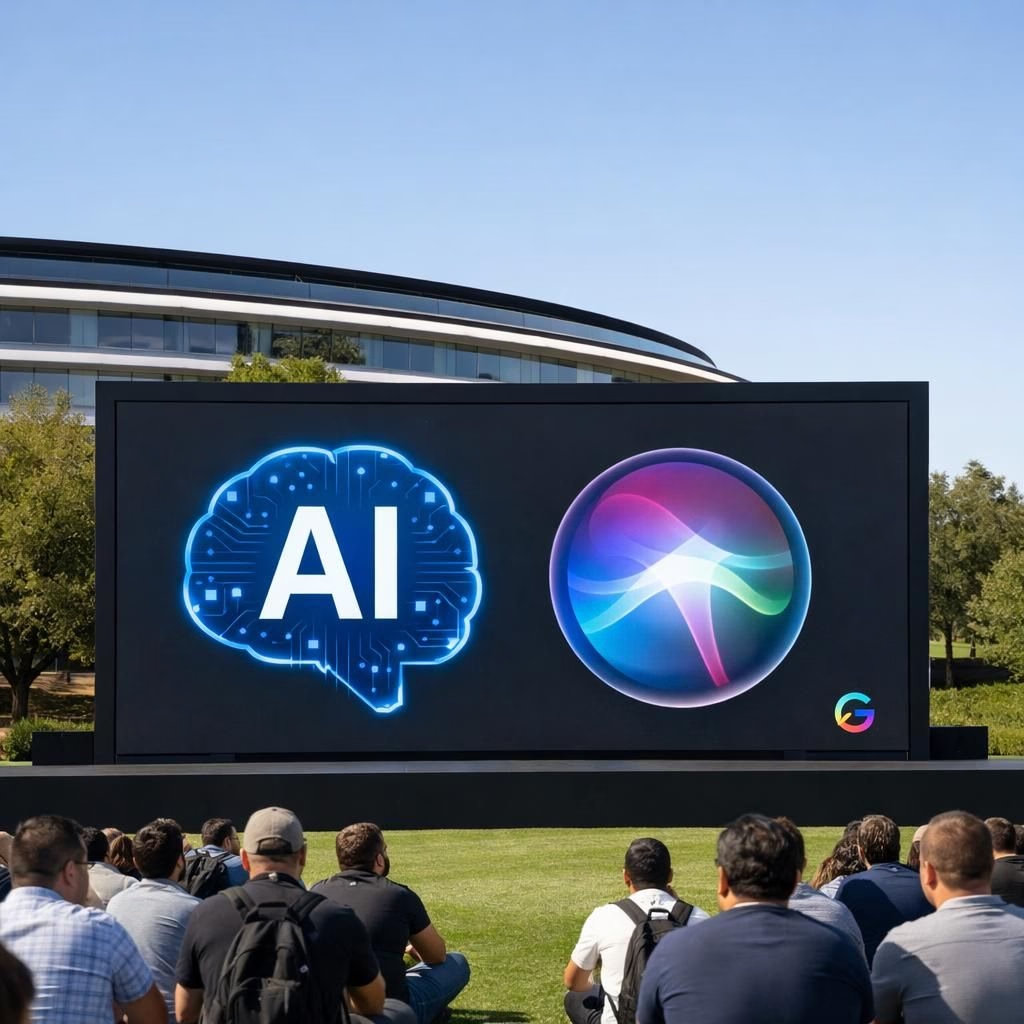
At WWDC 2026, AI and Siri are lead performers with a wink toward privacy. Apple announced a prominent tie-up with Google’s Gemini to power a wave of features you might actually use. Siri gets a major overhaul focused on on-device processing and privacy-first defaults. The event also serves as a quiet leadership moment as Tim Cook signals retirement while John Ternus stands ready to carry the torch. The iPhone 17/18 timeline hints feel calmer, more roadmap than rumor. If you crave drama, you will find practical improvements and a healthy sense of optimism for 2026 and beyond. Siri is not just hype; it is part of everyday workflows, from messages to reminders to app shortcuts, in a way that respects your data.
AI and Siri take the stage at WWDC 2026
The Gemini partnership remains the headline, a move that keeps Apple in the driver seat while offering powerful AI features across iOS and macOS. Apple insists privacy is a core design principle, promising on-device models and local memory rather than data sent to distant clouds. The message is practical: smarter suggestions, better voice commands, and a safer, more capable Siri that respects your context without leaking your data to servers. This is not a reboot so much as an upgrade that quietly adds layers to everyday tasks, with AI assisting you rather than steering the ship.
New Siri under AI guidance: privacy-first and on-device
Siri will stay on iPhone, iPad, HomePod, and Mac, but the thinking behind it moves closer to your hardware. On-device AI models, smarter prompts, and more natural responses are the core plan, with privacy as default. The upgrade is more than speed; it is about credible, safe AI tricks that respect user choices. Siri is capable of multi-step tasks, better reminders, and deeper app integration, all while avoiding cloud-only complacency. The latency worry remains, but Apple argues that on-device compute can be fast and private. The result is a more capable Siri that respects boundaries and your timeline.
Leadership transition and the Apple roadmap: AI-ready iPhone 17/18
Tim Cook leaves behind a concise, symbolic note, and the retirement signals a calm shift rather than fireworks. John Ternus is pointed to lead the next wave of hardware, with updates that lean into AI and on-device intelligence. The iPhone 17 era becomes Cook’s last launch cycle, and the iPhone 18 series is expected to carry the baton in 2027. The story remains hopeful: more seamless cameras, smarter chips, and stronger privacy controls. The change is about extending Cook’s legacy through steady, thoughtful improvements. The WWDC keynote reads as a blueprint, showing how AI and Siri will be embedded deeper into the product line while keeping privacy at the core.
Watching WWDC 2026: live streams, schedules, and how to dive in
Apple keeps the event accessible. You can catch the keynote on YouTube, Apple.com, or the TV app on Apple TV. In China, developers can watch on the Bilibili channel. The Platforms State of the Union streams on the developer site with workshops that tease software updates later in the year. The venue remains Apple Park, and the Steve Jobs Theater serves as the stage for a conference that blends serious software talk with reassurance about data privacy. If you want a schedule that fits your time zone, Apple lists PDT, EDT, and IST times so you do not have to guess whether a demo will be live or pre-recorded. The result is more access, fewer shocks, and a focus on useful, well designed AI experiences rather than spectacle.
Why this matters now: a practical, humorous outlook
For users, AI and Siri becoming more helpful while respecting privacy feels like progress you can trust. The Gemini tie-in is a pragmatic hedge against a single vendor calling all the shots. The leadership transition signals continuity, with Ternus likely to steer the hardware cadence into a new cycle that respects Apple’s privacy ethos. It is easy to mock tech promises, but this plan shows intent: better on-device intelligence, stronger privacy, and a product road map that invites rather than intimidates. If you want to discuss how AI and Siri will shape your daily routines—phone, laptop, or smart home—this is a good moment to share ideas.
Special thanks to the original article and coverage that inspired this rewrite: Times of India live blog: Apple WWDC 2026 keynote. We are grateful for the source material and thoughtful insights.
What this means for your day-to-day
- Expect smarter, on-device AI helpers that respect your privacy while staying fast.
- Look for Siri to become more capable inside messages, reminders, and apps without uploading everything to the cloud.
- Watch for a calmer hardware cadence led by AI-driven efficiency rather than sensational demos.
FAQ
What is Gemini and how does it relate to Apple devices?
Gemini is Google’s AI model family that Apple has begun to integrate to power features across iOS and macOS. The goal is to offer smarter experiences while preserving privacy through on-device processing where possible.
Will Siri really run mainly on-device?
Yes. Apple says on-device processing will be central to Siri, with local memory and privacy-first defaults designed to minimize cloud dependence.
How can I watch WWDC 2026 live from my location?
You can watch the keynote on YouTube, Apple.com, or the TV app on Apple TV. Developers in China can use the Bilibili channel, while the Platforms State of the Union will run on the developer site with workshops for deeper dives.
References
- Times of India live blog: Apple WWDC 2026 keynote
- Apple Newsroom
- Google Gemini overview
- Gemini official page