

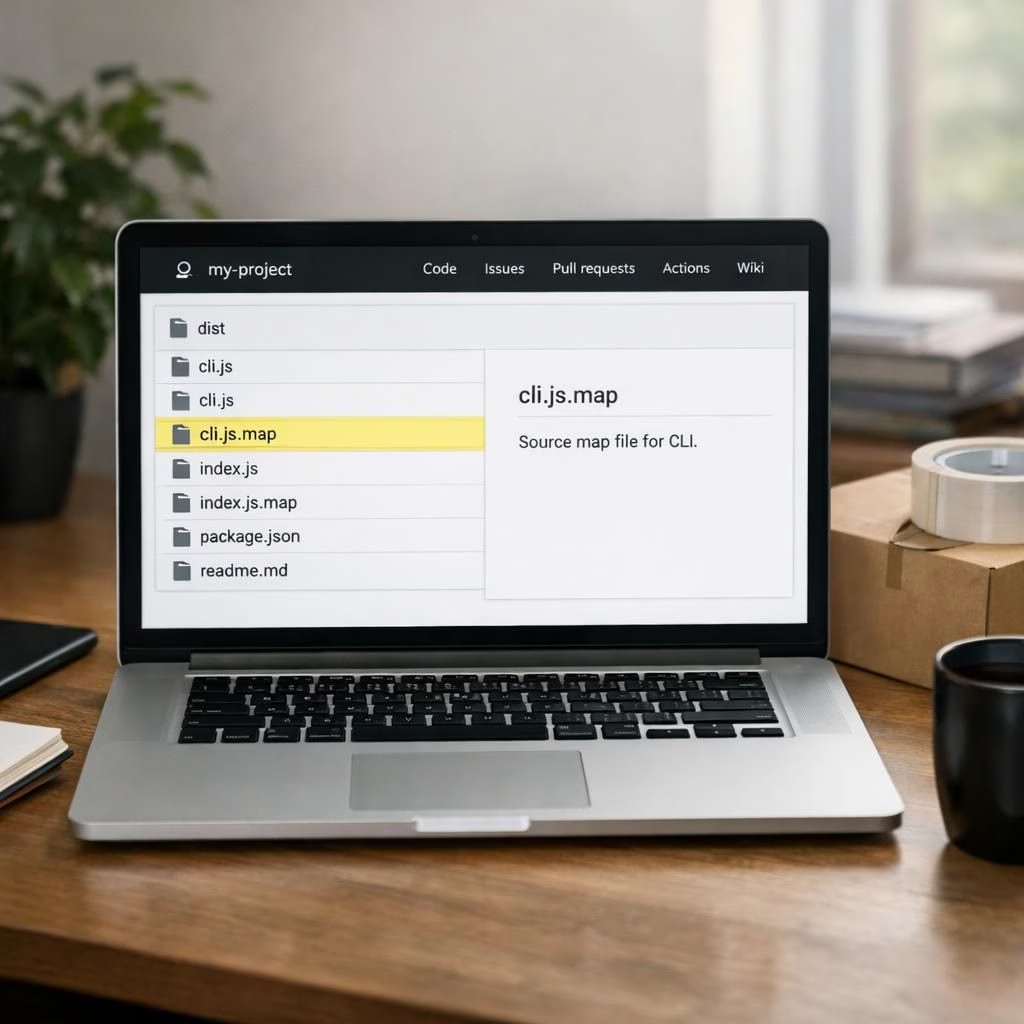
Security Claude Code collide in the real world after a packaging hiccup exposed a 60MB source map.
This quick exposure opened a window into a sprawling 512k-line TypeScript archive.
It happened because someone forgot to scrub a file from the final npm package.
It is not a catastrophe for end users.
It is a wake-up call for developers who click publish too quickly.
A source map links production code back to the original humans who wrote it.
But in the case of Claude Code, the map let researchers reconstruct TypeScript from the compiled output.
The security implications are not about data loss, but about visibility into internal logic.
Thousands of developers copied the code online, studying its design and memory layout.
This is a teachable moment for Claude Code and its community.
Source maps are a debugging aid that links production-ready code back to human-written source.
In Claude Code’s case, the map made it possible to reconstruct the approximate TypeScript source from the compiled binary.
The security lesson here is simple: never ship source maps in public releases if they reveal sensitive structure.
BlockBeats notes that the latest Claude Code version in this leak, v2.1.88 released on 31 March, still carried the full code map. It reportedly touched 1,906 proprietary source files, detailing elements such as internal API structures, telemetry systems, encryption mechanisms, and inter-process communication protocols. This is the kind of detail that makes nerds cheer and security teams sigh in equal measure.
ODaily reports that this isn’t the first time Claude Code has slipped up. Back in February 2025, an early version leaked for the same reason. At the time, Anthropic removed the old version from the npm registry and deleted the source map. The incident shows a worrying pattern, but also a path forward: tighten packaging, automate checks, and treat production packages like guest rooms—polite to guests, wary of what you leave behind.
Security & Claude Code: What leaked and why it matters
The core of the story is simple: an npm package carried a 60MB map that should have stayed on the developer machine, not in the public registry.
This is a reminder that packaging mistakes are not just minor admin issues; they invite observers into the inner workings of a tool.
The Claude Code leak did not expose user data or core systems, but it did expose the architecture, memory layout, and usage-tracking methods.
For security teams, that mix of transparency and risk is a delicate balance—enjoy the curiosity, guard the crown jewels.
From readers seeking background, see this overview of source maps on MDN and a security-focused take from OWASP.
Claude Code under the hood: security lessons for builders and users
What should teams take away from this incident? First, scrub every map and compiled artifact from release pipelines. If you wouldn’t want your production code to be readable by a curious intern, don’t ship the map.
Second, implement strict packaging controls and automated checks that fail the publish if a source map or similar artifact slips through.
Third, consider using private registries or access controls for sensitive projects, so only authorized developers can pull the code and its maps.
Fourth, maintain a small, well-tested playbook for incident response that covers source maps and similar artifacts.
Finally, reinforce a culture of code hygiene: a cleaner release is a safer release, even if it feels like paperwork at the time.
From a user perspective, Claude Code remains a tool for developers, not a personal data vault. The leak did not erode trust in user chats or data security; it did expose how the tool is built, how it tracks usage, and how to communicate with other processes. The upside is clarity: teams can learn how such systems are designed, where the security boundaries lie, and how to tighten those boundaries before issues become headlines.
- Remove source maps from production builds and ensure they are never shipped in npm packages.
- Use automated security and integrity checks in CI/CD that flag sensitive artifacts before packaging.
- Prefer private registries or access controls for development-only tools to limit exposure.
- Document the packaging process and run regular audits to catch drift between development and production artifacts.
- Educate teams about the difference between source code and compiled output, and why source maps deserve special handling in public releases.
As a practical takeaway, the best defenses against future leaks are proactive hygiene and a culture that treats packaging as sacred ground. Security is not a one-off checkbox; it’s an ongoing practice. Claude Code, like any complex tool, benefits from transparent design discussions, but it also benefits from disciplined release procedures that keep the inner workings where they belong—behind a well-guarded shield, not on a public shelf.
In the end, the Claude Code incident becomes a case study in balance: transparency for improvement, privacy for safety, and humor to ease the tension whenever a 60MB mystery map shows up in your npm package.
We invite you to share your thoughts on what steps you’d take in your own projects to prevent such exposure. How would you tighten your packaging and security checks in 2026? Tell us in the comments below.
Original reporting by NDTV: This article builds on the information and context provided by the NDTV technology team. Thank you to NDTV for the original reporting that sparked this broader discussion.
For readers seeking background, see this overview of source maps on MDN and a security-focused take from OWASP.