

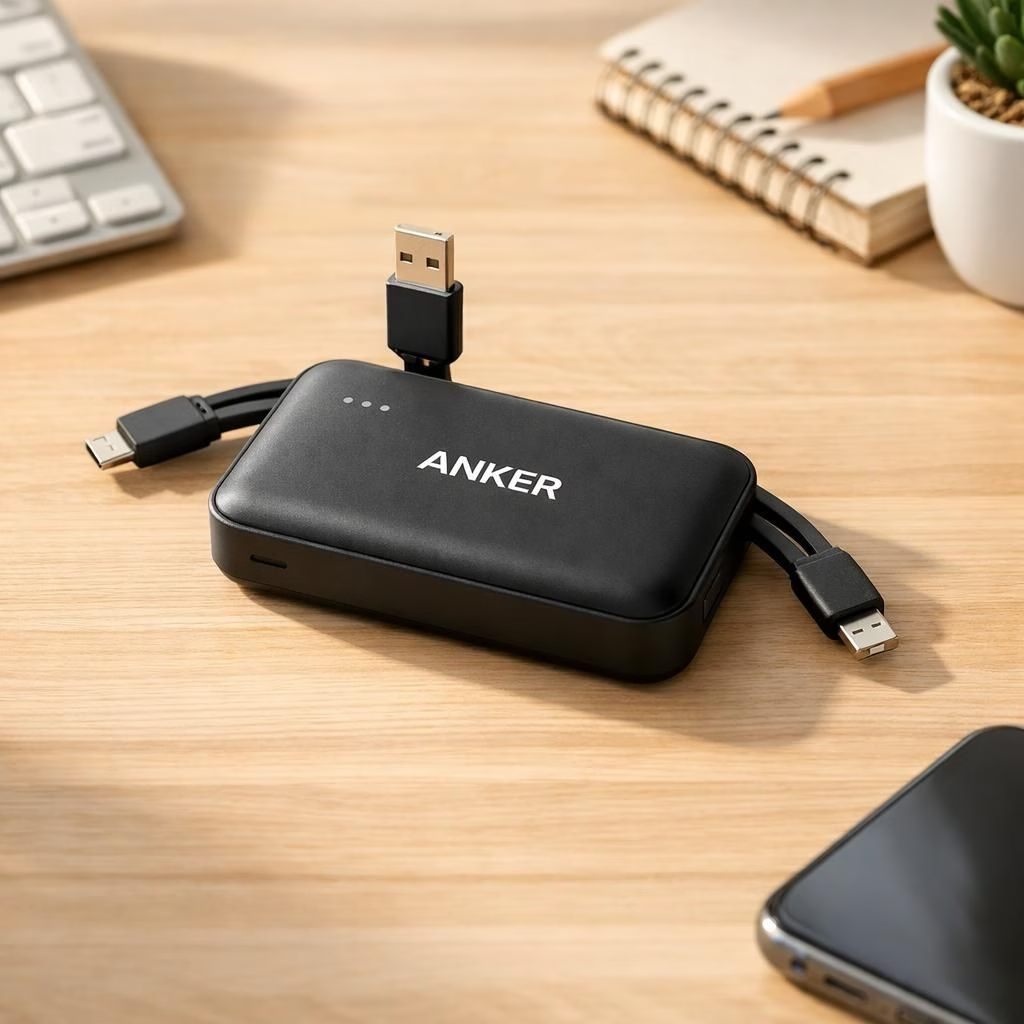
Few gadgets spark joy like a power bank with built-in cables. The power bank simplifies life when outlets vanish, and the built-in cables cut clutter and speed up your setup. In 2026, Anker keeps upgrading the pocket-friendly marvel, blending convenience with reliable performance.
Power bank perks: why power bank matters on the road
Across the lineup, the classic power bank remains the MVP for off-grid days. The Nano Powerbank is tiny, yet it delivers punch, slips into a pocket or clutch to juice a phone or a friend’s device during a long commute, and its price drop in 2026 makes it a smarter buy.
When you see the Prime family, you notice the design shift toward fast charging and reliability. The 220W Prime Power Bank promises real muscle without a tangle of cords.
It drops in price now, which makes it a smarter buy than ever. The market response is swift, and promotions spark attention across retailers in 2026.
Power bank travel-ready: a smarter charging kit
For travelers and desk jockeys alike, built-in cables reduce one mental step: grabbing a separate cord. The design also reduces misplacement; you cannot forget the cable if it’s attached. The 200W, 20,100mAh model with three ports demonstrates Anker’s blend of power and practicality, able to run a laptop, a smartphone, and a smartwatch in a pocketable brick.
Critics from Gizmodo and SFGATE have noted the value of a bundled approach, especially when you sprint from meeting to subway car. The result is a streamlined kit that keeps pace with a busy day.
In practice, a power bank with built-in cables is a small, reliable ally. It reduces clutter, speeds recharge cycles, and keeps travel days from feeling chaotic. If you’re stocking your gear bag for a 2026 sprint, these Anker options deserve your attention.
Original material inspiration and coverage from The Verge, Popular Mechanics, SFGATE, Gizmodo, and techAU—thank you for the rich baseline. Special thanks to The Verge for the original article: The Verge.
How to choose your power bank with ease
- Determine your daily device mix (phone, tablet, laptop) and pick a capacity that covers your typical day plus a safety margin.
- Check port variety and compatibility with your devices; if you travel with multiple gadgets, look for a model with USB-C and USB-A options.
- Consider weight and size so the charger fits your bag without adding bulk.
Frequently asked questions
-
Q: Do built-in cables limit device compatibility?
A: Most built-in-cable designs use standard connectors, but verify that the included cables fit your most-used devices before buying. -
Q: Can a 220W power bank charge a laptop?
A: Yes, many 220W models are capable of laptop charging in addition to phones and wearables. -
Q: How should I care for a high-wowerage power bank in travel days?
A: Keep it away from extreme heat, avoid full discharges, and recharge it regularly to preserve battery health. -
Q: Are these power banks allowed on planes?
A: Most airlines permit lithium-ion power banks in carry-on luggage up to a certain watt-hour rating; check your carrier’s rules and pack accordingly.
References
Original source linkback: The Verge.