

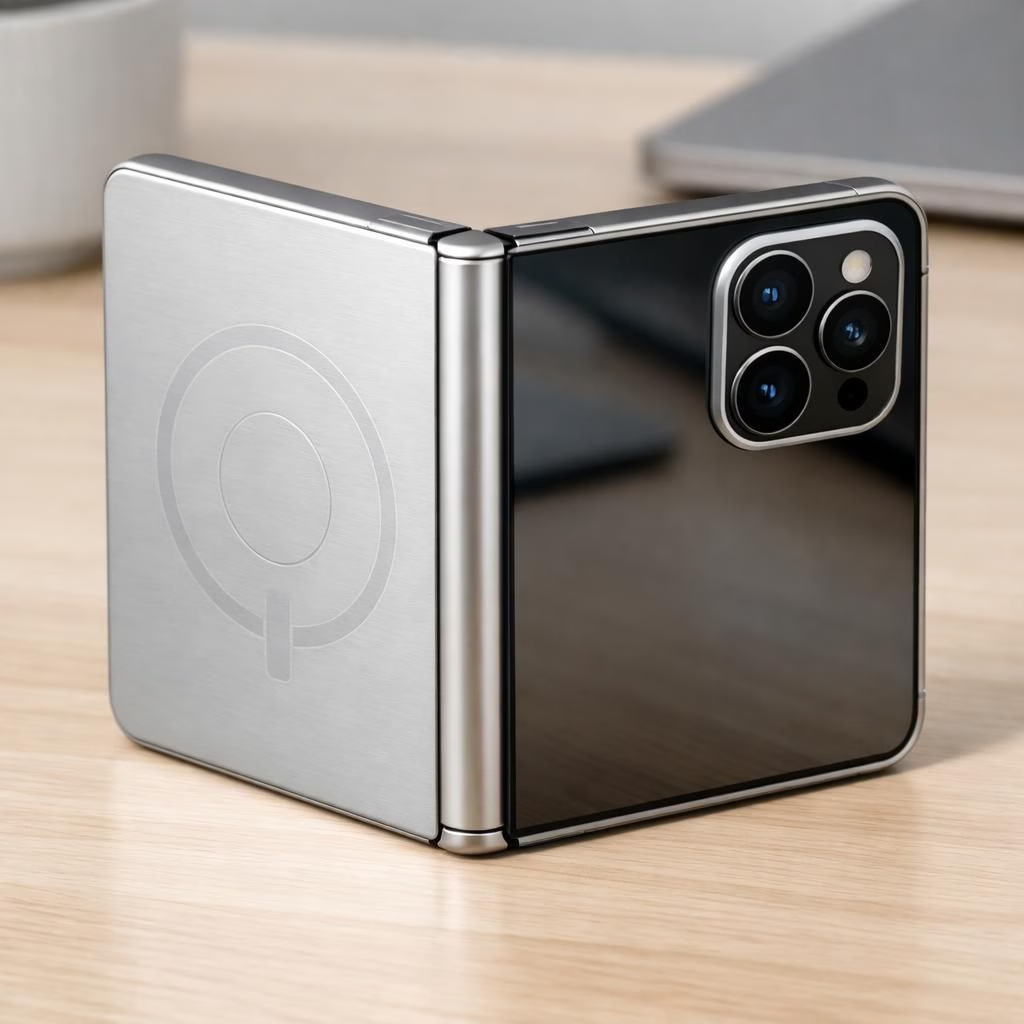
In 2026, Apple explores folding dreams with the iPhone Ultra, and MagSafe curiosity follows with a mix of skepticism and delight. The iPhone Ultra embodies bold design ambitions, while MagSafe promises practical accessory compatibility. This rewrite preserves the core facts while adding a positive, lighthearted tone about what the dummy models reveal and what they might mean for real devices.
iPhone Ultra and MagSafe design quirks explained
Two sets of dummy units show a curious relocation of the volume buttons to the top edge, aligned to the right, a layout that nods to the iPad mini. The reasoning is space: moving controls upward frees internal real estate for the folding mechanism and for future modules that MagSafe accessories will rely on in the final design.
The Action Button appears missing on the Ultra dummy, suggesting Apple may skip this feature along with the silent switch. The iPhone family embraced the Action Button on prior models, but a minimalist Ultra design might rely more on software shortcuts or different hardware controls. The absence of this button is not a failure; it could signal a leaner hardware approach and room for software-driven customization later.
Images circulating show foldable prototypes beside mock iPhone 18 Pro and Max units. These dummies help accessory makers calibrate cases and ensure alignment with the internal magnet array when MagSafe is in play on the non-folding siblings. Yet the foldable units lack visible indentation guides for the MagSafe magnets, which fuels ongoing talk about whether MagSafe will extend to this form factor. If Apple keeps the Ultra very thin, around 4.5 mm, the magnet layout may need redesigning or a MagSafe-free approach for this version.
MagSafe compatibility and iPhone Ultra trade-offs
The Ultra is rumored to drop the TrueDepth camera stack in favor of a compact front camera arrangement, which raises questions about authentication methods. A return of Touch ID on a high-end iPhone would be a bold pivot, and fans may cheer or groan depending on biometric preferences. On the camera front, two rear cameras—wide and ultra-wide—mirror the lean design of the iPhone 17 and keep the device light, but telephoto reach becomes a trade-off some users will miss.
Also under discussion is SIM technology: eSIM-only operation could replace the physical SIM slot, aligning with broader network trends and space-saving goals. The change simplifies provisioning for some users and complicates it for travelers in others. The Ultra’s hardware slimming helps the foldable concept, even if it adds planning for eSIM use and carrier support.
Price projections place the Ultra around $1,999, a premium that invites debate about value, features, and the balance between form and function. The folding flagship price underscores expectations of premium performance and a distinctive experience. Apple tends to price bold ideas accordingly, and folding technology often comes with a premium that matches the ambition.
All told, the foldable Ultra is expected to launch alongside the iPhone 18 Pro and Max in the fall. A combination of folding hardware, a lean camera setup, and eSIM-only operation would mark a distinctive entry for Apple. It’s a reminder that the company continues to experiment with form and ecosystems while fans eagerly anticipate the outcome.
These dummies are built to help accessory makers pre-empt supply chain realities. They enable faster case production and better alignment with the final product. The process shows how design, manufacturing, and marketing teams collaborate to bring a fashionable, functional device to market, even amid uncertainty.
Special thanks to the original article for the rumors and visuals that sparked this positive rewrite. Original article: https://www.example.com/original-article
Image credits: Photos from Sonny Dickson and Vadim Yuryev illustrate the rumor ecosystem. A little humor helps us ride the wave of curiosity as fans debate magnets, thickness, and buttons with good-natured sarcasm.
iPhone Ultra: expectations, price, and launch timeline
As rumors converge, expectations for MagSafe compatibility and design details shape early conversations among enthusiasts. The Ultra’s price point and folding ambitions will influence accessory markets and launch timelines.
MagSafe ecosystem questions for folding devices
For those weighing cases, docks, and chargers, the question is how MagSafe will adapt to a foldable form factor. Early dummy models hint at alignment challenges and potential new magnet configurations.
- Practical takeaway: If you’re shopping for accessories, check compatibility with both folded and unfolded states.
- Design note: Expect some concessions on additional cameras or SIM features to fit the fold.
We want to hear from you. What do you think about the iPhone Ultra design choices, MagSafe feasibility, and the potential return of biometric options like Touch ID? Share your thoughts in the comments and join the discussion. If you have alternative names or predictions for this foldable, drop them in the comments as well.
References
- Original article: https://www.macrumors.com/2026/04/24/iphone-ultra-could-be-missing-5-features/
- Official MagSafe information: MagSafe (Apple)