

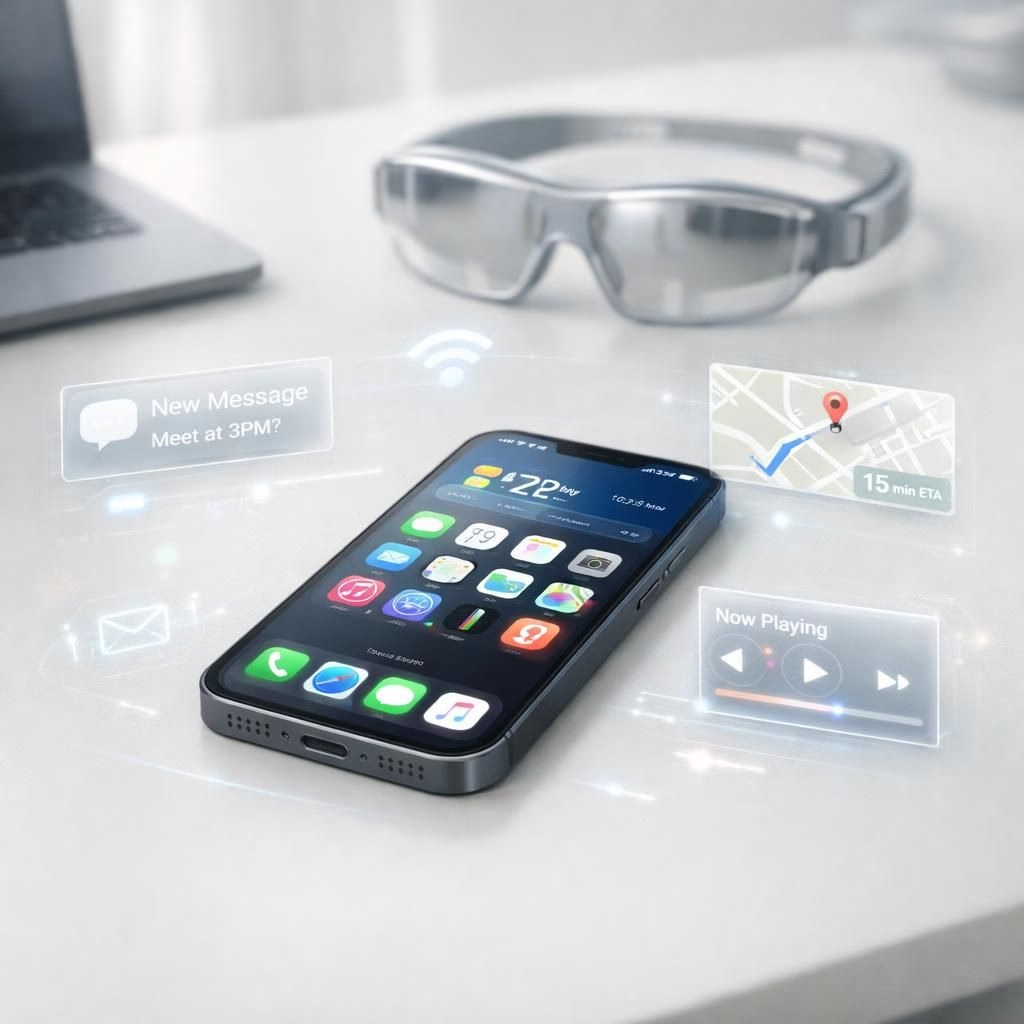
In a sunlit corner at Grand Central Terminal, Tim Cook offered a calm wink and a clear stance: the iPhone remains the center of our digital lives, even as Apple rides the wave of spatial computing toward new frontiers. He spoke of a future where AR innovations weave into everyday use, but the anchor remains the familiar screen in our pockets. The interview touched on AR glasses and an AI-powered pendant without a screen. It sounds odd, but it could be a practical extension of the iPhone ecosystem. The iPhone turns twenty next year. The device’s popularity is not fading. If anything, it is hitting new highs. Last quarter, iPhone revenue reached 85.2 billion dollars, a record that would make any calculator blush. Cook called the quarter simply staggering. He reminded us that iPhone demand is robust worldwide. The core truth is simple: the iPhone will be around for a very long time, even as Apple explores other tech territories.
iPhone stays central in a world of spatial computing
People chase novelty, but the iPhone stays practical. It is the hub. The device will be twenty years old next year, a milestone that shows Apple built a platform, not just a gadget. The new revenue record proves the ecosystem works. The iPhone is the starting point for most people’s digital life. Apps, payments, health data, and maps all orbit this device. The idea that the iPhone will endure is not bravado; it is a real trend. Apple uses that base to push beyond. spatial computing isn’t a fad. It stacks digital information into the real world. The iPhone acts as the control center. It coordinates new wearables, AR experiences, and AI features. We may not all wear a pendant without a screen, but we could use it to summon maps, messages, or music with a gesture. Apple bets that as the world grows more complex, the iPhone keeps the path simple.
AR glasses, AI pendants, and the iPhone as hub in spatial computing
Two big bets are AR glasses and an AI-powered pendant. Cook says these are not replacements for the iPhone but extensions that keep the iPhone as the hub. The AR glasses would stream data to the iPhone, not replace it. The pendant could deliver remote control without a screen. This is not science fiction; it is a practical strategy. It keeps the iPhone central while the rest of the system becomes ambient. The numbers back this approach. Revenue grows in every geographic segment. That means more iPhones and more ways to use them. The spatial computing topics generate buzz, yet the device remains a secure, familiar portal to the rest of the ecosystem. The plan is to make the iPhone the center of a broader experience, not a single device. If AR glasses arrive, the iPhone will help us understand holographic cues, not fight with a separate gadget.
Security and privacy matter as well. In 2026, protecting personal data stays a selling point for Apple. The iPhone acts as the trusted beacon that controls the rest of spatial computing experiences. The new categories should be features, not replacements. The iPhone handles heavy processing, while other devices act as sensors or surfaces for display. This approach favors clarity over clutter. It is also more private by design. People can choose what to share and when. The iPhone remains the gateway, not a gate that blocks the view.
What does this mean for you? It means the everyday iPhone stays essential. You may soon experience new ways to interact. If you like to tinker, practical steps help: update to the latest iOS, review privacy settings, and explore spatial computing features in daily tasks. Consider battery life and plan for smooth integration with AR devices. The goal is a simple path through a growing technical landscape. Keep the iPhone at the center while you explore spatial computing as a layered interface. Your daily routines can become smoother without losing control.
Original article attribution: Thanks to Nikias Molina for the Grand Central Terminal interview. Read the original piece here: https://www.example.com/original-tim-cook-interview. Thank you.
I invite you to share your thoughts in the comments.
Getting started with spatial computing on your iPhone
Starting small helps you stay in control while you learn. Try these practical steps as a baseline plan:
- Update and secure: keep your iPhone on the latest iOS and review privacy permissions.
- Audit privacy: check what data goes to apps and what stays on device.
- Experiment with ambient features: enable spatial computing features in daily tasks like maps, messages, and routine automation.
- Battery planning: consider how AR and related features may impact battery life and plan accordingly.
Frequently asked questions about iPhone and spatial computing
-
What does this mean for everyday iPhone users?
The iPhone remains the central hub even as spatial computing becomes more integrated into apps and services. -
How does spatial computing affect privacy and security?
Apple emphasizes data protection; with the iPhone serving as a gateway, spatial computing experiences can be kept private by design. -
When might AR glasses arrive?
Apple has outlined a cautious, gradual approach where hardware pairs with the iPhone as the hub, rather than replacing it.
Conclusion: The iPhone has long been the anchor for Apple’s ecosystem, and spatial computing is shaping how we interact with the world around us. The next chapter will likely blend the familiar glow of the iPhone screen with ambient, gesture-driven interfaces.
References
- Apple Newsroom
- The Verge
- Original source: https://www.macrumors.com/2026/03/18/tim-cook-comments-on-iphone-future/