

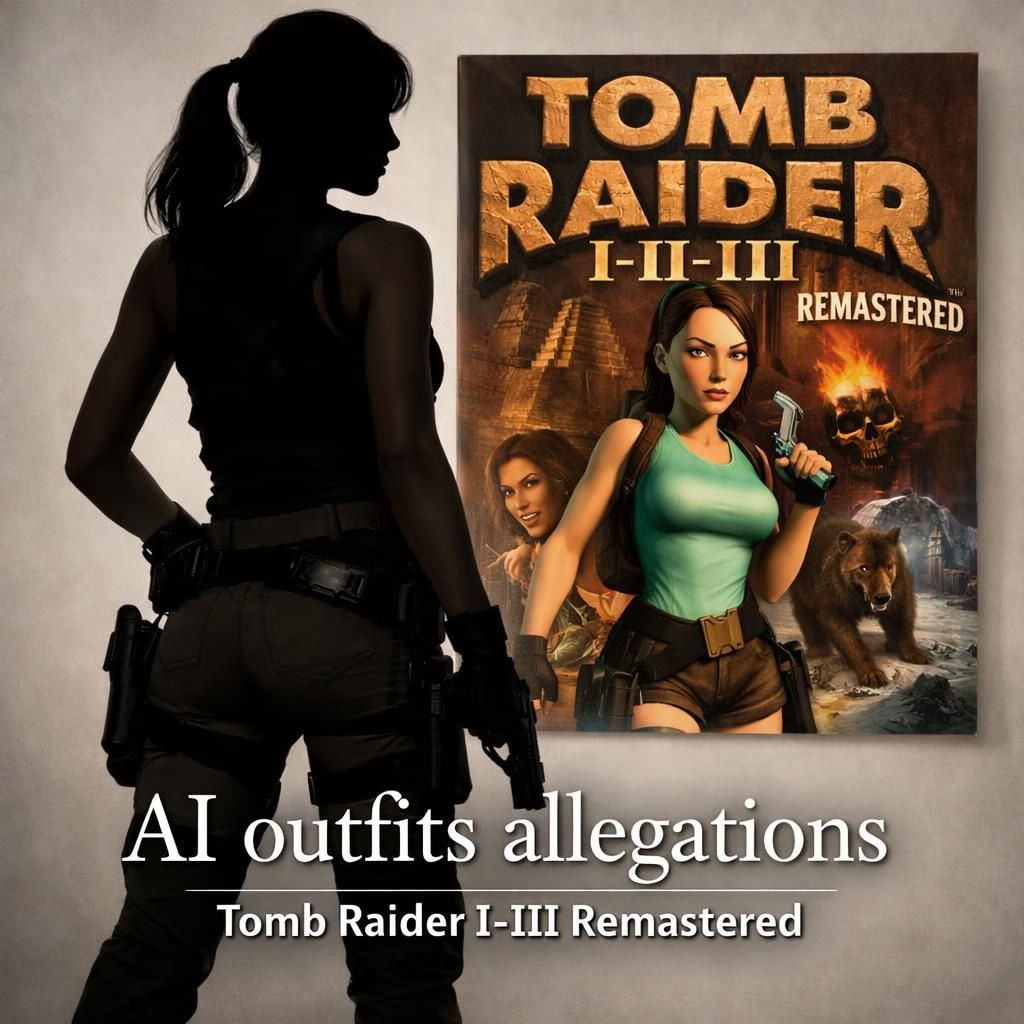
Hey there, fellow explorers of pixels and patch notes. This piece tackles AI outfits allegations and Tomb Raider I-III Remastered with a balanced eye and a light heart. The big moment came when Aspyr and Crystal Dynamics faced backlash tied to alleged AI-generated assets in the refreshed outfits. In public statements, they insisted no AI-generated assets were used, arguing the outfits were designed by human teams and integrated into a broader patch. Meanwhile, fans and critics debated whether the new looks fit Lara Croft’s legacy, and whether the patch itself was a helpful update or a misstep dressed in glossy armor. The conversation is less about censorship and more about taste, accountability, and the thin line between homage and overreach in 2026.
AI outfits allegations: public response and transparency
Publishers stepped into the spotlight, gently framing the edges of a controversy that started online and moved into press rooms. The claim, beyond the AI outfits allegations, was that the patch was a human-driven effort to expand options and replayability. Yet the discourse persisted, fueled by side-by-side comparisons of old-school charm and modernized silhouettes. The chorus from fans asked for transparency on asset origins, a trust-building effort that hinges on the studios behind Tomb Raider I-III Remastered.
As coverage piled up, outlets like Nintendo Life and IGN documented the tension, while Time Extension and PC Gamer reported on the patch notes and the broader debate. The core truth remains accessible: AI outfits allegations sparked a real dialogue about creative control, budget priorities, and whether fidelity to the original character matters more than the thrill of new skins. If you measure by engagement alone, the AI outfits allegations saga succeeded in turning a patch into a teachable moment about expectations, communication, and how to balance nostalgia with novelty.
Tomb Raider I-III Remastered: patch notes and player sentiment
Turning the page to Tomb Raider I-III Remastered, the patch today adds outfits and a new Challenge Mode as a free update. The official patch notes framed this as a quality-of-life improvement that gave players fresh options while preserving core mechanics and level design. In practice, the new outfits landed with mixed reactions: some players appreciated the added variety, while others felt the new looks pulled Lara away from the tight, iconic silhouette fans have celebrated for decades. The debate spilled into social channels and forums, where players weighed the value of aesthetic experimentation against the authenticity of the core character in Tomb Raider I-III Remastered.
Critics and enthusiasts alike noted that the studio’s intent was not to erase memory but to invite renewed debate about design direction. Playful experimentation, when executed with care, can coexist with reverence for the original run; Tomb Raider I-III Remastered is a good case study in how a beloved franchise negotiates contemporary visuals without erasing its past. The patch also introduced new gameplay modes that encourage exploration and experimentation, providing a practical route for players who want more challenges without changing the familiar rhythm of Lara’s adventures in Tomb Raider I-III Remastered.
On asset provenance, Aspyr has consistently stated that no AI-generated assets were used. This stance matters to many players who want to trust the creative pipeline behind the game they love. The discussion broadened to include the responsibilities of remaster teams when updating classic visuals for modern platforms. The consensus among critics who cover the patch is that the core game remains strong, the remaster offers welcome enhancements, and the outfits, while divisive, do not erase the strengths of Tomb Raider I-III Remastered. The end result is a patch that prompts conversation rather than quiet compliance; a healthy sign for a franchise that thrives on community input.
In the broader media frame, outlets like PC Gamer, IGN, Nintendo Life, and PlayStation Blog kept track of how the patch rolled out, what players wanted next, and how the outfits could evolve with future updates. The takeaway is not about absolutes but about ongoing dialogue: can a remastered collection balance reverence for the original visuals with the curiosity of modern audience expectations? The answer, at least for 2026, seems to lean toward listening, iterating, and keeping a steady sense of humor about art direction in long-running franchises like Tomb Raider I-III Remastered.
For readers who care about process, the patch demonstrates a practical pattern: define goals clearly, communicate choices openly, and measure success by player satisfaction and retention. The AI outfits allegations chatter, while noisy, did succeed in spotlighting the importance of asset transparency. The Tomb Raider I-III Remastered discourse, in turn, highlighted how impactful a single patch can be when it touches art direction, gameplay flow, and nostalgia in one sweeping update. If the devs can continue this pattern—clear messaging, thoughtful design, and a willingness to refine—Tomb Raider I-III Remastered may emerge not just as a nostalgia hit but as a living example of how modern remasters can respect the past while listening to the present.
As the patch rolls out, players are invited to judge not only the outfits but the overall balance between tradition and innovation. The conversation is far from over, and that ongoing dialogue is a sign of health for a beloved series. Tomb Raider I-III Remastered, with its patch that includes new outfits and a Challenge Mode, becomes a benchmark for how to handle fan expectations while safeguarding the core experience Lara fans treasure. The best outcomes will blend thoughtful updates with a clear respect for the character’s legacy and a transparent development story around AI outfits allegations in future patches.
Finally, to the community: your voices matter. If you have thoughts on the outfits, the patch, or the transparency around asset creation, please share your perspectives. Your feedback informs future updates and helps shape the ongoing story of Tomb Raider I-III Remastered in 2026 and beyond.
Original reporting and context from the teams behind the stories:
– Nintendo Life: https://www.nintendolife.com/
– IGN: https://www.ign.com/
– Time Extension: https://www.timeextension.com/
– PC Gamer: https://www.pcgamer.com/
– PlayStation Blog: https://www.playstation.com/blog/
Thank you to Nintendo Life, IGN, Time Extension, PC Gamer, and PlayStation Blog for the original reporting and thoughtful coverage that helped shape this analysis.
If you enjoyed this take, consider sharing your thoughts below and telling us how you view AI outfits allegations and Tomb Raider I-III Remastered in 2026. And a hearty thanks to the original articles that sparked this conversation.
Original article references and attribution: Nintendo Life, IGN, Time Extension, PC Gamer, and PlayStation Blog. Acknowledgment with gratitude for the source materials that informed this piece.
External references
Additional context can be found on major outlets that covered the patch and its reception: IGN, PC Gamer, PlayStation Blog.