

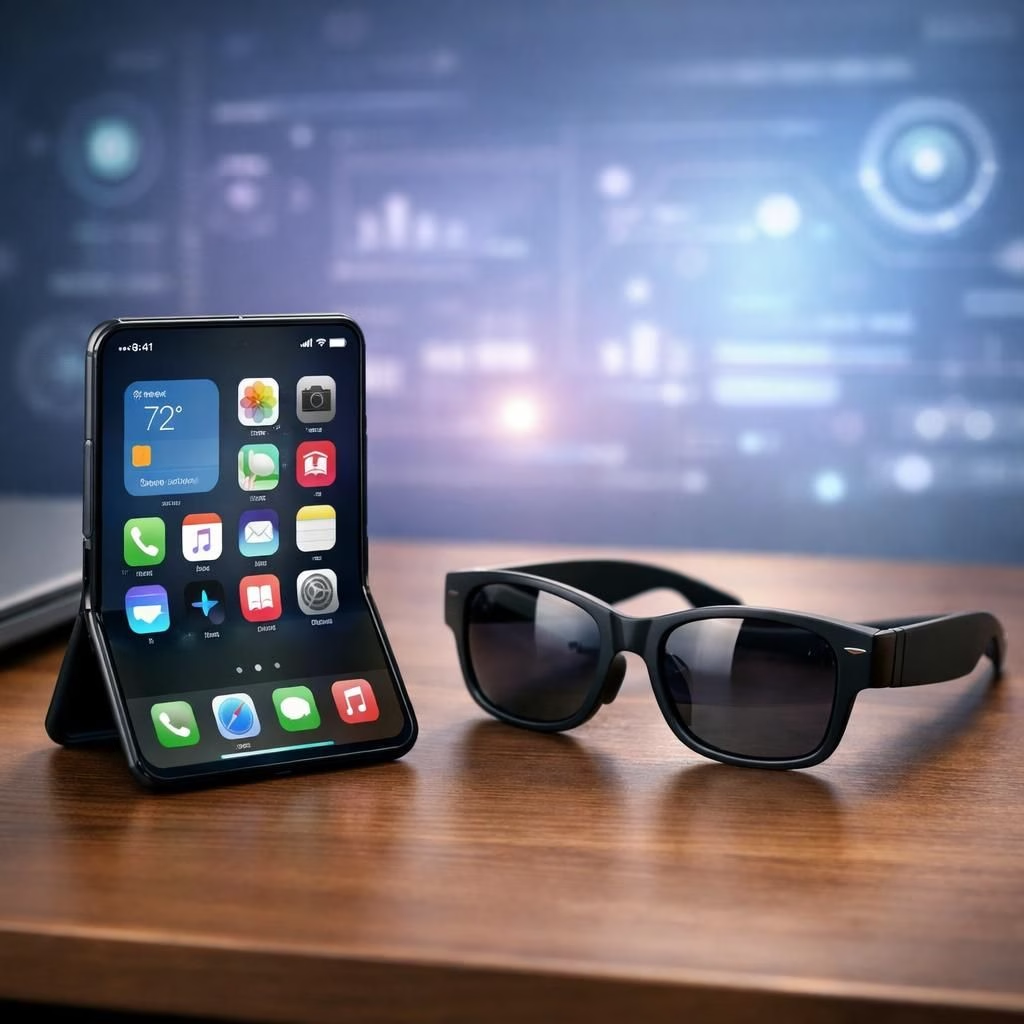
Apple’s new CEO John Ternus takes the helm on September 1, 2026, and in less than two weeks he is expected to unveil a foldable iPhone alongside the iPhone 18 Pro lineup and a raft of other goodies. The foldable iPhone is pitched as the company’s biggest product launch in a decade, a move that would set a high bar for a company famous for careful changes rather than headline-grabbing stunts. Yet Bloomberg reports that outgoing Tim Cook leaves behind a “strong pipeline” of devices, suggesting Ternus has a runway longer than a runway at a foggy airport. There is buzz about AI and Tag B among the plans, and investors are listening, hoping this next era will spring from a more dynamic cadence than the previous one.
AI AR glasses in Apple’s 2026 roadmap
Bloomberg’s chatter points to a long list: refreshed Macs and iPads with touch capabilities; a foldable iPad possibly arriving late 2026 or early 2027; and a set of wearables that can overlay digital information on the real world. The rollout would also expand Apple’s camera stack and software, potentially expanding opportunities for developers and creators. The foldable iPhone and iPhone 18 Pro models would sit alongside new features that help Siri understand context, anticipate needs, and speed up routine tasks. The strategy reads like a gallery of ambitions rather than a single launch, which is exactly how Apple has built momentum—momentum that makes analysts smile and consumers dream of a lighter morning commute with fewer dongles.
- Touchscreen Macs are on the horizon, bringing a modern input method to portable machines.
- A foldable iPad is reportedly a priority, with late 2026 or early 2027 as potential windows.
- AI-powered wearables and Tag B devices would overlay digital data onto the real world, expanding the Apple ecosystem.
AR glasses era and AI-infused wearables
Beyond the foldable iPhone, rumor mill hints at new cameras and intelligence-enabled wearables that can capture moments and context. Apple is said to be exploring a family of sensor-driven accessories that feed data into iPhone software and Siri. The idea is to create a seamless loop: sensors collect, software assists, and the iPhone responds with timely actions. The company may also experiment with a smart Tag B glasses concept that can display notifications, play music, and offer navigation cues without reaching for a phone. This is a space where Apple could differentiate itself by balancing privacy, user experience, and convenience, a tricky mix that demands not just clever hardware but careful software governance. The optics and companion apps would need to feel native, not gimmicky, if users are to embrace them in everyday life.
There’s potential for a Tag B ecosystem that keeps devices coordinated while addressing privacy concerns and UX consistency.
In addition to wearables, Apple is rumored to advance a smart home hub with Siri-driven control, a tabletop robot for video conferencing, and a privacy-focused security device. A cohesive ecosystem could make Apple devices feel more integrated, but it also invites scrutiny and competition with established players. For consumers, the bottom line is clear: more devices in the pipeline mean more possibilities for seamless experiences, but also more decisions about how much one brand should steer the connected home.
What do you think about this ambitious lineup? Share your thoughts in the comments below.
Original reporting by Bloomberg inspired this post. Thank you to Bloomberg for the original material: Bloomberg.
Practical impact and timeline for readers
For everyday users, the most tangible benefit could be fewer devices that feel disjointed. If Apple truly threads foldable hardware, AI-powered assistants, and AR capabilities into one ecosystem, the result might be smoother software updates and more context-aware features across devices. To plan ahead, consider how a potential foldable iPad or AI wearables could fit into your workflow, homes, and leisure time.
- Assess whether a foldable iPad would replace some current devices in your setup.
- Think about how AI-powered features could simplify daily routines, such as reminders, scheduling, and smart-home controls.
- Evaluate privacy settings early, especially for wearables and glasses that collect sensor data.
Frequently asked questions
Q: When might a foldable iPad or AR glasses arrive?
A: Bloomberg hints at late 2026 to 2027 for a foldable iPad and a long-term AR glasses program could stretch into the 2028–2030 window, depending on regulatory and technical hurdles. Tag B devices may evolve gradually rather than debuting in a single shock moment.
Q: How should I prepare for AI features across devices?
A: Start by reviewing your current devices’ software update plans and privacy settings. Look for improvements in Siri context awareness, automated routines, and cross-device handoffs that reduce friction in daily tasks.
Q: Will the new products affect pricing or bundles?
A: Apple’s history suggests new platforms come with premium pricing and potential bundles. Budget for compatible accessories and consider trade-ins to maximize value over several years.
External sources
- Bloomberg — coverage and context on Apple’s leadership and roadmap.
- Apple Newsroom — official updates on hardware and software initiatives.
- CNBC Technology — broader tech-market perspectives and rumors around AR and AI devices.
References
Original source: India Today