

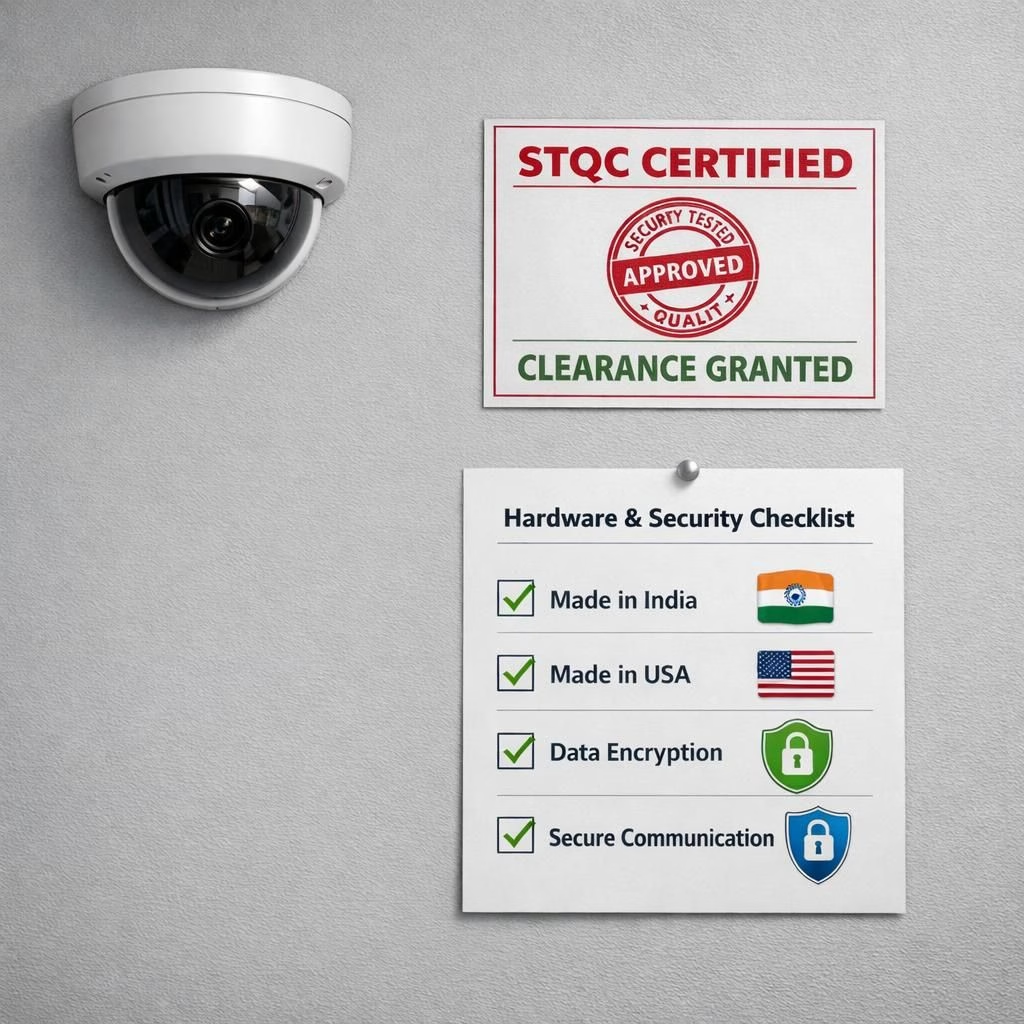
India CCTV security has become a national priority as the government moves from policy statements to practical steps. Starting April 1, 2026, internet-connected CCTV cameras sold in India must pass through the STQC clearance framework. In plain English, no more plug-and-play surveillance devices from abroad without an official stamp of approval. This is not a rumor; it’s a deliberate move to strengthen national security and reduce cybersecurity threats across urban and rural environments.
India CCTV security gains guardrails that actually work
Under the new rules, manufacturers must disclose the key components used in their cameras, including the origin of the system-on-chip (SoC) or processor. The STQC clearance will test cameras on encryption, hardware origin, firmware integrity, and tamper resistance. Tests will also check whether data can be accessed remotely or exposed to unauthorized updates. Even devices assembled in India will require clearance, and products failing checks cannot be sold legally in the country. It sounds strict, but it is designed to be practical and bite-sized for manufacturers as well as users.
STQC clearance steps into the spotlight for 2026 cameras
What does this mean for brands and the market? Chinese brands such as Hikvision, TP-Link, and Dahua Technology previously enjoyed a large market share. The new framework aims to level the field and raise the bar for everyone. The STQC clearance framework will, in practice, raise the bar for security while providing a clear path for vendors to get products onto shelves. Importantly, existing cameras in use will not be seized, and current owners should not expect their devices to stop working immediately. Yet updates and after-sales service could face delays or additional checks as companies align with the new standard. Domestic players like CP Plus, Prama, Quobo, Matrix, and Sparsh have stepped up production and now hold a meaningful share of the market. With tighter compliance comes higher costs and possibly fewer supplier options, which could nudge prices up in the mid and premium segments. The market is undergoing a careful transformation, not a collapse.
Beyond the business angle, cybersecurity remains a core concern. Strong encryption, verified firmware, and tamper-resistant hardware reduce the risk of breaches. Consumers gain peace of mind when camera firmware comes with signed updates and clear origin information. However, some fear that the cost of compliance will reach into sticker prices. The policy invites innovation, not just compliance. It nudges manufacturers to invest in local supply chains and safer software practices. The result could be better security for homes and small businesses alike, even if wallets feel a pinch at checkout.
Cybersecurity in 2026: what buyers should know
For buyers, the shift is a reminder to check for certifications, update cadence, and data handling policies. Look for cameras with encryption, secure boot, and transparent hardware sourcing. Ask vendors about firmware updates and how often they occur. This is cybersecurity in action—a practical, incremental improvement that takes it from a buzzword to a feature buyers can use. The better the security posture, the more resilient your surveillance system becomes against wandering malware and opportunistic intruders.
In short, the policy favors a safer digital ecosystem without turning every consumer into a security auditor. Prices may rise, but the value is clearer: better privacy, stronger protections, and a clearer standard for what qualifies as a “safe” internet-connected camera. India’s CCTV landscape is at a turning point, moving toward trusted manufacturers and verifiable hardware provenance.
Timeline and practical steps for manufacturers
- Submit product specifications and hardware origin information
- Undergo STQC clearance testing for encryption, firmware, tamper-resistance
- Receive clearance certificate and update labeling
- Align after-sales service and distribution with the clearance requirements
For consumers, this means a period of adaptation. Shops may stock up as brands renegotiate supply chains. Smaller installers may need to retrain crews to interpret the new firmware signing and update prompts. The net effect should be a steadier, safer ecosystem, but the ride may include price bumps and occasional stockouts in mid-range segments.
Practical buying tips for 2026
- Look for STQC clearance marks on packaging, check for hardware origin disclosures, and ensure the device supports signed firmware updates.
- Ask vendors for documentation and service terms, especially around update cadence and remote access controls.
- Verify encryption capabilities, secure boot, and transparent firmware signing. Keep a checklist handy when shopping.
What do you think? Share your thoughts in the comments. And a big thank you to the original article for providing the material that inspired this post. Linkback attribution: Thank you to the original source article at Original article.
Implications for buyers under STQC clearance rules
For buyers, the shift represents a practical upgrade in how devices are sourced. You can expect clearer disclosures about hardware provenance and update practices, which improves privacy and resilience. The STQC clearance process aims to weed out unreliable devices while encouraging legitimate imports and local manufacturing. The policy also nudges installers and small businesses to build safer routines around firmware signing and secure remote access controls.
As India’s CCTV market evolves, consumers should remain vigilant about encryption levels, firmware signing, and data-handling policies. The aim is to make the surveillance ecosystem safer without turning shoppers into compliance experts.
What this means for consumers and installers
- Expect better security practices and clearer product information at the point of sale.
- Some brands may adjust pricing due to compliance costs and supply constraints.
- Installers might need to retrain staff to interpret new firmware prompts and signing requirements.
FAQ
- Will existing CCTV cameras stop working after April 2026? No. The policy does not seize current devices, but future sales and updates will be subject to clearance.
- Why is STQC clearance important? It helps ensure encryption, firmware integrity, and tamper resistance, reducing breach risks.
- Will prices rise? Prices may rise modestly due to compliance costs and limited suppliers, but Indian brands are expanding to meet demand.
- What should buyers look for? Look for STQC clearance, encryption, secure boot, and transparent hardware sourcing.
Conclusion and next steps
The policy aims to create a safer, more transparent CCTV ecosystem in India while balancing costs for consumers and businesses. For shoppers, the practical takeaway is clear: check packaging, verify hardware origin, and ask for firmware signing details. For manufacturers, the path is a push toward safer software practices and stronger domestic supply chains.
References
External sources
- STQC Testing and Certification (STQC)
- Ministry of Electronics and Information Technology (MeitY)
- Security guidelines (general reference)