

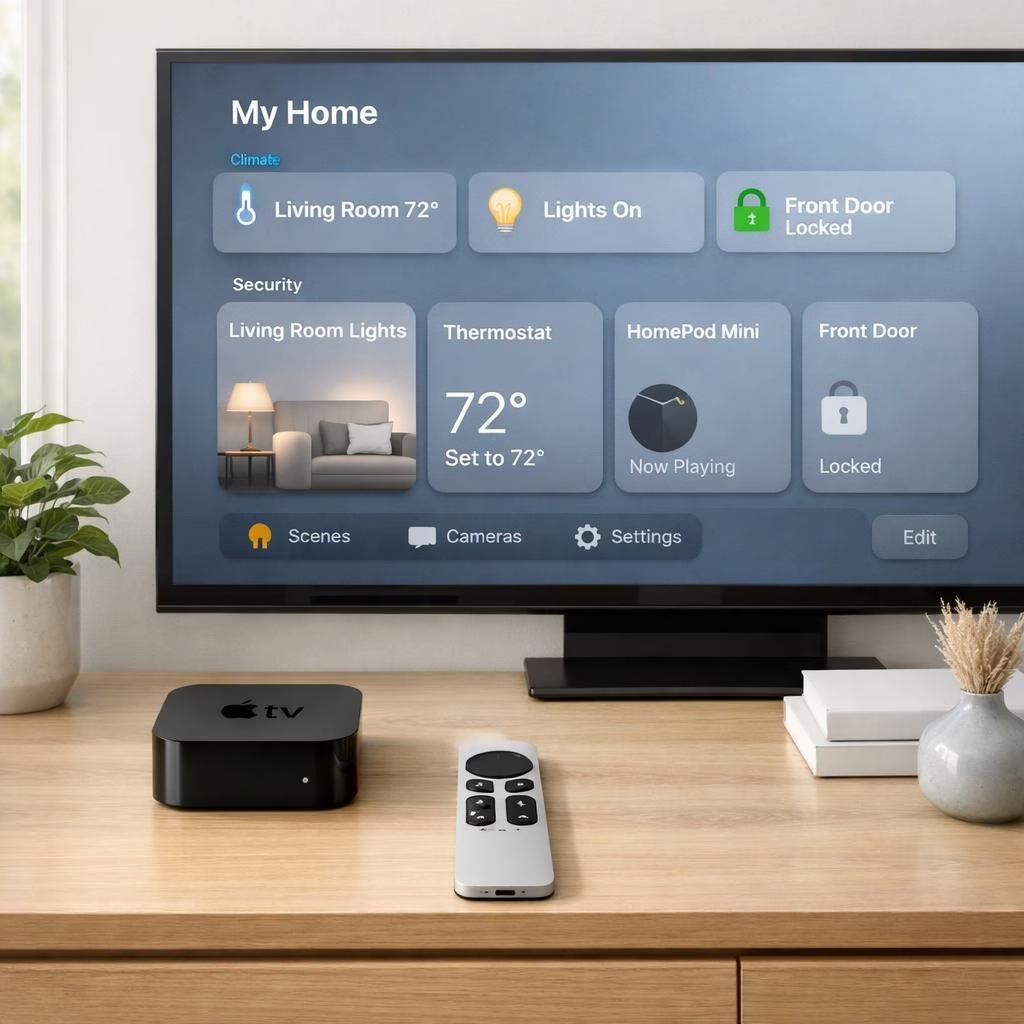
Apple TV returns with a subtle wink: a new Apple TV model is likely to drop in April or May 2026, just before WWDC, giving developers a window to test tvOS 27 on upgraded hardware. It reads like a well-timed spoiler for Apple’s living-room saga: fix the hardware first, then let the software do the talking. The rumor mill is quiet, but the signals are loud enough to deserve a closer look. Lower inventory of current Apple TV units and HomePod minis hints a fresh model is close at hand. If you care about performance, AI features, and a smoother mix of streaming and gaming, you’re not imagining things — this could be the upgrade you’ve been waiting for.
Technically, Apple’s timing makes sense. A WWDC window in June is tailor-made for developers to push apps, test the new tvOS 27, and get feedback before the public release. The goal is to give the ecosystem a polished runway: fewer last-minute bug fixes, more optimized experiences, and a smoother hand-off from hot concept to live product. The April or May drop window would also help Apple balance hardware and software, ensuring the new features land in a device that can actually run them. It’s not just about a newer chip; it’s about a more confident, integrated experience across streaming, gaming, and smart home control.
Apple TV: Developer-First Refresh Ahead of WWDC
The buzz centers on a refreshed model rumored to feature the A17 Pro chip, a notable leap beyond the A15 powering today’s boxes. For developers building apps on Apple TV, the A17 Pro is a big deal — faster launches, smoother AI tasks, and better multitasking help bring ambitious apps to life without begging for mercy from the hardware gods. If the new Apple TV hits as expected, we’ll see snappier performance in everything from streaming overlays to on-device processing for smarter recommendations. With tvOS 27 on the horizon, developers can gauge how apps leverage the new hardware features.
Beyond the chip, the hardware rumor mill hints at 8GB of RAM and storage options of 64GB or 128GB, with the possibility of larger storage if Apple leans into AAA gaming. Those spec bumps matter: they translate to more room for background tasks, more ambitious apps, and less time spent waiting for assets to load. The idea is simple: give developers a roomy canvas so they can experiment, optimize, and deliver a compelling experience on day one, not week two.
And yes, there’s more. The refreshed Apple TV is expected to maintain a clean, familiar remote and interface while introducing practical upgrades like HDMI pass-through and stronger Dolby features. Improved Dolby Vision and Dolby Atmos could elevate every movie night, while pass-through helps you simplify cable setups with soundbars and consoles. In other words, Apple is quietly upgrading the whole home-theater stack, not just the streaming end of the box.
tvOS 27: A17 Pro in Action for Gaming and AI
tvOS 27 is positioned as the software backbone that makes the hardware sing. The most exciting part, according to insiders, is deeper integration with Apple Intelligence — the company’s AI framework — which could bring smarter on-device processing, better app suggestions, and more responsive experiences. For developers, that means more opportunities to test AI-driven features in a real-world, living-room setting. For users, it could translate to quicker recommendations, smarter search, and apps that adapt to your routines rather than requiring a manual reboot of your brain to use them.
Gaming is another big talking point. If Apple doubles down on AAA titles on Apple TV, the A17 Pro would be up to the task of delivering engaging visuals and smoother performance. Resident Evil and Assassin’s Creed are mentioned as potential contenders, with visuals possibly enhanced through MetalFX upscaling. Don’t mistake this for a full-console replacement, but think of it as a powerful mid-range gaming device that can handle modern, visually rich titles without needing a separate gaming rig. That could broaden Apple TV’s audience — from casual streamers to hobbyist gamers looking for a living-room companion that can co-exist with a set-top box and a game controller.
Of course, success hinges on partnerships. Apple can have the fastest chip and the slickest software, but if developers aren’t on board or if the games don’t land well with the audience, the ambition falters. Still, the groundwork looks solid: a unified platform where AI features, gaming, and streaming can all be part of a single, coherent experience. tvOS 27, by design, invites experimentation and iteration in the early weeks, a strategic approach that often yields better outcomes than a launch-and-hope-for-the-best approach.
On the hardware side, other features tease an even more complete package. HDMI pass-through would improve compatibility with home-entertainment ecosystems. Enhanced Wi‑Fi and Ethernet options could address the network reliability many households crave. A refined lineup of Dolby features would push the audio experience closer to cinema-grade, while the familiar remote keeps the day-one setup painless. Put simply: the next Apple TV aims to be a more capable hub, not just a glorified streaming box.
The current Apple TV lineup appears increasingly out of step with Apple’s broader ecosystem. The A15 chip struggles to meet tvOS 27 and the AI ambitions, while low inventory nudges customers toward the new model. This feels less like a retirement and more like a scheduled upgrade. The shift aligns with Apple’s strategy of phasing out older hardware to make room for smarter software and more capable devices that can keep pace with user expectations and developer needs.
Pricing is expected to stay sensible. The Wi‑Fi model could start around $140, and the Ethernet model around $160. Apple seems intent on balancing accessibility with the value of the upgrades, ensuring a broad audience can enjoy the improved experience without feeling priced out of the ecosystem. The math is simple: more capability at a price point that makes sense for both new buyers and existing users looking to upgrade.
As a central piece of Apple’s smart home ambitions, the new Apple TV could serve as a true smart home hub with enhanced HomeKit integration, stronger connectivity, and more reliable control across devices. This would cement its place in the living room as a core part of the family’s tech stack, not just a gadget you forget about after a couple of weeks.
If you’re a developer, gamer, or smart-home enthusiast, the April or May 2026 window looks especially promising. The hardware upgrades, new gaming potential, and reinforced smart-home capabilities position the device as more than a streaming box. It’s shaping up to be a multifunctional hub that plays nicely with the rest of Apple’s ecosystem and your daily routines.
Whether you’re chasing AI features, AAA gaming, or a smarter home, this anticipated refresh presents a compelling blend of performance, versatility, and value. The direction seems clear: Apple wants a hardware-software duet that’s stronger together than apart, especially when your living room doubles as a testing ground for the next wave of innovations.
Original article: Matt Talks Tech — thank you for the original coverage and insights.
Source & Image Credit: Matt Talks Tech
Practical steps for developers and home theater enthusiasts
- Review your app roadmap to take advantage of on-device AI and faster responses on tvOS 27 powered hardware.
- Test HDMI pass-through setups with your existing soundbars and AV receivers to ensure smooth integration.
- Audit asset pipelines and loading times to leverage the extra memory headroom if Apple expands storage options for AAA games.
- Plan early for UI and UX tweaks that can benefit from faster on-device processing and smarter recommendations.
FAQ
-
Q: Will the new Apple TV be more expensive than today’s models?
A: The rumor mill suggests pricing will stay sensible, with the Wi‑Fi model around $140 and the Ethernet variant near $160, making the upgrade accessible for many users. -
Q: Is HDMI pass-through confirmed for the new Apple TV?
A: Hardware improvements like HDMI pass-through are cited as likely, which would improve compatibility with soundbars and gaming consoles. -
Q: When will tvOS 27 officially launch?
A: tvOS 27 is expected to arrive later in the year, with WWDC 2026 serving as a key milestone for developers to test and refine their apps. -
Q: Can Apple TV support AAA gaming on the new hardware?
A: The A17 Pro upgrade and potential storage bumps are aimed at enabling more ambitious gaming, including well-known franchises, without a separate console.
Conclusion
Taken together, the April–May 2026 window looks set to redefine Apple TV as a more capable, integrated hub for streaming, gaming and smart home control. The pairing of a powerful chip with tvOS 27 promises a cohesive experience that’s ready for the living room, not just a collection of features. If you’re a developer, gamer, or smart-home enthusiast, this refresh could be worth watching closely as WWDC approaches.
References
- Original source linkback: https://www.geeky-gadgets.com/apple-tv-4k-2026/
- Matt Talks Tech coverage: Matt Talks Tech
References