

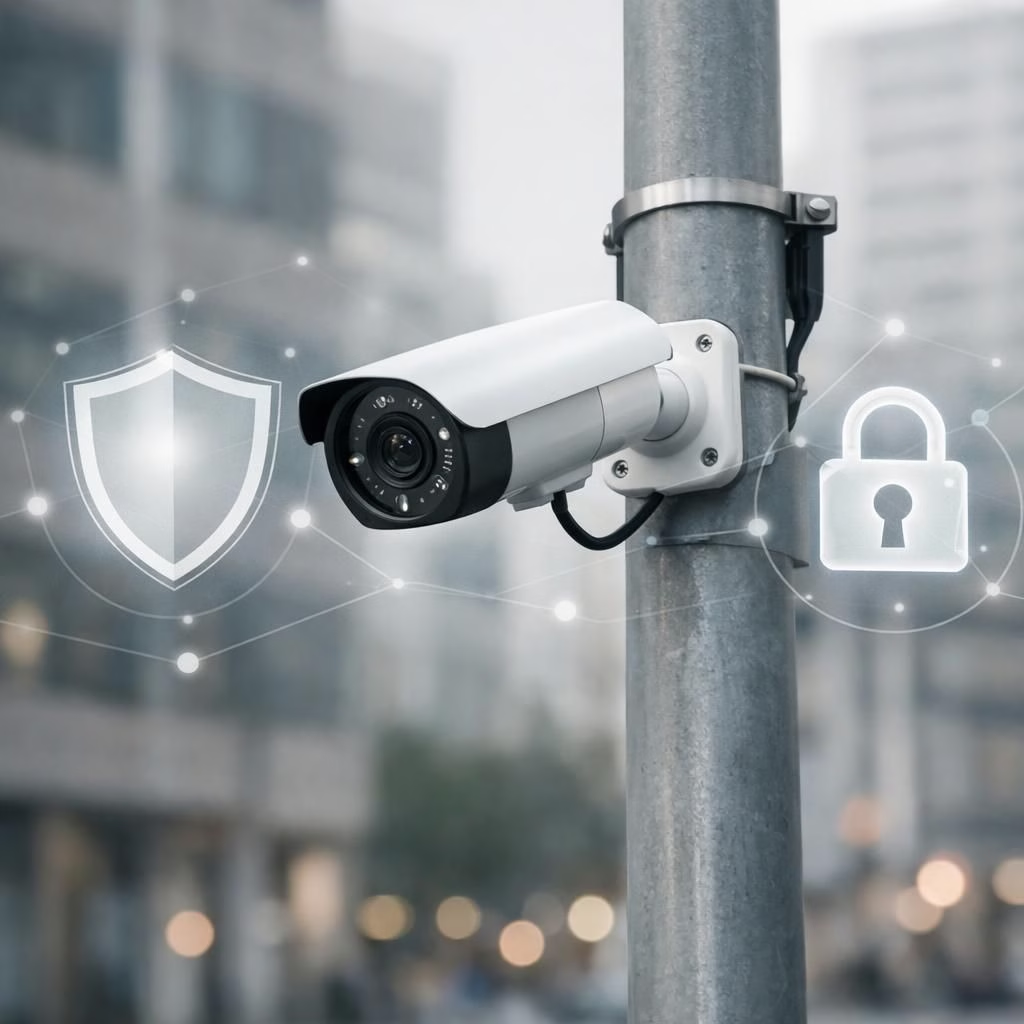
India has decided to ban internet-connected CCTV cameras and related hardware from Chinese manufacturers, including Hikvision, Dahua Technology, and TP-Link. From April 1, new certification requirements under the STQC framework take effect. Under these rules, all CCTV products must receive approval before they can be sold in India. The move aims to tighten security standards for connected devices, as these products can become surveillance tools vulnerable to hacking. Ultimately, the policy treats every camera as a potential entry point into a larger digital ecosystem and patches the door.
The STQC framework requires CCTV devices to pass a battery of tests before they reach stores or government offices. This includes prohibitions on hardcoded passwords and hidden backdoors, as well as requirements for secure firmware updates and robust encryption. Vendors must demonstrate that devices resist tampering at both hardware and software levels. Officials say the tests are designed to catch common flaws that criminals could exploit to hijack streams or access sensitive footage. The aim is simple: make surveillance devices behave like trusted components rather than insecure backdoors.
CCTV and the security framework behind India’s 2026 push
In 2021, Parliament heard that roughly one million cameras installed in government facilities came from Chinese suppliers. Officials warned about vulnerabilities that could route video streams abroad or enable unauthorized access. The policy centers on practical steps: better inspection, stronger encryption, and clearer responsibility for firmware. Indian laboratories may inspect source code if a manufacturer uses proprietary communication protocols rather than standard ones. The net effect is a tighter loop of accountability around every device that touches a government network.
Global surveillance and CCTV standards for devices
India’s stance mirrors a broader global trend. The United States banned Hikvision and Dahua equipment in 2022 over security concerns. The United Kingdom and Australia have imposed similar restrictions on Chinese-made surveillance devices. Governments now require tamper-proof enclosures, malware detection, and verified encryption for devices used in the state. For manufacturers, the bar is rising: share testing results, provide access to source code when requested, and show that every update lands securely. This global shift underscores a shared belief that surveillance equipment should enhance safety without creating backdoors for criminals or foreign leverage in critical infrastructure.
For manufacturers, the bar rises: share testing results, provide access to source code when requested, and demonstrate secure update mechanisms. This global shift reinforces the idea that surveillance equipment can improve safety without opening doors to misuse. In India, the framework now aims to apply these principles across the market. The outcome is a more predictable, accountable supply chain for public and private networks alike.
Practical implications for Indian businesses
The policy does not target domestic manufacturers. Officials say local players can compete more fairly now that there is a standardized testing pathway. Indian suppliers who invest in robust QA, transparent security practices, and frequent updates stand to win government contracts and consumer trust alike. For importers and retailers, there is a new compliance checklist: verify STQC status, demand clear certification documents, and keep a ledger of firmware versions to prove ongoing security maintenance. While the process may raise upfront costs, it also reduces the long-term risk of cyber incidents that could disrupt services or erode customer confidence.
- Hardcoded credentials are out; unique, audited credentials are in.
- Firmware must be updatable securely, with verifiable update mechanisms.
- Encrypted communications are mandatory for all device traffic.
- Tamper resistance and clear hardware protections are expected features.
- Source code access is possible when proprietary protocols are used, ensuring transparency.
For consumers, the change means better security on the devices they rely on at home and in small offices. It also signals that buyers should favor products with clear security disclosures and ongoing update support. If a device cannot obtain STQC clearance, it should not enter the Indian market, which reduces the chance of a surprise security flaw slipping through the cracks.
What this means for the future of surveillance and daily life
Looking ahead, the pattern set by India aligns with what many governments want: surveillance that protects people, not surveillance that quietly undermines digital safety. Businesses will need to adapt procurement practices, engineers will design with security by default, and users will benefit from devices that can be trusted to defend rather than compromise their networks. The shift also encourages domestic innovation—local firms can build and certify products that meet the higher bar, potentially driving better prices and more reliable service for Indian users over time. As with any major security refresh, there will be growing pains, but the destination—a safer, more transparent ecosystem—seems worth the effort.
If you manage CCTV networks or simply care about digital security, share your thoughts in the comments below. Your experiences with this policy, its implementation, and its impact on day-to-day safety are valuable and welcome.
Original article via Reuters: https://www.reuters.com/world/asia-pacific/india-bans-hikvision-dahua-cameras-april-1-2026/ — Thank you to Reuters for the original reporting and material that informed this piece.
FAQ about India’s CCTV certification push
What is STQC and what products require clearance?
The STQC framework is a government program that validates security and reliability for digital devices. CCTV cameras and related hardware sold for Indian use must pass its tests to qualify for certification.
Does this affect consumer home cameras?
Yes. Any CCTV product sold in India, including consumer home kits, will need STQC clearance before entering the market. This aims to reduce the chance of insecure devices being deployed in homes and small offices.
How will enforcement work?
Authorities will require certification documents at the point of sale. Importers and retailers should maintain a ledger of firmware versions and update histories to prove ongoing compliance.
Will this impact foreign and domestic manufacturers differently?
The policy applies to all suppliers. Officials say local manufacturers can compete more fairly because they can participate in the standardized testing process and demonstrate robust security practices.
Conclusion and next steps
The India-led certification push signals a shift toward safer, more transparent connected devices. For businesses, the path forward is clear: prioritize security-focused development, document certifications, and maintain transparent firmware updates. For consumers, expect better protection and longer-lasting devices in daily life as the market adapts to higher standards. The journey will unfold over the coming months, with ongoing collaboration between industry, labs, and regulators.
References
Original article via Reuters: https://www.reuters.com/world/asia-pacific/india-bans-hikvision-dahua-cameras-april-1-2026/ — Thank you to Reuters for the original reporting and material that informed this piece.