

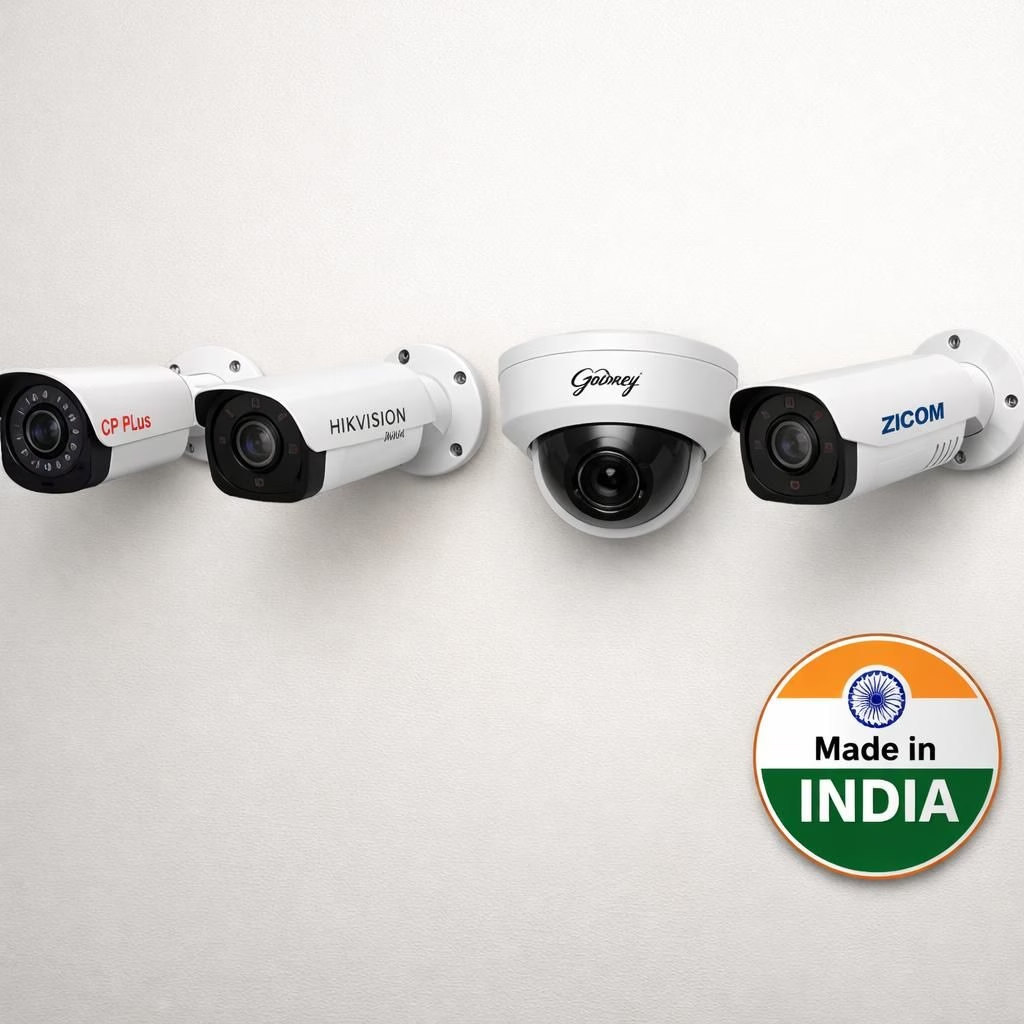
Starting April 2026, India’s CCTV ecosystem began a brisk shift. For CCTV India and Security Tips in 2026-minded readers, the decision to bar certain foreign devices under STQC rules signals not the end of the world but a new chapter in the security narrative. The government’s stance targets products made in China or using Chinese chipsets in the standards-testing regime, and the effect is a marketplace retooling with a distinctly Indian accent. The move is not a temper tantrum; it is a calibrated nudge toward resilience, local capability, and a quieter, steadier supply chain orchestra.
What the policy aims to do is straightforward: reduce risk, increase domestic manufacturing, and encourage more transparent firmware. The result is a market that used to lean on a single-league international lineup now embracing a broader cast. Domestic players—CP Plus, Qubo, Prama, Matrix, Sparsh—have filled the gap with renewed vigor, shifting supply chains to Taiwanese chipsets and localized firmware. Counterpoint Research’s February snapshot shows Indian firms commanding a sizable share, while CP Plus alone now holds a strong 45–50% slice, up from the prior 20–25%. The message is clear: the home team is not just playing defense; it is building an offense with local talent and global partners alike. For CCTV India stakeholders, the change also means closer attention to Security Tips in 2026 guidance on risk management and procurement.
CCTV India: The Great Realignment
As the vacuum left by Chinese brands widened, the market welcomed an energized domestic cohort. CCTV India is becoming a phrase that buyers and integrators now use with growing frequency. Bosch and Honeywell still occupy the high-end arena, competing where milliseconds matter and total cost of ownership remains a priority for enterprise buyers. This division of labor across market segments is healthier than a one-note chorus. Smaller traders and former smartphone brands like Xiaomi and Realme, which once flooded the category, have exited the space after certification challenges. The net effect is a more curated lineup, where buyers can choose from cameras that are certified, supported, and aligned with national security standards.
The setback faced by Hikvision—its largest factory, capable of producing two million cameras per month, being denied certification—became a case study in corporate pivots. Rather than flee the market, Hikvision has pursued joint ventures with Indian partners, illustrating pragmatic adaptation rather than retreat. Dahua’s business contraction of about 80% narrows its footprint to analog cameras that are increasingly becoming antique relics in a world chasing smart, internet-enabled devices. The upshot is a marketplace that rewards innovation, localization, and a steady supply chain—three features that investors and buyers alike crave in today’s tech-enabled world. For CCTV India buyers, this shift translates into more predictable supply and clearer accountability across the lifecycle of a camera system.
What does this shift mean on the ground? For buyers, it means more options that comply with local standards, a more predictable regulatory environment, and the potential for better after-sales service. For manufacturers, it signals a transition from dependency to collaboration—closer ties with local system integrators, channel partners, and certification bodies, all designed to shorten the path from factory floor to customer site. And for end users—businesses, schools, hospitals—the result is not just policy compliance but a more transparent product lifecycle, with firmware updates, security patches, and clear accountability baked in from the start.
Security Tips in 2026: Smart Choices for Buyers
On the buyer side, the landscape is evolving, but the basics remain strong: verify certification, demand traceable firmware, and consider total cost of ownership. The rise of domestic brands does not erase the need for quality. If anything, it elevates it, because certification standards become the floor, not the ceiling. Institutions upgrading their surveillance ecosystems face several practical questions: what is the total cost of ownership, how robust is the firmware update cycle, and what is the service response time when a camera goes down in the middle of a late-night shift? For CCTV India practitioners, adopting Security Tips in 2026 can help frame responsibilities across procurement, deployment, and ongoing support.
The cost dynamic is nuanced. Analysts point to a 15–20% rise in BOM (bill of materials) for mid- and high-end models due to a shift toward Taiwanese and U.S. chipsets, which offer performance and security assurances that many buyers value. Lower-end cameras, produced locally, have steadier price trajectories because supply chains and manufacturing costs are more tightly controlled in-country. For buyers, the takeaway is to align procurement with the security needs of the facility. Critical sites may justify premium equipment with longer warranty periods and stronger vendor support, while smaller deployments can benefit from cost-competitive, certified options with scalable firmware updates.
Two additional realities emerge from this transition. First, the high-end market remains a battleground for global players who prioritize security features, reliability, and ecosystem compatibility. Second, the supply chain becomes more robust as domestic manufacturers diversify sourcing, enabling quicker replacements and easier compliance with local regulations. In practice, this means better risk management for public safety deployments and more predictable budgeting for city-scale projects. In short, media attention aside, the policy shift nudges the market toward safer, more sustainable growth rather than short-term gains.
For organizations modernizing their surveillance, a few best practices help navigate the new normal. Prioritize vendors with clear certification records and straightforward firmware update paths. Favor devices with transparent hardware sourcing information and a published security update cadence. Require open interfaces for interoperability with existing security systems, so upgrades don’t create lock-in or degrade your security posture. And don’t forget training for staff—good habits today prevent costly incidents tomorrow. In a market where the story keeps unfolding, prepared buyers turn uncertainty into opportunity. For ongoing guidance, many teams consult Security Tips in 2026 as part of their procurement playbook.
The broader takeaway for India is a strategic win: stronger domestic manufacturing, enhanced digital security, and a more resilient, self-reliant supply chain. The shift does pose affordability questions for some buyers, particularly smaller institutions upgrading to certified systems, but these pressures are being addressed through a combination of local manufacturing, vendor competition, and smarter procurement strategies. It’s a constructive balance: price discipline where possible, with higher investment in critical security features where it matters most.
As the sector matures, stakeholders—policymakers, manufacturers, and end users—will refine deployment playbooks that balance cost, capability, and compliance. The move aligns with a broader national push toward digital security and supply chain independence, while also stimulating local employment and technical skill development. The result is a more robust, transparent market where public safety and private security can coexist with innovation and reasonable prices.
Ultimately, the story is about choices. India’s CCTV market is choosing variety, certification, and local integration over a single-source model. It’s a storyline where domestic brands step into the spotlight, and global players adjust their strategies to fit a more diverse, consequence-aware landscape. If you’re shopping for an upgrade or planning a campus-wide security refresh, this is a moment to map needs to capabilities with clear vendor diligence, rather than chasing the loudest marketing claim. Your future self, and your security team, will thank you for it.
Thank you to The Economic Times for the original reporting and valuable market context that helped shape this analysis. Original article: The Economic Times – Security Cameras coverage.
Share your thoughts below: what challenges or opportunities do you foresee as CCTV India strengthens its domestic manufacturing base? We’d love to hear your experiences in the comments.
FAQ
- What does the STQC certification ban mean for buyers and installers? It signals a shift toward certified, domestically-supported devices that integrate with local systems.
- Will prices rise across all camera categories? Analysts expect a 15–20% BOM increase mainly in mid- to high-end models, with lower-end locally produced cameras staying more price-stable.
- Which brands are gaining the most from the realignment? Domestic players like CP Plus, Qubo, Prama, Matrix, and Sparsh are expanding their market share.
- What should organizations check before upgrading? Prioritize clear certification records, firmware update cadence, and open interoperability interfaces.
- Where can I find ongoing guidance on best practices? See updates and resources linked to Security Tips in 2026.
References
- The Economic Times – Security Cameras coverage: https://economictimes.indiatimes.com/industry/telecommunication/security-cameras
- Times of India article (original source linkback): Times of India – Hikvision and Dahua coverage
External Links
- Counterpoint Research — India CCTV market insights
- Bosch Security Surveillance — High-end camera solutions
- Honeywell Security — Enterprise-grade surveillance