

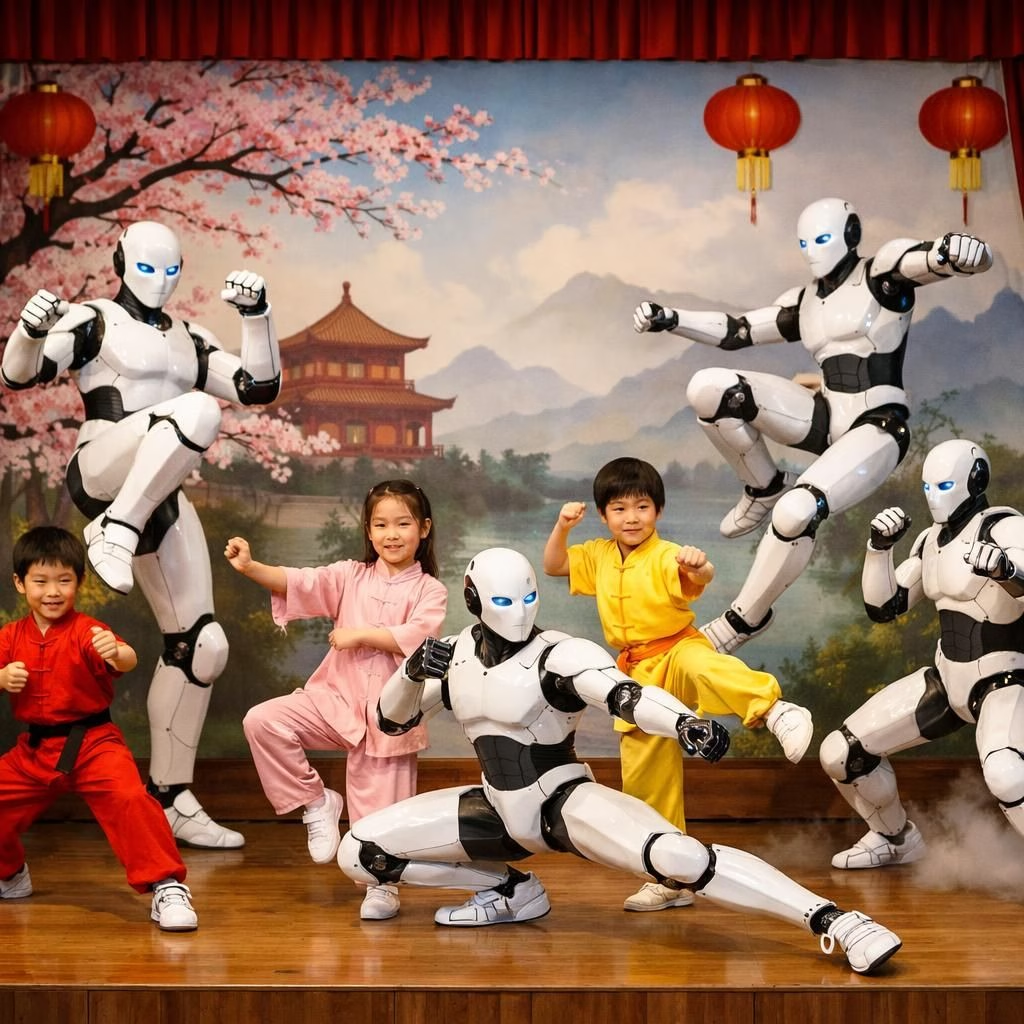
China‘s annual CCTV Spring Festival Gala is more than a broadcast event; this year it doubled as a showcase for humanoid-robotics from four domestic startups. Prototypes from Unitree Robotics, Galbot, Noetix, and MagicLab performed martial arts routines, swordplay, and choreographed backflips. Child performers watched in amused awe as the moment signaled that China isn’t just a factory—it aims to turn humanoid-robotics into a future workforce and symbol of industrial pride. The gala underscored a policy push to fuse culture, manufacturing, and AI.
humanoid-robotics in China: Gala highlights and goals
Beyond glitter, the gala reads as a public display of a broader ambition. China has long positioned robotics as both user and maker in modern manufacturing, and the startups demonstrated design diversity—modular joints, AI perception, and scalable control. They signaled potential integration into production lines rather than stand-alone showcases. Analysts note AgiBot shipped 5,100 humanoid robots in 2025, capturing about 39% of the global market, according to Omdia. IPO discussions are heating up for 2026 as startups plan to list. The public celebration reinforces the sense that China remains at the forefront of robotics policy, funding, and testing. The crowd’s cheers hint at a broader social license for automation in daily life and education.
humanoid-robotics momentum in policy and markets
Behind the spectacle, policy support and private funding are building momentum. The gala aligns with China‘s strategy to promote automation across industries, backed by subsidies and incentives. Investors are watching for several startup IPOs in 2026, signaling confidence in humanoid-robotics as a growth driver. Public demonstrations connect research labs to factory floors, turning curiosity into potential contracts and jobs.
China’s push in humanoid-robotics: manufacturing, AI, and momentum
China is at the center of a broader move toward embodied AI and automation. Elon Musk has argued that China will be the biggest competitor in humanoid-robotics, thanks to scale, manufacturing, and AI. Tesla plans to shift toward Optimus and may repurpose the Fremont factory to produce robots, with a long-run goal of millions of units per year. The path to full production remains challenging, but the excitement in China and elsewhere is real. Domestic AI startups continue to roll out frontier models during the Lunar New Year, linking lab breakthroughs to factory-floor use cases.
The Lunar Year cadence keeps dialogue lively and visible, while demonstrations bridge labs and factories. China‘s push in humanoid-robotics rests on policy support and private investment, building a robust ecosystem for suppliers, talent, and investors.
Looking ahead to 2026, the convergence of entertainment, policy direction, and commercial ambition points to a tangible path for humanoid-robotics in China. The gala’s glitz illuminates how robots could assist aging populations, speed up production, and advance AI-enabled services. If you enjoyed the show or found the framing compelling, share your thoughts in the comments and tell us what you think about humanoid-robotics in China, 2026, and the future of AI-powered manufacturing.
Practical steps for organizations exploring humanoid-robotics
- Start with a task inventory to identify repetitive, precision-based actions suitable for humanoid-robotics.
- Estimate ROI by balancing throughput gains with labor cost reductions.
- Launch a small pilot in a controlled environment before full-scale deployment.
- Plan workforce retraining to blend automation with human skills.
- Establish data governance and safety protocols for AI-driven systems.
FAQ about humanoid-robotics in China
Q1: What is humanoid-robotics?
A1: It refers to robots designed to mimic human form and capabilities, used in manufacturing, logistics, and service tasks.
Q2: Why is this news significant for manufacturing?
A2: It signals a broader push toward automation, with potential productivity gains and new job categories that blend human and machine work.
Q3: What did Elon Musk say about competition?
A3: He has suggested that China could be the biggest competitor in humanoid-robotics because of its scale, manufacturing, and AI capabilities.
Q4: What is the 2026 outlook?
A4: The year is expected to bring more demonstrations, IPOs, and pilot deployments across industries, especially in smart manufacturing and logistics.
Conclusion: The momentum around China’s humanoid-robotics strategy points to a longer-term trend where automation supports productivity gains and a changing workforce. Public events, policy support, and private investment are aligning to move robots from labs to the shop floor. The pace will vary by industry, but the signs point to an increasingly automation-enabled economy.
References
- Times of India article: Chinese humanoid robots showcase at Lunar New Year event
- Omdia—Robotics market data
- Reuters Technology
- MIT Technology Review