

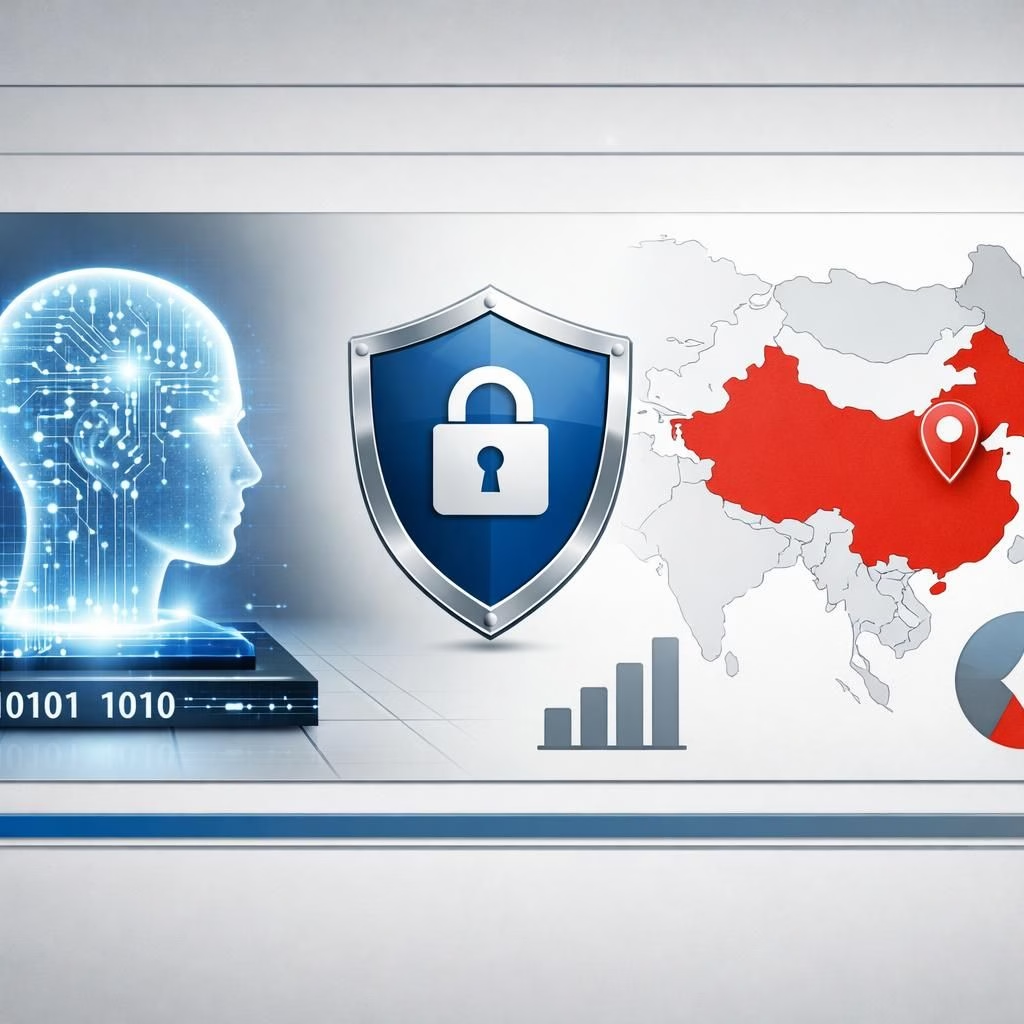
In 2026, the White House OSTP released a memo that reads like a policy thriller about AI security. It flags China AI theft as a growing risk to American innovation. The document argues that foreign entities, especially in China, distill American AI at industrial scale. The point isn’t that all foreign AI is plagiarized—it’s that AI security gaps and risk models are exploited. As Trump prepares to meet Xi in Beijing, the timing adds urgency: protect American innovation and preserve integrity. The memo notes tens of thousands of proxies operate in a coordinated effort to siphon U.S. AI advantage, a number meant to illustrate scale rather than guilt by association. The bottom line is simple: secure the pipeline, secure the frontier, and keep imitation separate from true innovation in AI security and trust.
AI security in 2026: Why China AI theft demands more attention
Beyond headlines, the memo argues that distillation campaigns can strip AI security protections from models. Yet AI security matters beyond political drama. A stolen model may not match genuine innovation in performance, but it can run on borrowed data and hit benchmarks at a fraction of the cost. The risk is strategic: actors could embed vulnerabilities or remove safeguards, making frontier AI easier to deploy for harmful purposes. For policymakers and industry, the message is clear: we need stronger vetting, better attribution, and more transparent distillation practices, without throttling legitimate research. The term China AI theft appears here as a shorthand for a broader pattern where profit meets policy risk. The OSTP memo emphasizes that diffusion of this tech without guardrails invites misaligned incentives and avoidable missteps. Yet the piece also offers a roadmap: defend essential AI capabilities, invest in trusted labs, and push for international norms that reward originality and responsible use. Policy guidance from NIST’s AI risk management framework and think tanks like Brookings AI governance inform this approach.
The OSTP memo on AI security and China AI theft: actions and concerns
Looking ahead, the OSTP memo frames policy options: export controls on semiconductor tech and AI software, closer scrutiny of outsourcing and proxies, and stronger security architecture around models. It urges steps that keep AI security tight while ensuring beneficial innovation. It notes that distillation lets bad actors borrow our best ideas while quietly removing guardrails. The piece also discusses Washington’s behind‑the‑scenes negotiations around the Trump-Xi talks and what a potential consensus might look like. The reference serves as a cautionary note about cost‑effective breakthroughs and the risk they pose to slower, safer Western models. The narrative includes the ongoing friction with Anthropic, and how security concerns have shaped discussions about privacy, safety, and accountability. Throughout, the OSTP memo keeps returning to a simple theme: preserve innovation, enforce security, and keep the field advancing with responsible guidelines. The overall tone remains pragmatic and optimistic: with the right checks, AI security can coexist with robust competition and global cooperation.
As with any high-stakes policy drama, the truth lies in how we translate words into safeguards. The White House’s stance is clear: monitor distillation, defend American AI, and insist on integrity as a baseline for global leadership. The world watches as the Trump-Xi dialogues unfold, and tech leaders watch even closer to ensure progress remains safe, transparent, and beneficial. If you enjoyed this look into AI security and the topic in 2026, share your thoughts about how you balance openness with security in frontier AI.
Original article acknowledgement: Thank you to the original source for enriching context and material.
AI security: practical steps for policymakers and industry
- Strengthen model vetting and provenance tracking to reduce risk of hidden backdoors.
- Limit untrusted distillation pipelines and proxy networks that siphon ideas without guardrails.
- Invest in trusted labs and transparent safety measures to maintain public trust.
- Promote international norms that reward originality, accountability, and responsible AI use.
Frequently asked questions
- What is model distillation, and why does it matter for security?
Model distillation transfers knowledge from a large system to a smaller one. It matters for security because flaws can be copied at scale if guardrails are weak. See the OSTP memo for context.
- Why is the term China AI theft used in policy discussions?
The term serves as a shorthand for a broader pattern where adversaries borrow capabilities while bypassing safeguards. The phrase appears in policy discussions to describe this risk.
- What can governments do to reduce risk without slowing innovation?
Authorities can tighten screening of supply chains, set clear guardrails for distillation, and fund trusted research labs while encouraging responsible international norms.
- How do you stay informed about AI policy developments?
Follow official updates from the White House OSTP and major think tanks; the current memo is a useful case study in balancing openness with security.
Conclusion: The takeaway is pragmatic—protect core AI capabilities, maintain safeguards, and pursue global cooperation that keeps frontier AI safe and beneficial. For next steps, organizations should map their own risk profiles and invest in transparent security practices.
References