

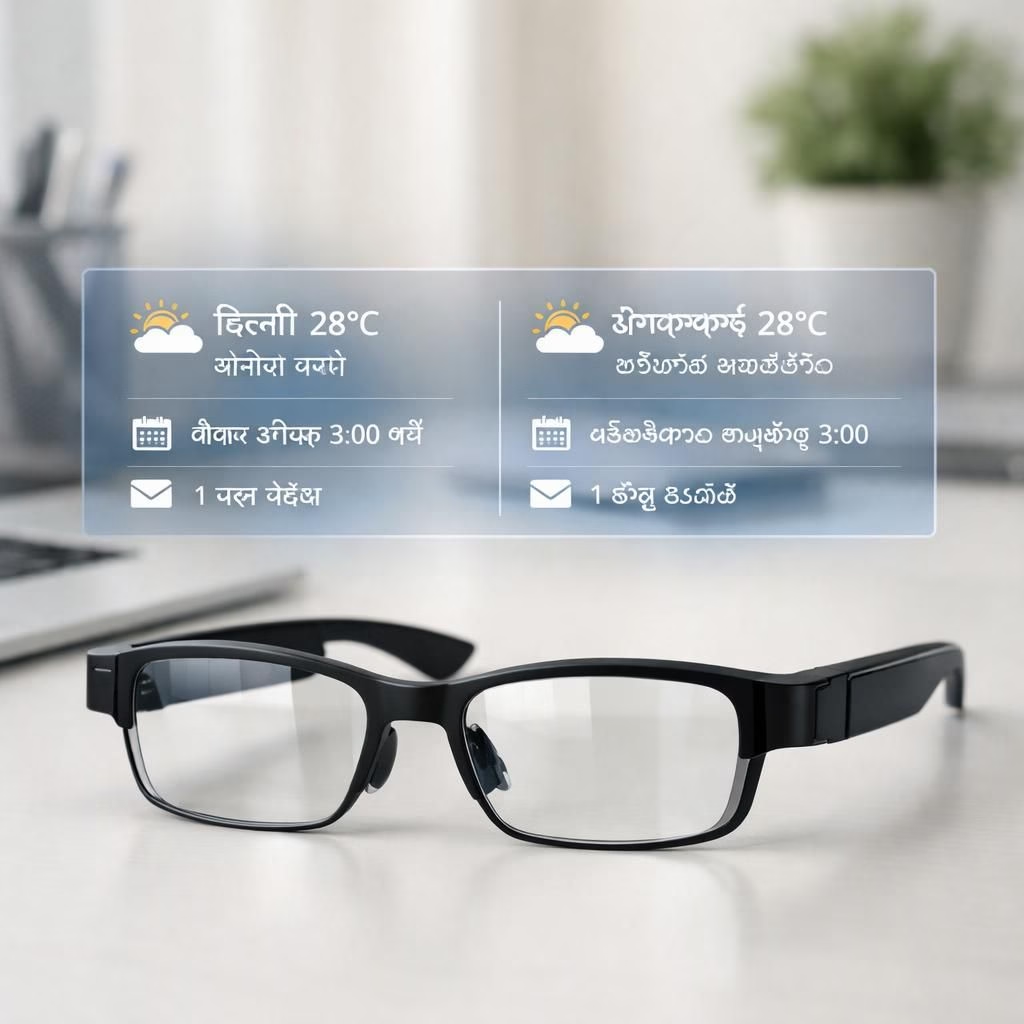
At the India AI Impact Summit 2026, Bengaluru-based Sarvam AI unveiled Kaze, a stylish pair of AI glasses designed to converse in Indian languages and interpret local contexts. The pitch is simple in a way that feels almost optimistic: on-device AI, a privacy-minded architecture, and a developer platform that could host a bustling ecosystem of apps. This isn’t just gadgetry; it’s a statement that AI can be designed and built in India, with language and culture in the foreground. The first impression suggests AI glasses aren’t a novelty item but a serious attempt to fuse hardware with a homegrown software stack—a move that could tilt the playing field in favor of domestic innovation. For many observers, India AI Impact signals that India wants more than English-first interfaces; it wants a device that speaks in the country’s many tongues, and in a manner that respects local data norms.
AI glasses in daily life: language, privacy, and developer potential
The hardware design keeps the appearance clean and wearable, with a glassy frame that looks more like a fashion accessory than a gadget-laden piece of tech. The cameras and microphones are there to support voice interactions and situational awareness, but the real story is what runs inside. Kaze emphasizes an on-device AI stack—meaning the models run locally rather than outsourcing heavy lifting to distant servers. The upside is straightforward: lower latency for fast queries, and a privacy narrative that many users find compelling in an era of ubiquitous data collection. The on-device angle also promises resilience in urban environments where connectivity can be spotty or expensive. This is not a drill: the device is pitched as a platform, inviting developers to craft apps that are tuned to Indian languages and local use cases. That could mean everything from real-time translation in public transit to document processing in regional scripts, all accessible without a cloud dependency. However, the proof will be in execution—battery life, heat management, and the fidelity of voice interfaces as you switch between languages and acoustic backgrounds. Still, the prospect of a consumer-facing product that leans heavily on a domestic AI stack is itself a form of progress with cultural resonance. AI glasses here aren’t a novelty; they’re a testbed for a homegrown AI pipeline that could redefine how we interact with devices in daily life.
India AI Impact: a domestic AI stack with global ambitions
In the comparison with Meta’s Ray-Ban eyewear, Kaze leans into a locally powered AI stack and a user experience optimized for India’s linguistic diversity. The goal is clear: move beyond English-first interactions and offer a more inclusive interface for non-English speakers. The promise extends beyond voice commands to robust document processing, multilingual chat, and context-aware assistance—on-device, which is important for privacy and for users who don’t want every utterance to travel to a cloud. The emphasis on Indian languages isn’t merely cosmetic; it reflects a broader push to ground AI in local needs, training data, and regulatory expectations. This approach aligns with a national appetite for a self-reliant AI ecosystem that can compete with global platforms while delivering solutions tailored to Indian realities. The platform side hints at a future where developers can build, test, and monetize apps that truly resonate with Indian users, rather than exporting English-language experiences that are later localized in clunky ways. Yet the saga comes with caveats: pricing, hardware specifications, battery performance, and the nuanced quality of on-device AI in everyday scenarios remain open questions that could make or break the product’s early momentum. Still, the direction feels purposeful, and the branding around a domestically grown AI stack adds credibility to the ambition of a distinctly Indian tech footprint within the AR/AI wearables space. India AI Impact, as a framing device, signals more than a product launch; it signals intent to nurture a homegrown tech ecosystem that can stand alongside international offerings while staying true to regional needs.
What we know—and what remains unknown about Kaze
We know Kaze is designed to run custom apps from Sarvam’s platform, with a focus on on-device performance and language versatility. We know the hardware aesthetic is discreet, designed to be worn all day, and that Sarvam is betting hard on a developer community as a lever for broader adoption. We also know that pricing, exact hardware specs, battery life, and the precise quality of the on-device AI will determine how aggressively the market embraces the product. The company has signaled a May 2026 launch window, with a chat feature rolling out soon thereafter. What remains to be seen is whether the on-device AI can hold its own in noisy real‑world environments, how well the localized language models handle regional scripts, and whether the developer ecosystem will grow fast enough to justify the hardware price point. The competitive angle—positioning against Meta’s Ray-Ban—adds pressure, but it also creates a narrative that a domestically built AI stack can compete on privacy, latency, and cultural relevance as much as on sexy new features. All things considered, Kaze represents a thoughtful attempt to bridge hardware, software, and linguistic accessibility under one roof, with a distinctly Indian cadence.
Practical steps for developers using AI glasses
Say you’re a developer curious about Kaze. Start by exploring Sarvam’s on-device SDKs and language packs, then build a simple app that demonstrates multilingual input and offline document processing. Consider a quick feature set: real-time translation, offline OCR for regional scripts, and a privacy-preserving chat interface that works without cloud chatter. Test across common Indian languages and dialects to gauge model coverage and latency. Finally, showcase user flows that respect local data norms and offer granular controls for permissions and data retention.
Road map, pricing questions, and a cautious but hopeful outlook
Assuming a May 2026 release, stakeholders will be looking for a credible roadmap that ships with a clear sense of how the developer ecosystem will evolve. If Sarvam can deliver a tangible set of tools, SDKs, and sample apps that demonstrate multilingual capabilities, the path to a vibrant marketplace becomes plausible. The price question is almost as important as the product specs: a competitive price point could unlock a wave of early adopters, while a premium tier could attract enthusiasts and enterprise users looking for robust offline capabilities. Battery life remains a focal point: in India’s varied climates and daily routines, a device’s endurance can determine whether it becomes a fixture in daily wear or a niche gadget. The on-device AI quality will be judged in real-world tasks—from translating a crowded train announcement to extracting data from a regional document—so expectations will be high. If Kaze can deliver consistent performance across Indian languages and dialects, it could carve out a distinct niche in a market hungry for culturally tuned AI experiences. Until then, the product remains a promising concept, a genuine attempt to build something native that respects linguistic diversity while dabbling with high-tech possibilities.
In closing, the launch embodies a blend of optimism and pragmatism: a domestic AI stack, a hardware form factor that wears well, and a platform strategy that invites local developers to shape what AI glasses can do for Indian users. While we wait for concrete specs and pricing, the narrative itself is noteworthy: India AI Impact isn’t just about a product; it’s about the country crafting a practical, privacy-conscious path for AI wearables rooted in local language needs. If you’re curious about how this could change everyday interactions, stay tuned for hands-on impressions when early units land in May 2026.
Original article source: Times of India. Sarvam Kaze: Times of India coverage.
If you have thoughts or questions about Sarvam Kaze, share your perspective in the comments below. Your insight could help refine what a truly India-driven AI glasses experience could be.