

Publishers and policymakers woke up to a familiar drama last Friday. Bloomberg News reported that AI startups in China may face new limits on taking US capital without government approval, a move squarely in line with China policy guidelines.
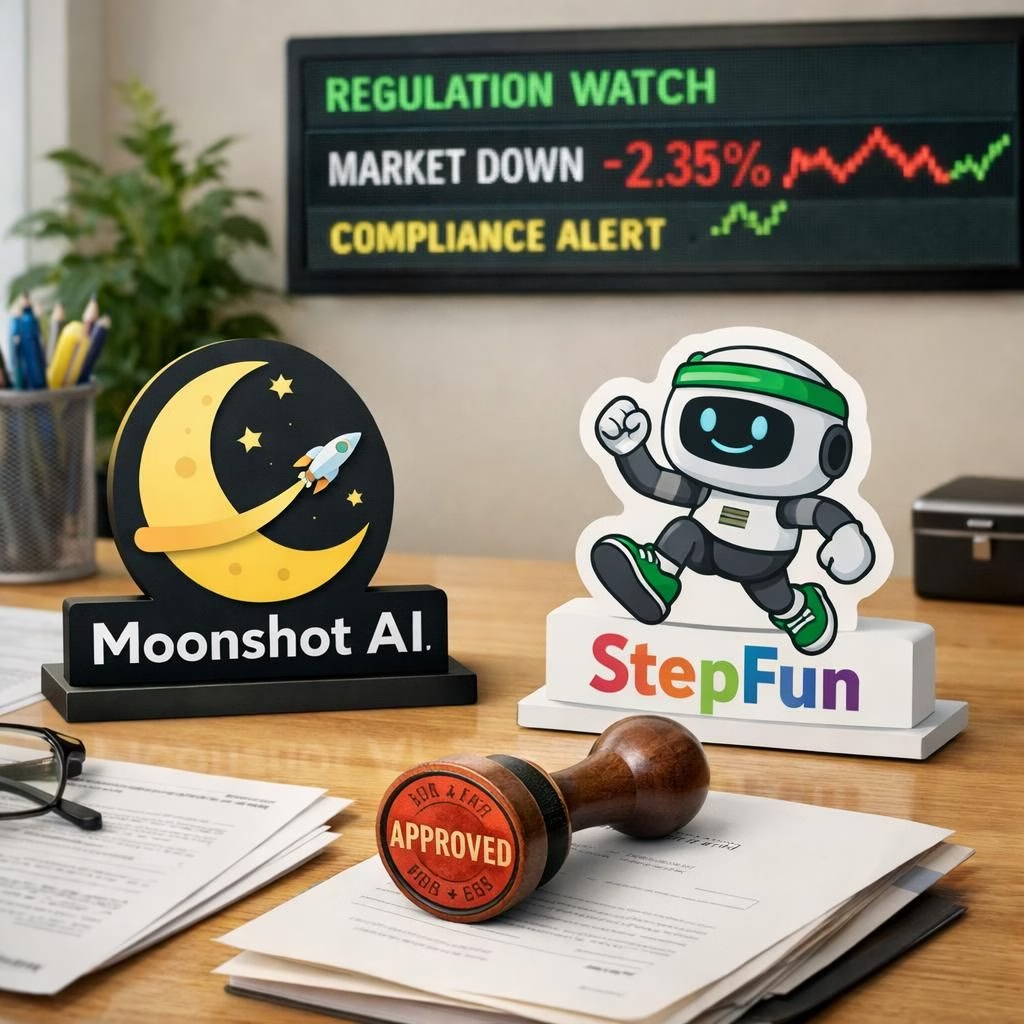
The National Development and Reform Commission, among others, has directed several private tech firms to decline US funding in rounds unless an explicit government sign-off arrives. Moonshot AI and StepFun were named among those guided, and ByteDance reportedly faces restrictions on secondary share sales to US investors without clearance.
The aim is simple: keep sensitive tech aligned with national security priorities within China policy objectives. This is AI in action, and the China policy checks come with a knowing wink from regulators who prefer paperwork to surprises. The stakes feel high enough to merit a briefing, and low enough to inspire a cautious chuckle from anyone who has tried to move fast in regulated seas.
The stakes feel high enough to merit a briefing, and low enough to inspire a cautious chuckle from anyone who has tried to move fast in regulated seas.
AI and China policy: Investment gatekeeping explained
In plain terms, this is a gatekeeping move. Regulators want to ensure that capital streams do not quietly carry critical technologies across borders without oversight.
The risk, as officials frame it, is that foreign buyers could gain stakes in chips, software, or analytics that shape strategic advantage.
What looks like a financial rule also functions as a national security measure.
For investors, the change means a need for patience, paperwork, and perhaps a little luck.
The Bloomberg report notes that several companies received instructions to seek explicit clearance before closing rounds with US backers.
That is not a ban on investment; it is a pause button, pressed with a bureaucratic flourish.
Moonshot AI and StepFun exemplify the new normal for startup strategy: plan for compliance, not just product-market fit.
ByteDance’s situation on secondary shares underscores how governance threads tighten around even existing stakes.
This is China policy in practice, guiding decisions with clear signals rather than guesswork.
AI funding under China policy: what founders should know
Two big levers stand out for AI entrepreneurs and their backers. First, the rules emphasize national security as a primary lens for assessing risk. Second, they push teams to build stronger local ties, more robust data practices, and transparent ownership charts. This is not a retreat from opportunity; it is a recalibration toward sustainable collaboration.
For AI-focused founders, the takeaway is simple: map your technology to regulatory categories early, and keep your documentation tight. In practice, this means preemptive disclosure, well-structured licensing where necessary, and a clear path to regulatory sign-off before any cross-border funding closes. That approach protects both the investors and the hosts of innovation—and it helps everyone sleep a little easier as moonshot dreams meet due diligence.
China policy realities for AI startups in 2026
Two things stand out. First, the shift builds on past pressure from Washington on investments in Chinese tech. Second, the response comes as China doubles down on national champions in AI, semiconductors, and quantum tech. The Manus affair in 2025 is a touchstone: Meta’s billion-dollar purchase prompted scrutiny of foreign investments and technology exports.
In practical terms, AI startups—Moonshot AI, StepFun, and others—now face a more deliberate due diligence cycle. This means longer timelines, a steadier supply of legal counsel, and a stronger case for localization of talent and data governance. The market still grows, but more slowly in early rounds, with capital chasing predictable regulatory outcomes rather than audacious, high-velocity rounds.
US pension funds and endowments, for instance, remain sizeable backers of China-focused funds and venture activity across EVs and AI, though they now assess risk through a more cautious lens. The policy tilt does not end American curiosity; it channels it into careful, rules-driven exploration. And yes, the interplay between AI breakthroughs and China policy continues to shape what counts as acceptable risk and acceptable reward.
For AI founders, this means building a governance spine that can ride out regulatory storms without snapping the company in two. For investors, it means rethinking portfolio construction to balance cross-border ambition with risk discipline. The China policy reality check also encourages collaboration with domestic players who understand the landscape—and who can translate global innovation into regionally compliant products. This is not a lockout; it is a roadmap that rewards clarity, accountability, and long-term resilience. AI teams that embrace these principles will still compete for the same global markets, but with a steadier clock and fewer last-minute scrambles to satisfy a shifting set of requirements. The market may tighten around certain deals, yet it remains fertile for those who calibrate speed to compliance.
- Build a robust compliance playbook that maps technology to security categories and audits ownership paths, all in line with China policy expectations.
- Document export controls early and keep a clear line of sight to regulators; avoid loose, post-hoc justification.
- Seek explicit approvals well before term sheets; one signature beats two drafts and a delay.
- Diversify funding with domestic capital to reduce cross-border bottlenecks without sacrificing growth.
The long view suggests a healthier market for what we might call strategic resilience. Startups that anticipate reviews, align with state priorities, and protect data with clear governance gain trust. Investors who adopt a steadier, more disciplined mindset will find opportunities in this tighter climate. The result could be steadier, more sustainable growth, and a more predictable path toward global collaborations that respect thresholds—and that is a win for China policy alike.
Original reporting and gratitude: Thanks to Bloomberg News for this insightful coverage of the evolving landscape in AI, China policy, and cross-border investment. Source: Bloomberg News.
If you enjoyed this analysis, please share your thoughts in the comments. How do you see AI startups navigating China policy in 2026? Your perspective helps spark a broader, friendlier conversation about global tech and security. And if you know the original Bloomberg piece, we appreciate the thoughtful reporting that made this synthesis possible.
Frequently asked questions
- What does this mean for US investors? Investors will likely need explicit regulatory clearance before tying up cross-border funding rounds, adding time to every deal.
- Are there exceptions for specific technologies? The guidance emphasizes national security, so regulatory categories and licensing paths matter for each deal.
- Will this slow down innovation? In the near term, yes, as due diligence tightens; long term, it aims to reduce risky, opaque investments.
- How should founders respond? Build a governance spine, document ownership and licensing, and engage domestic partners to navigate local requirements.
Conclusion and next steps
The trajectory is not a hard lockout but a structured pathway toward safer cross-border collaboration. AI teams that align with state priorities, invest in robust governance, and pace growth with regulatory clarity will remain competitive in global markets. The best outcome is a steadier clock for cross-border deals and more durable partnerships that respect thresholds set by China policy.