

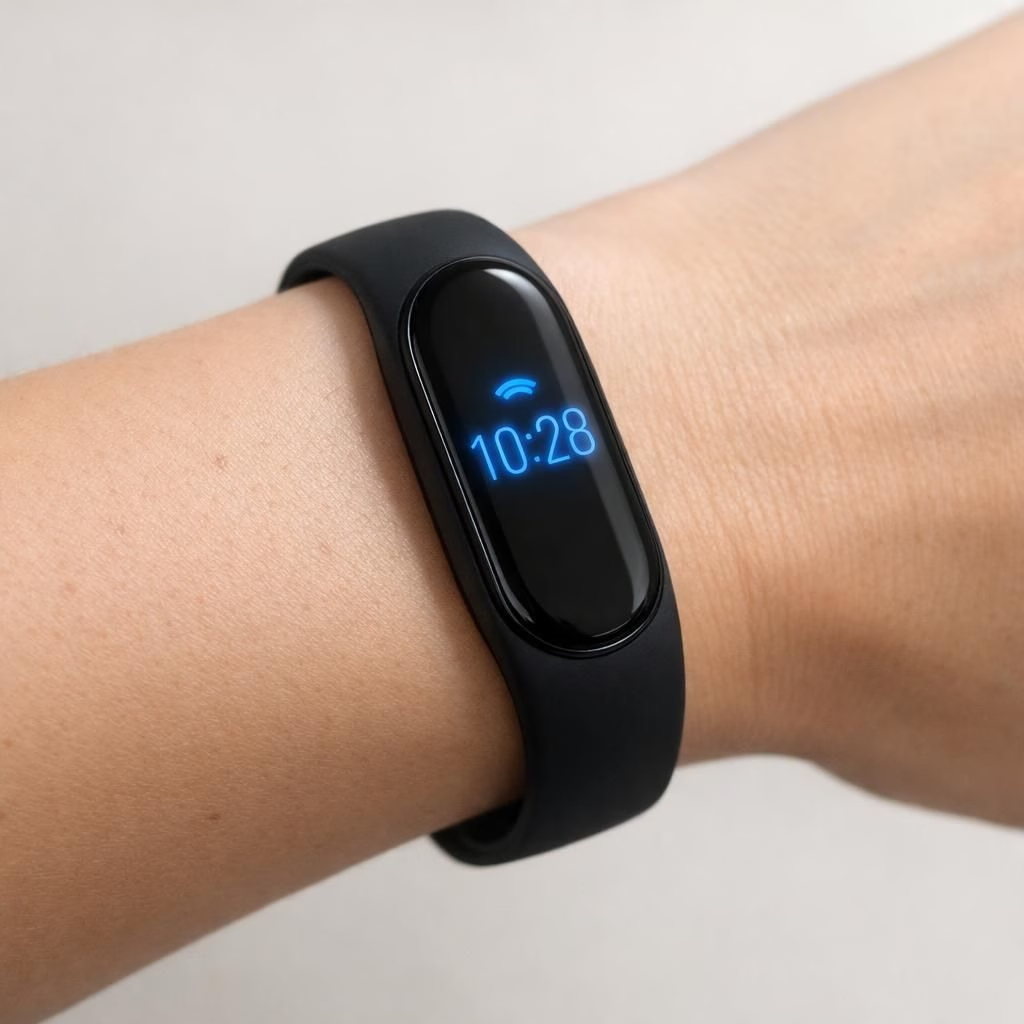
Google’s quietly ambitious Fitbit project keeps vanishing into plain sight. The Fitness Band is designed to be a subtle, helpful companion—less about a flashy screen and more about useful health signals in daily life, a classic move for Wearable Tech that pretends not to demand attention.
Fitness Band insights
The design choice deserves a nod. This Fitness Band treats battery life as a virtue and screen space as a luxury. Many wearables chase a dramatic display; Google’s approach favors a quiet, dependable experience that people forget they own until health data becomes useful. The Wearable Tech ecosystem benefits when power efficiency and user comfort take priority over neon displays.
The rumored direction—perhaps a screenless or near-silent mode—fits an industry shift toward less flashy, more actionable wearables. In practice, that means longer intervals between charges and more continuous sensing, which translates to steadier long-term trends rather than daily spikes. For users, this could translate to less fiddling and more understanding of what the numbers actually say.
In the grand scheme, this kind of usability win could help the Fitness Band stay relevant in a crowded field. It’s a win for the Wearable Tech ecosystem when power efficiency and comfort take priority over a neon OLED parade.
There’s also a strategic angle worth noting. Google appears to be treating Fitbit as a platform, not just a gadget. That mindset shifts the narrative from “another device” to “another data stream,” and it matters for developers, clinicians, and hobbyists alike. If the ecosystem grows to support third-party health insights, the Fitness Band can become a trustworthy hub rather than a vanity accessory. This move quietly shifts the balance of power in Wearable Tech by nudging rivals to tighten software quality and interoperability. The end result could be a more cohesive experience across devices that share a common language for steps, sleep, and mood data. In short, the Fitness Band isn’t just a status symbol; it’s a data bridge in a sprawling Wearable Tech world.
Second, the rumor around a Whoop-style orientation hints at a design that prioritizes raw habit data over constant screens. We’re talking about metrics that matter for daily decisions: training, recovery, and sleep. If the device can deliver reliable guidance without demanding constant attention, it becomes a silent coach. The challenge remains ensuring accuracy is transparent, privacy is intact, and the user experience remains frictionless. When those boxes are checked, the Fitness Band can stand out not by shouting, but by being dependable in the background.
As with any major consumer electronics move, we should expect a blend of cautious optimism and healthy skepticism. The industry loves to hype a new “screenless” or “invisible” device, but real-world use demands robust sensors, battery longevity, and accessible software. If Google can thread those needles, the Fitness Band could become a reference point in how Wearable Tech balances health data with everyday wearability.
Wearable Tech trends
From a broader angle, Wearable Tech is trending toward subtlety and integration. The idea isn’t to replace phones or gym memberships but to become a trusted companion that lives on the wrist with quiet efficiency. The right wearables collect data with as little friction as possible and translate it into meaningful guidance. If Google’s Fitbit project continues down this path, we could see a future where wearables blend more seamlessly with health platforms, medical devices, and everyday routines. The promise isn’t merely about steps and calories; it’s about turning streams of raw data into clear, actionable insights. In that sense, the Wearable Tech ethos is aligning with users who want smart devices that respect their time and privacy while still offering real value. The potential is enormous, provided the software stays painless, the data stays private, and the hardware remains reliable across day-to-day scenarios.
Critics will point to the usual suspects—marketing gloss, feature creep, and the inevitable leaks—but those are the costs of moving a mature category forward. If the Fitness Band can deliver consistent battery life, intelligent sensing, and a thoughtful user interface, it will earn trust even among skeptical reviewers within the Wearable Tech community. The path forward is not a single blockbuster update but a series of small, deliberate improvements that accumulate into a convincing product story. That approach fits the current appetite of fans and newcomers alike: devices that feel useful, not flashy, and that respect the wearer’s time and data. When we observe these shifts in practice, the Wearable Tech landscape looks less like a crowded showroom and more like a carefully curated wardrobe—one where each piece earns its keep by making daily life easier and healthier.
In the end, this evolution matters because it reflects changing expectations. Consumers want wearables that blend into life while offering real, digestible health insights. They want devices that don’t demand constant attention or a PhD in data science to interpret. The Fitness Band, with its emphasis on durability, efficiency, and practical analytics, seems poised to meet those expectations in a significant way. If Google can sustain that trajectory, the wearable market could pivot from one-off gadgetry to reliable, integrative health tech that respects both the user and the data they generate.
Share your thoughts: what do you value most in a wearable today—battery life, data accuracy, privacy, or a frictionless interface? Join the conversation in the comments and tell us how a Fitness Band or any Wearable Tech could better fit into your life.
Original reporting and inspiration come from several tech outlets covering the Google Fitbit narrative. A special thank you to the original material for helping shape this synthesis; you can view the source coverage here: original reporting by 9to5Google. We are grateful for the thoughtful, in-depth coverage that sparked this exploration.
Thank you for reading. If you enjoyed this take, please share your thoughts in the comments and help us refine the conversation around Wearable Tech and Fitness Band.
FAQ
- What is the Fitness Band from Google? A screenless or near-screen wearable focused on actionable health data rather than flashy displays.
- How long does the battery typically last? Design aims for longer life with efficient sensing and optimized software.
- Is privacy protected? Google emphasizes privacy controls and transparent data handling, with user consent as a core principle.
- When can we expect a public release? Official timing remains unclear; the emphasis is on building a reliable, user-friendly ecosystem first.
Practical steps
- Set up automatic data sync with your health app to avoid manual transfers. This keeps the Fitness Band and your other devices aligned.
- Enable privacy controls early. Review what data is shared and with whom, a key best practice in Wearable Tech ecosystems.
- Use power-saving modes when you don’t need real-time feedback. This extends battery life for day-to-day wear.
Fitness Band in daily life
For many users, the real value lies in a device that supports, not distracts. The Wearable Tech device should fade into the background while still guiding healthier habits.
Wearable Tech privacy & trust
Trust hinges on clear data practices and easy-to-understand insights. A quiet, reliable band can set the standard for Wearable Tech that respects users.