

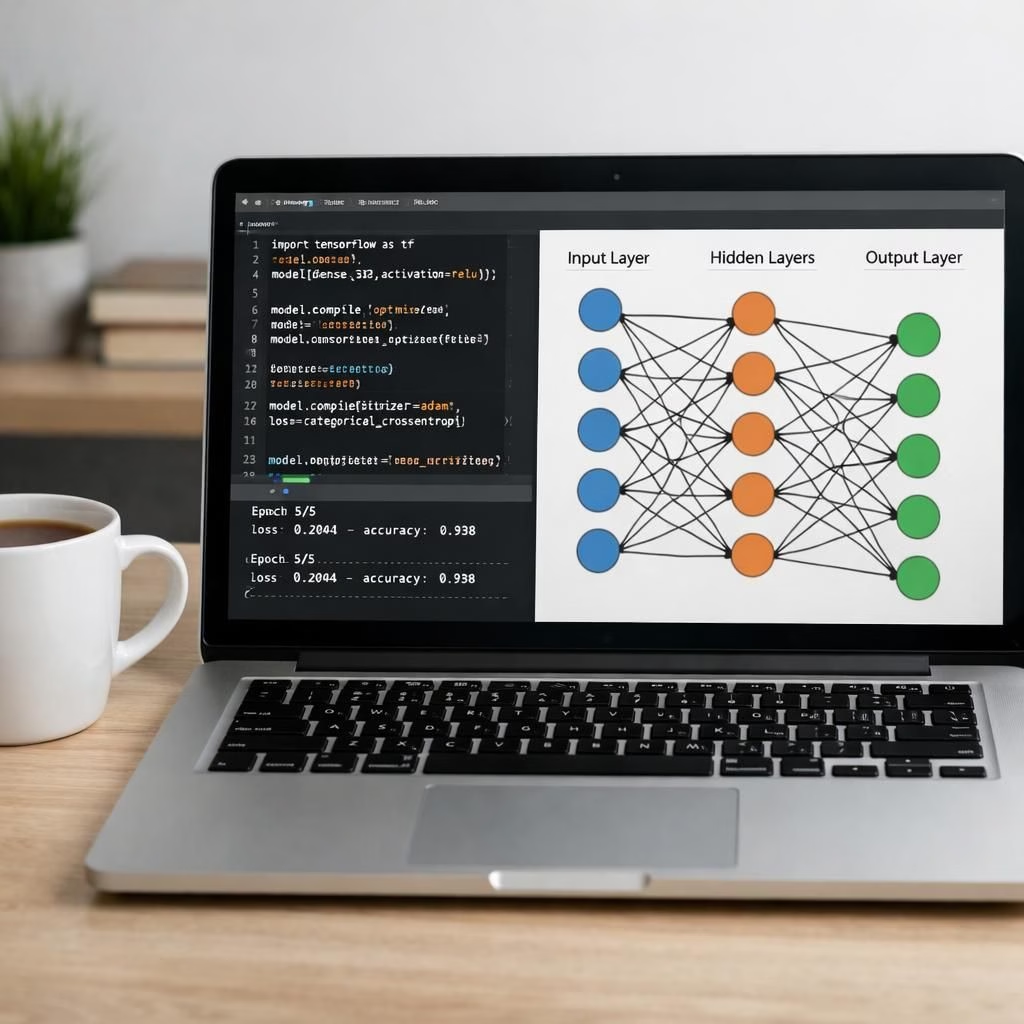
Future AI and Jagged Intelligence open a playful but honest window into what machines do well and where humans still shine in 2026. This article keeps the core truth intact while adding a smile and practical tips. Machines excel at scale, but they still rely on human judgment for context, ethics, and creative leaps. The result is not a doom scroll but a map: know the terrain, plan your path, and laugh at the glitches when they appear. Practical examples show AI accelerating design reviews, QA testing, and large-scale simulations. Humans still set goals and interpret outputs.
Future AI: Strengths in Math, Pattern Recognition, and Speed
AI shines in heavy lifting tasks: crunching numbers, spotting patterns in vast data, and churning out code in seconds. It can solve complex math problems quickly, as demonstrated by leading AI systems that tackled five of six challenging questions in an Olympiad-style test for top students. The takeaway is not that machines are flawless, but that they scale certain cognitive tasks with precision and consistency that humans rely on after long hours of work. When a model completes a difficult programming task or sifts through millions of records in minutes, it frees people to focus on design, strategy, and humane judgment. The practical effect is to enable faster iterations and better decision support, not to herald a robot takeover. For example, AI accelerates design reviews, QA testing, and large-scale simulations. Humans still set goals and interpret outputs.
Jagged Intelligence: Common Sense Is Not So Common
But the same AI sometimes stumbles on simple, trick questions. When asked whether to walk or drive to a 50-meter repair shop, the bots suggested walking. The joke hides a lesson: brilliance in one area does not guarantee general reliability. Researchers describe this as Jagged Intelligence, a spectrum where speed and accuracy shine in math or coding while basic intuition lags. The insight helps economists and policy folks map how automation changes work. Leaders who track these gaps can guide training, reskilling, and safe deployments. The point is to pair machine strength with human oversight, not to pretend the machine will replace all thought. In practice, many teams find the best results come from human–AI collaboration that pairs quick calculation with thoughtful critique.
Practical Takeaways for 2026 in Tech, Schools, and Society
Take practical steps to stay ahead. Below are concrete ideas teams can try this year.
- For programmers: collaborate with tools that augment speed rather than merely replicate it.
- For educators: emphasize critical thinking and problem framing as much as raw computation.
- For policymakers: focus on safety, transparency, and retraining opportunities.
- Organizations should plan iterative pilots and keep humans in the loop at key decision points.
Have thoughts on Future AI and Jagged Intelligence? Share them in the comments below.