

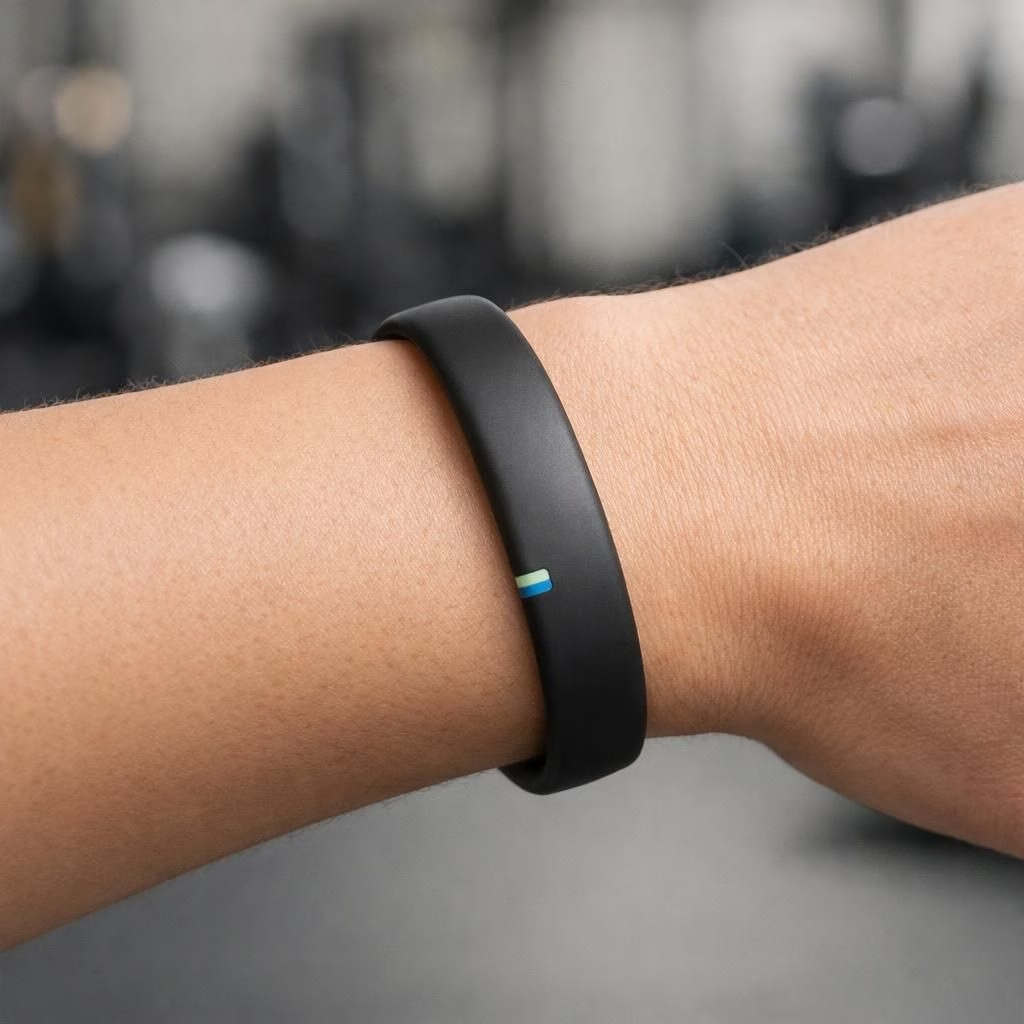
Welcome to 2026, where FitTech dreams flirt with a screenless future. The chatter centers on a FitnessWearable concept Google is quietly exploring, a band that looks like a minimalist bracelet rather than a smartwatch. The goal is deceptively simple: capture health data with sensors, track workouts, and deliver insights without a bright display turning your wrist into a digital billboard. This is not science fiction. It’s a transparent nudge to rethink wearables as passive assistants, not constant notifications. It seems Google is testing a screenless Fitbit-like band that could redefine how we measure movement, sleep, and recovery while sparing eyes from the glare of yet another OLED panel. The hype is real, but so is the humor: we don’t yet know if this FitTech idea will survive a battery drain test or a privacy audit, but the concept alone is fueling debates across fitness forums and tech blogs.
FitTech push reshapes the FitnessWearable market
In market terms, FitTech sits as a family of devices that trade bravado for subtlety. A screenless form factor could extend battery life, reduce distraction at work or while driving, and push health metrics into the background where only curious analysts dare to look. A screenless FitnessWearable would lean on sensors for heart rate, oxygen, sleep, and movement, and then push summaries to your phone or a paired device. It’s designed for quick glances rather than marathon data dives. The promise is a device that tells you when to move, when to rest, and when to recalibrate your goals without shouting alerts every few minutes. The risk is that users may miss the social dopamine hit that a bright screen can deliver with every notification. Still, the potential to simplify data without sacrificing insight is compelling, especially for those who want to live smarter without turning every wrist tap into a mini information dump. The public curiosity around this FitTech concept is real, and Steph Curry’s involvement in promotional clips has only added a dash of popcorn-worthy drama. The question remains: can a screenless FitnessWearable ever deliver the motivational push that today’s robust screens can offer in a compact, elegant package?
Why FitTech matters for FitnessWearable adopters
For adopters, the appeal lies in comfort, battery life, and a calmer data stream for the FitnessWearable.
If metrics like movement, sleep stages, and recovery cues arrive as concise tips, users may care less about aesthetics.
Privacy becomes a real selling point; opt-ins and transparent data use could sway decisions. Early privacy controls for the FitnessWearable will matter as much as the sensors.
What this could mean for FitnessWearable buyers and the market
From a shopper’s perspective, a screenless option would redefine the value proposition beyond looks. If the core metrics—heart rate variability, sleep stages, activity intensity, and recovery cues—are captured accurately and summarized as bite-size insights, people may care more about reliable data than flashy displays. The market today leans toward players like Whoop and Oura. A Google-backed FitnessWearable that emphasizes comfort, battery life, and seamless cloud sync could tilt the balance toward more habitual wearables for daily life. Data privacy will be a central talking point; clear controls, opt-ins, and transparent data use will matter to privacy-minded shoppers. The business case hinges on ecosystem benefits: a single package that links your phone, health apps, and smart home could attract casual users who dislike gadget clutter. And yes, Steph Curry’s cameo has shown that the cross-pollination of sports marketing and health tech is a real thing: quick clips and recovery data have broad appeal for fans who crave performance insights without overloading the wrist with numbers.
In practical terms, expect debates about battery life, charging cadence, and sensor accuracy. A screenless design would likely rely on passive data processing in the cloud, with on-device accelerometers and optical sensors doing the heavy lifting. The reliance on an app ecosystem means you’d be nudged by notifications in your phone only when something meaningful happens. The design philosophy might borrow from fitness bands that emphasize comfort and minimalism while still offering rich data layers behind the scenes. The result could be a device that feels less like a gadget and more like a sports assistant, quietly helping you stay consistent with your goals. The idea aligns with a broader move toward quiet tech—devices that do a lot without demanding constant attention. In other words, FitTech could become about the art of restraint rather than the art of being loud. The narrative also nods to the historical tension between wearables and fashion: big screens came for health, and now we may see the pendulum swing back toward subtlety, with a focus on actual health outcomes rather than pixel density.
Original reporting and inspiration from 9to5google. Thank you to the writers for the initial coverage: 9to5google.
Have thoughts? Please share your thoughts in the comments below.
Practical steps for exploring a FitnessWearable with FitTech
- Evaluate battery life expectations for a FitnessWearable and plan charging around workouts.
- Check privacy controls and opt-in settings before enabling data sharing with apps and cloud services for the FitnessWearable.
- Assess how well the companion app translates raw sensor data into useful, bite-size insights for your daily routine.
- Compare comfort, weight, and wearability to existing trackers before committing to a screenless model.
FAQ: FitTech and the FitnessWearable concept
- What exactly is a screenless Fitbit-like band? It’s a band that collects health data and shares insights on a paired device rather than a constant wrist display.
- When could such a device arrive? There’s no official launch date; the idea is still in exploration stages.
- How will data privacy be handled? Expect opt-ins, transparent data use, and user controls to limit sharing.
- How does this differ from today’s wearables? It emphasizes minimal screens, quiet alerts, and more emphasis on actionable health insights.
References
For broader context, see stories from credible outlets: Bloomberg, CNET, and Engadget.