

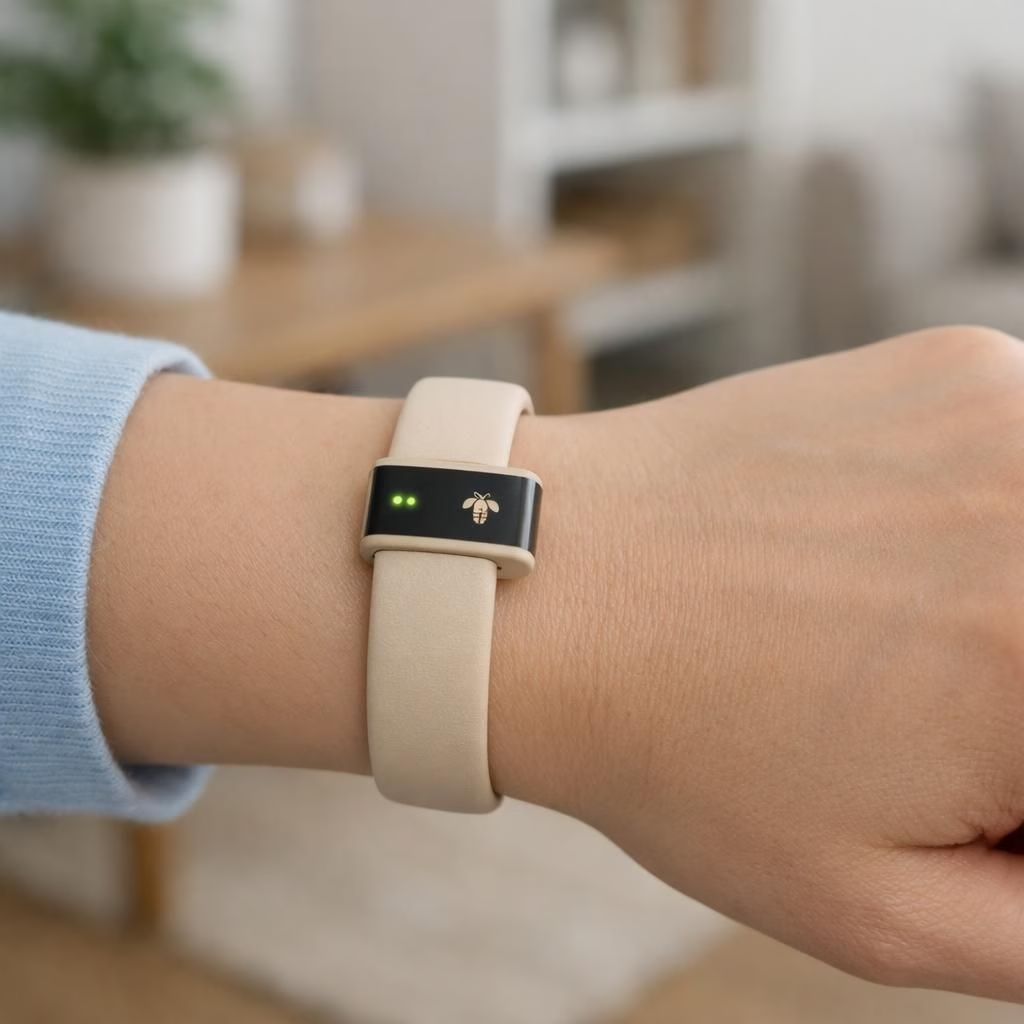
Trying the Amazon Bee wearable, I found this Wearable Tech experiment surprisingly engaging and a touch unsettling. The Bee sits on my wrist like a quiet, nerdy friend, ready to whisper insights about your day. In a world full of flashy trackers, it feels oddly calm, a device that asks you to notice rather than shout. The result is a watchful companion that asks for a handshake, then steps back to let your day unfold. The pairing also makes the Amazon Bee feel less like a gadget and more like a thoughtful, low-key assistant.
Amazon Bee in Everyday Life
In daily life, the Amazon Bee acts as a quiet coach. It tracks movement, sleep, and ambient cues that might influence your mood. The AI behind it tries to present insights that feel friendly and personal rather than clinical. The experience is practical: you get nudges to hydrate, stretch, or take a breath when stress rises. The tactile feedback is gentle and easy to interpret, almost like a tiny mentor on your wrist. The goal is simple: help you notice patterns without turning you into a data spreadsheet. For users who prefer a calm interface over a data dashboard, this Wearable Tech approach can feel refreshingly human.
From a design standpoint, the Bee remains unobtrusive. It sits comfortably, barely drawing attention during meetings or workouts. The battery life supports a busy day, and the charger travels well in a small bag. The companion app displays a friendly graph and expects you to decide what to tweak, not the other way around. The vibe leans toward practical minimalism, which many people will enjoy, especially if they dislike gadget clutter on their wrists. In the broader Wearable Tech landscape, Bee sits somewhere between a notification badge and a thoughtful coach.
Wearable Tech Realities
Two readers asked what I would actually do with this Bee wearable beyond bragging rights. The practical uses are real: reminders to drink water after coffee, alerts to stand up during long meetings, and nudges to revisit a goal at the end of the day. The battery life is decent for daily wear, though heavy users may crave a longer cycle. The device needs charging every couple of days, and the charger is tiny enough to vanish into a desk drawer—charm and mild annoyance in one package. The Bee’s sensors render a usable snapshot of your day, not a perfect mirror, and that honesty matters when you evaluate wearables for 2026. In the Wearable Tech space, Bee feels practical rather than perfect, a companion that helps you see patterns without forcing a verdict.
As a consumer, I appreciate good UX, and the Bee delivers a crisp app experience that pairs nicely with other devices. The insights arrive in digestible bits, not a dense spreadsheet, which makes it easier to act on them. Still, the creeping vibe from the TechCrunch article lingers: a device that knows you a bit too well can feel invasive if you let it. The fix is simple: configure what data you share, how long you store it, and how often you review it. You control the story your data tells, and that control is the point of Wearable Tech in a healthy digital life.
In the broader context, privacy matters as much as performance. The Bee invites you to balance usefulness with boundaries, and that balance is at the heart of any responsible Wearable Tech choice.
Amazon Bee in Real Life: Privacy and Control
Privacy is the big question when a device learns your routines. You should be able to limit what data is captured, how long it stays, and who sees it. The Bee offers adjustable privacy settings in the companion app, with simple toggles for activity tracking, location hints, and health tips. In practice, start with minimal sharing and gradually expand if you need more tailored insights. This is the core idea of Wearable Tech: you should set the boundaries that fit your life. For now, you can experiment with privacy presets, then revisit them after a week or two, and adjust again as your comfort grows.
In weekly reviews, you can compare the data you chose to share with the value you gain in insights—this trade-off is central to Wearable Tech adoption.
To support informed decisions, consider official guidance on privacy and data security from reputable sources. For example, see the FTC privacy and security guidance for businesses, which outlines practical steps to protect consumer data. You can also reference the NIST Privacy Framework for a structured approach to managing privacy risk.
Tips for evaluating a new wearable in 2026
- Check what data is collected and how it is stored.
- Experiment with privacy controls and keep revisiting them as you use the device.
- Assess how the device fits your daily routine; if it nags, you may not wear it long.
- Compare battery life to your usage; if you charge nightly, you win.
- Consider openness: can you export data, or does it stay locked in the app?
- Test comfort: a device should feel like a helper, not a burden on your skin or schedule.
Now, a quick verdict: this Bee bracelet may be one of those test-drive gadgets that quietly changes your habits because it seems ordinary yet subtle in effect. That may be the nicest compliment you can give a wearable in 2026: it works without shouting, nudges you toward small, healthier choices, and avoids turning your life into a dashboard of doom. If you prize privacy control and a calm interaction, the Bee earns a closer look for daily use rather than medical monitoring. For some, this Amazon Bee experience will feel pleasantly unobtrusive; for others, a reminder that data comes with responsibility in the Wearable Tech era.
Original article: I tried Amazon’s Bee wearable and am both intrigued and slightly creeped out — TechCrunch. Thank you to TechCrunch for the original coverage.
Frequently asked questions
- How private is the data from the Bee? In short, it depends on your settings. Start with minimal sharing and use the app’s privacy controls to limit what’s stored and for how long. See the FTC privacy resources for practical guidance on safeguarding consumer data.
- Can you export or delete your data? Yes—where supported by the app, you can export or delete data. If exporting is important to you, verify the option in the account settings before you commit to a device.
- How long does the battery last? For typical daily use, you’ll likely recharge every couple of days. If you’re light on features, you might squeeze longer; heavy users will want a USB charger handy.
- Should you buy? If you value a calm, non-intrusive nudge toward healthier habits and privacy controls, this Bee is worth a closer look. It isn’t a medical device, and it won’t replace professional guidance, but it can encourage small, consistent changes.
References and further reading are included below for readers who want to explore Wearable Tech privacy and data-handling concepts in more depth.