

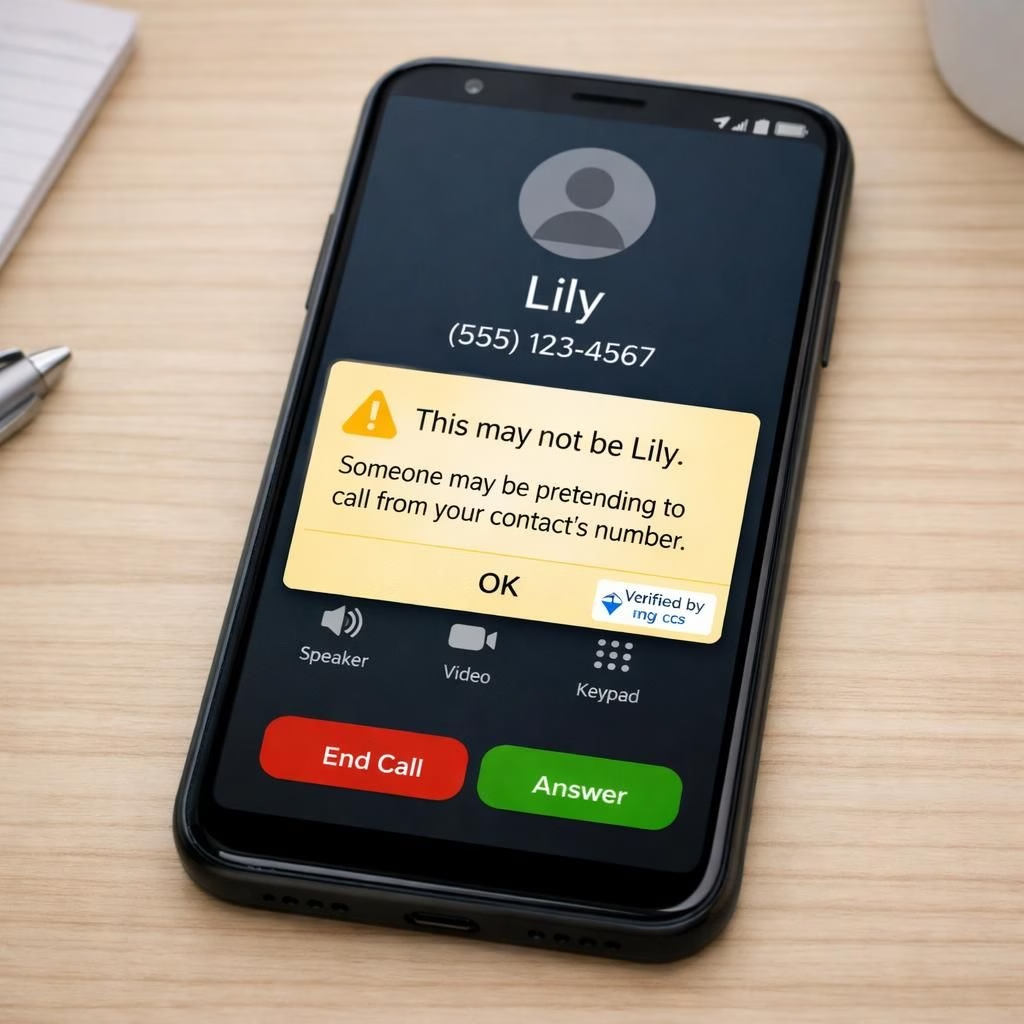
Welcome to a sunny tour of fake-call-detection and rcs in Android Dialer, where security meets daily notification fatigue with a wink. The promise behind this feature is simple: your number and device confirm each other in real time, reducing the chances of successful impersonation during a call. Google’s approach blends hardware-backed checks with software signals to raise the bar for what a legitimate call looks like.
fake-call-detection and rcs: How the system verifies calls
The feature builds on the rcs standard to digitally bind your phone number to the actual handset. When you call another Android user, the phone sends a real-time, silent background confirmation signal. If that signal is missing—perhaps due to VoIP or spoofing—Google Dialer flags the call, hides the contact photo, and updates the recent-calls log to read Unknown. It is a simple alert that aims to halt scams before they yank your wallet or your confidence from your pocket.
In the demo, the pop-up reads: This may not be Lily. Someone may be pretending to call from your contact’s number. That line is a bit sci-fi, but it is meant to give you a moment to pause. The hardware-backed, real-time verification isn’t a magic shield, but it raises the bar for impersonation attempts.
fake-call-detection and rcs in practice: real-world impact
The mechanism uses the rcs to bind your number to your handset in a way that makes spoofing harder. It works best when both parties use the Google Dialer with this capability. This cross-platform approach aims for broad interoperability, since rcs exists across carriers and devices. The rollout is device-aware and designed for ubiquity.
Android 12 and newer devices will begin receiving updates to enable the real-time binding of caller identity to the handset, allowing the Dialer to verify mutual contacts. Google notes that this design prioritizes interoperability and user trust over a single platform. The approach aims to be broadly compatible, even as Apple stays quiet on any plans to adopt a similar feature.
For users, the experience is simple. If a call fails verification, a warning appears and you can hang up with a tap. If a call passes, nothing disruptive happens. The goal is to keep you informed without slowing you down.
There are caveats. No security feature is perfect. False positives can happen, and some scams may slip through. Still, fake-call-detection and rcs push attackers toward more complex tricks and give people better signals.
Tech notes matter for the curious. The real-time, silent background confirmation signal lies at the heart of the system. rcs binding is designed to be resilient to spoofing and focuses on local device integrity as well as network signals.
alerts, UX, and future directions
The user experience is designed to be minimal yet meaningful. A single, clear option to end the call avoids friction while maintaining control. The broader aim is to strengthen trust signals across ecosystems as standards mature. Apple has not commented on any plans to adopt a similar feature, which keeps this Android-first for now.
In short, fake-call-detection and rcs represent a pragmatic shift toward verifying caller identity. It is not a silver bullet, but it is a meaningful upgrade in an era of impersonation scams. It signals a future where calls feel safer by default.
Original article reference and thanks: Thank you to WIRED for the original reporting and context that informed this piece. See the source here: Wired: Google Dialer adds real-time fake-call detection.
If you have thoughts on how you would use this feature or concerns about privacy, please share your insights in the comments. Your input helps shape safer calls in 2026 and beyond.
Practical steps for users
- Keep your Android Dialer updated to the latest version to enable real-time rcs checks.
- Ensure both callers are using the Google Dialer and have their contact lists up to date.
- Treat any unexpected requests with caution; even with verification, trust signals arent perfect.
FAQ
-
What is fake-call-detection and how does it work on Android?
It’s a feature built into the Google Dialer that uses rcs to validate calls in real time and warn when verification fails.
-
Will this work if the caller uses a non-Google rcs app?
Best results occur when both sides use a compatible Dialer with real-time binding, but the system is designed to degrade gracefully on mixed stacks.
-
Does this invade privacy or collect more data?
Processing happens at the device level; signals are designed to protect privacy while helping you spot impersonation.
-
Will Apple adopt a similar feature?
Apple has not commented; there’s no public timeline yet.
Takeaway and next steps
Fake-call-detection and rcs mark a practical shift toward safer calls by default. It’s not a cure-all, but it’s a meaningful upgrade that adds a visible signal you can trust in real time. If you’re curious, keep your phone updated and follow Android/Google updates for more details.